
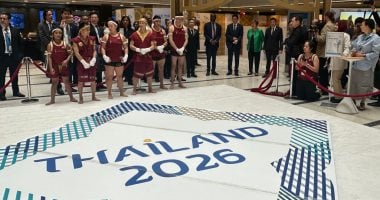
In October, Thailand will host the annual meetings of the International Monetary Fund (IMF) and the World Bank in Bangkok, welcoming a prominent gathering of global economic leaders. This significant event promises to address pressing financial issues and foster collaboration among countries, reflecting the importance of Thailand as a key player in the international financial landscape.
Recently, the IMF announced that the joint annual meetings with the World Bank Group for 2029 will take place in Abu Dhabi, United Arab Emirates. This decision follows a vote by the boards of governors from both institutions to select the hosting country. The upcoming meetings in Thailand will serve as a precursor to this future gathering, emphasizing the pivotal role these meetings play in shaping global economic policies.
The spring meetings of the IMF and World Bank will be held in Washington, D.C., from April 13 to 18 this year, with a high-level Egyptian delegation in attendance. Egypt has revamped its representation at international financial institutions, appointing Hassan Abdullah, the Governor of the Central Bank of Egypt, to represent the country at the IMF, while Ahmed Kouchak, the Minister of Finance, will serve as the alternate governor.
Additionally, it was decided that Bader Abdel-Aty, the Minister of Foreign Affairs and International Cooperation, will represent Egypt at the World Bank, with Dr. Ahmed Rostom, Minister of Planning and Economic Development, acting as the alternate. This restructuring of representation comes at a crucial time when coordinating monetary and fiscal policies in Egypt is increasingly vital, especially with the implementation of an economic reform program supported by the IMF amid rising inflation and global challenges stemming from ongoing geopolitical tensions.
The ongoing conflict in the Middle East and its economic repercussions will be among the key topics discussed during the annual meetings of the IMF and World Bank. This conflict is regarded as the third major shock to the global economy, following the COVID-19 pandemic and the Russia-Ukraine war of 2022. Senior officials from the IMF and World Bank have indicated that they will revise their global growth forecasts downward while raising inflation expectations due to the conflict, cautioning that emerging markets and developing countries will bear the brunt of rising energy prices and supply chain disruptions, especially in light of the Hormuz Strait crisis, through which 20% of the world’s energy supplies flow.
During the annual meetings of the IMF and World Bank in Thailand, several seminars, regional media sessions, press conferences, and various other events will be conducted, focusing on global economic trends, climate change, international development, and the global financial system. The spring meetings, hosted in Washington from April 13 to 18, 2026, will similarly feature a range of discussions aimed at addressing these critical issues.
The IMF and World Bank host spring meetings each April, followed by annual meetings in October, attracting central bank governors, finance ministers, development officials, private sector executives, civil society representatives, academics, and economic analysts from around the globe. The involvement of such a diverse group highlights the collective commitment to addressing the challenges facing the global economy.
Furthermore, Bank Misr, one of the largest banking institutions in the Middle East, is sponsoring the press coverage by “Youm7” for the spring meetings of the IMF and World Bank in Washington. This partnership underscores the importance of media engagement in fostering dialogue and informing the public about the discussions and decisions made during these pivotal events.