
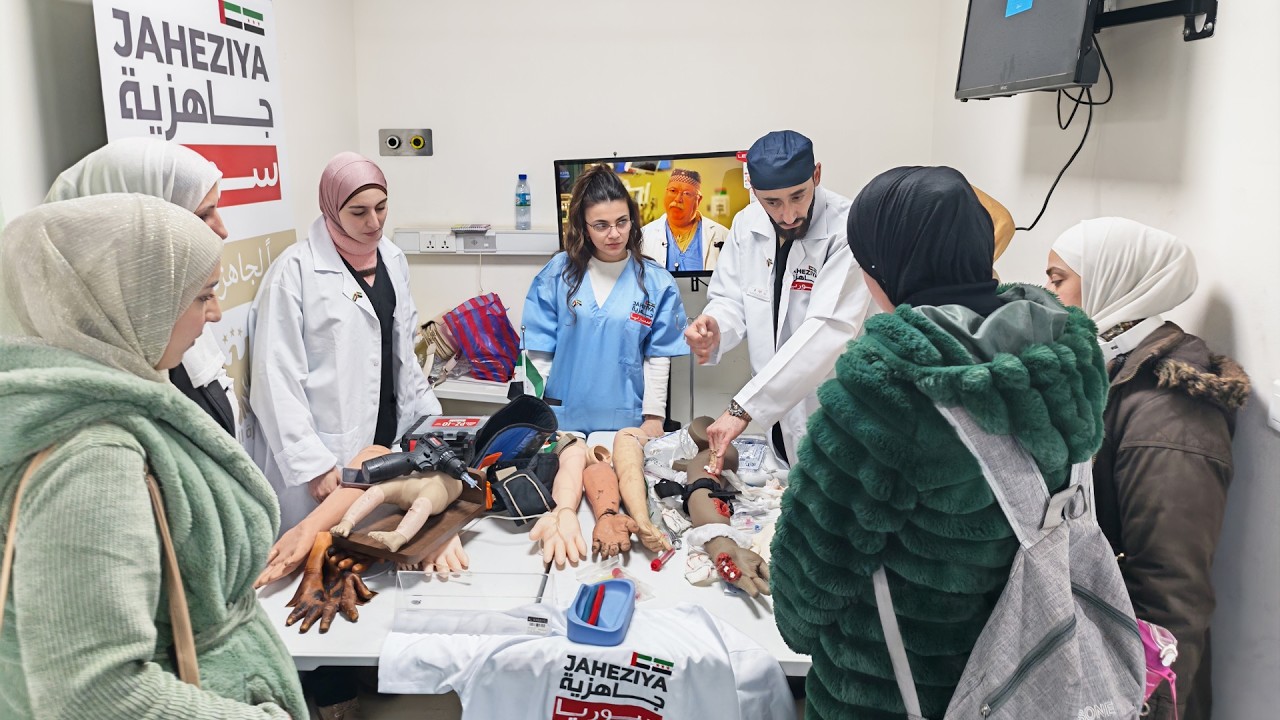
The launch of the second phase of Syria’s medical readiness initiative, aimed at enhancing healthcare response capabilities, marks a significant step forward in collaborative efforts between Syria and the UAE. The program, titled “جاهزية سوريا,” focuses on developing trained professionals and establishing standardized procedures that align with international best practices. This initiative not only addresses immediate healthcare needs but also aims to build a sustainable medical framework for the future.
The second phase of the Syrian-UAE medical readiness and response program, “جاهزية سوريا,” was launched today at the Sheikh Mohammed bin Zayed Field Hospital in Damascus. This phase, which will last for three months, involves the preparation of certified national trainers and the qualification of Syrian and Emirati experts to manage specialized programs, establish medical training centers, and build reserve teams within a unified readiness and response system. The program employs an internationally developed training approach in collaboration with the Readiness Academy, the European Centre for Disaster Medicine, and specialized institutions from the UAE, the United States, and Europe.
The launch of the second phase follows the success of the first phase, which trained over 400 frontline workers from hospitals and the Ministries of Health, Higher Education, police, and military, under the supervision of Syrian, Emirati, and European experts. Dr. Iyad Baath, Director General of the Syrian Medical Specialties Authority, stated that the program began with a pilot phase, during which 200 healthcare specialists were trained, and a joint committee was formed between the Ministry of Health and the Readiness Academy to oversee the program and develop national capacities capable of ensuring the sustainability of training and improving the readiness of hospitals and emergency response teams.
Dr. As’ad Sharaf al-Din, Head of the “جاهزية سوريا” program, emphasized that the program is being implemented as part of a five-year plan based on international standards to enhance hospital readiness and improve medical response efficiency for critical cases through advanced training and modern simulation techniques. Dr. Adel Al-Shammari Al-Ajmi, CEO of the UAE National “جاهزية” program, noted that the success of the unified Emirati model for readiness and response has contributed to sharing experiences with brotherly and friendly countries, enhancing health partnerships, and attracting and qualifying Emirati and Syrian medical talents as certified trainers, within a program aimed at training 20,000 specialized medical personnel in both countries.