
In a significant development regarding political dynamics in southern Yemen, a deputy leader from the Southern Transitional Council (STC) has firmly stated that the factions in this region will not operate under the command of the Saudi-led coalition. This statement comes in response to comments made by Rashad Alimi, the president of the council, indicating that all southern forces should act under the coalition’s leadership. The discussion highlights ongoing tension between local groups asserting their independence and external influences seeking to coordinate military efforts in Yemen.
Clarification from the Southern Transitional Council
Faraj Al-Bahsani, the deputy chairman of the STC, expressed his disagreement with Rashad Alimi’s assertion that all southern forces would operate under the coalition’s direction. He emphasized the challenges of unifying various factions—whether affiliated with the STC, Hadramout, or other groups—under a single banner led by the coalition. Al-Bahsani pointed out, “It will be difficult to unify forces as announced by Rashad Alimi under one banner led by the coalition,” adding that southern troops, including those associated with the STC or Hadramout, would not accept such terms.
Call for Autonomy in Decision-Making
Al-Bahsani further urged the Saudi coalition to allow the southern factions to deliberate on their course of action without external pressures, suggesting that discussions held in Saudi Arabia would hinder authentic dialogue. He believes that a more conducive environment for negotiation should be established, free from the influence of coalition urgencies. This call for greater autonomy signals a desire for the southern forces to assert their rights and preferences in shaping their political landscape.
Public Support for the Southern Transitional Council
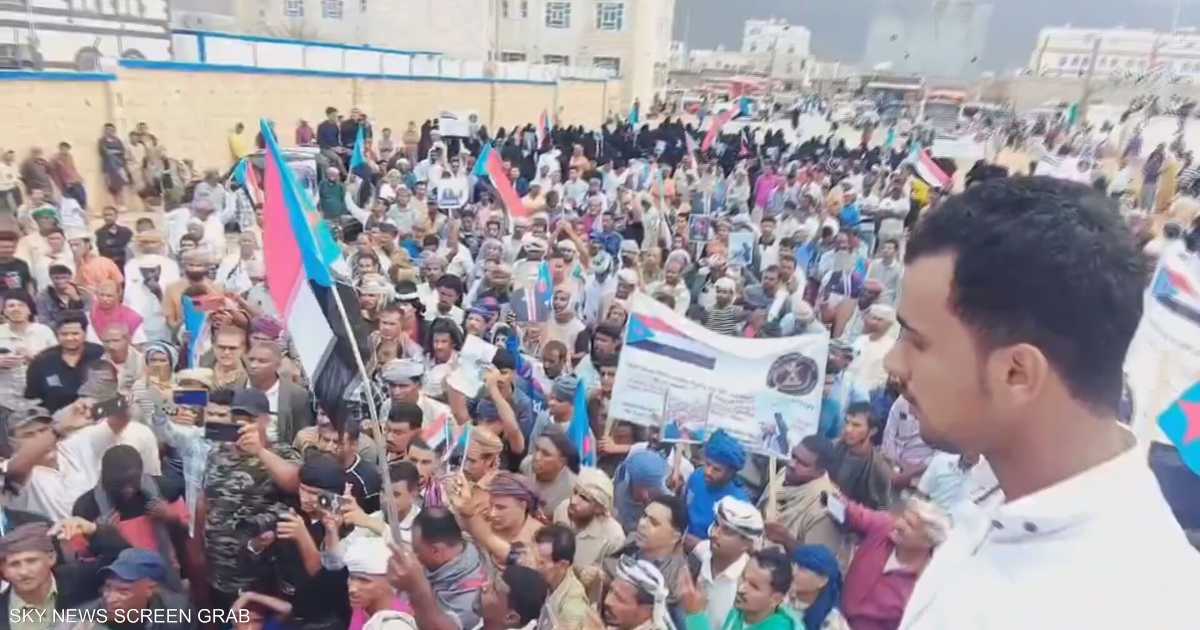
Recent events in the region have illustrated an undercurrent of popular support for the STC. Large-scale demonstrations in Aden and Socotra have drawn thousands, who vocally backed both the council and its leader, Aidarous Al-Zubaidi. Participants expressed their refusal to recognize any initiatives aimed at dissolving the council, highlighting it as the legitimate representative of the southern populace. Leaders in Socotra reiterated the importance of self-determination, reinforcing the call for ongoing struggle to fulfill the aspirations of the people.
Affirmation of Rights
During protests in Socotra, participants underscored their steadfast belief in their right to determine their own future. Saleh bin Majid, the deputy leader of the STC in the Socotra Archipelago, asserted that the voices from the demonstrations affirmed the southern population’s conviction that they must have a say in their destiny. These sentiments reflect a growing assertion of identity, suggesting that the factions in southern Yemen are firmly committed to their autonomy and that ongoing negotiations with the coalition will need to account for this strong local sentiment.