
الشارقة 24:
In a recent visit to the Sharjah Centre for Learning Difficulties, Sheikha Jamila bint Mohammed Al Qasimi, the head of the Sharjah City for Humanitarian Services, praised the emirate of Sharjah for its pioneering approach in supporting individuals with specific learning difficulties. She highlighted the comprehensive system of services and initiatives aimed at empowering these individuals, promoting their integration into society, and enhancing their quality of life. Sheikha Jamila commended the Centre’s efforts in developing specialised academic services, raising awareness about specific learning difficulties, and providing essential support to affected individuals and their families.
Integrating Efforts for Sustainable Development
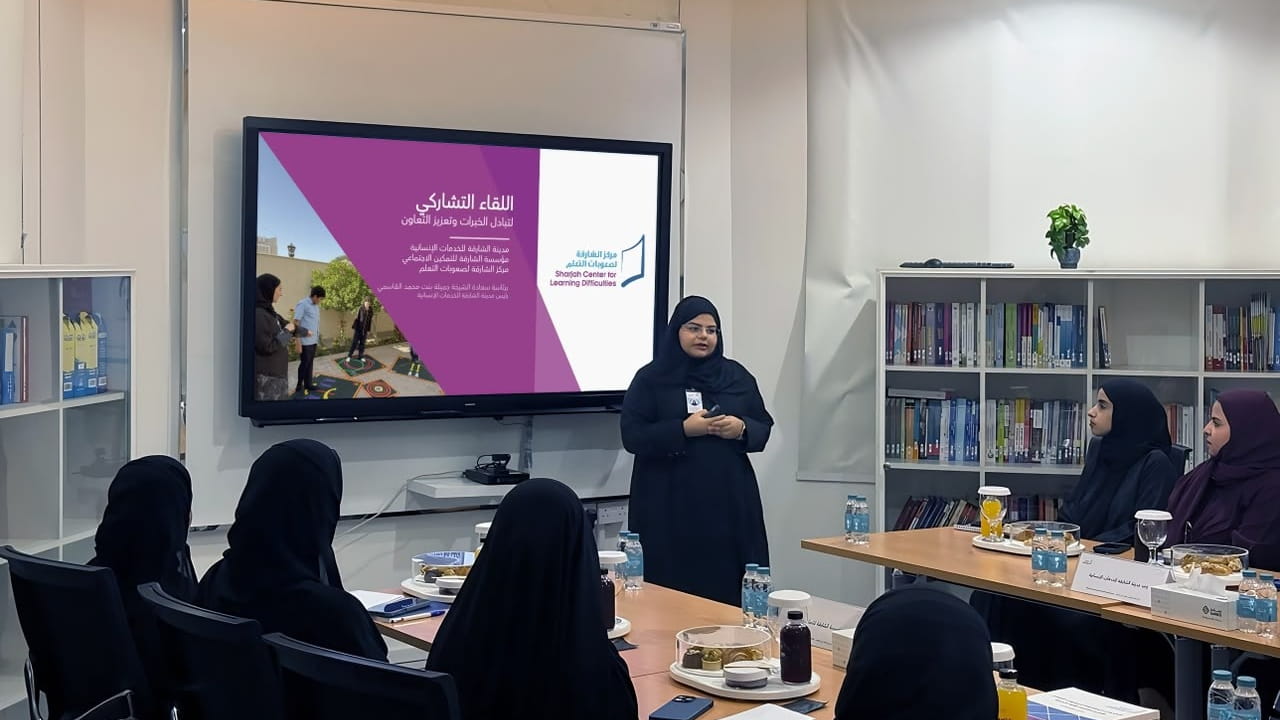
During her visit, Sheikha Jamila was accompanied by a delegation from the Sharjah City for Humanitarian Services and the Sharjah Social Empowerment Foundation. The meeting aimed to review the Centre’s significant achievements in the academic year 2025/2026, along with its future initiatives and projects for 2026/2027.
The meeting included an overview of the operational plan results for the 2025/2026 academic year, which stemmed from the Centre’s strategic plan for 2025–2028. This strategic framework encompasses 33 strategic goals, 69 operational objectives, and 95 performance indicators spread across seven key areas, achieving an impressive average completion rate of 99%. The plan focused on areas such as specialised services, academic empowerment, institutional capacities, community partnerships, digital transformation and innovation, governance and quality, as well as institutional growth and strategic transformation.
A Vision for the Future
Sheikha Jamila emphasised that developing a comprehensive system to support and empower individuals with learning difficulties requires a forward-looking strategic vision. This vision should be based on specialised knowledge and sustainable planning, linking service development with enhancing community impact. She asserted that the progress made by the Sharjah Centre for Learning Difficulties in enhancing its programmes and specialised services is crucial in providing more inclusive educational and rehabilitation opportunities, enabling individuals facing specific learning issues to unlock their potential and actively contribute to society.
Furthermore, she noted that the integration of roles between institutions is essential for developing a more interconnected service delivery system. This can be achieved by unifying efforts, exchanging expertise, and leveraging institutional capacities to design impactful initiatives with lasting effects. Enhancing partnerships, she explained, creates broader opportunities for improving practices, integrating specialised expertise, and establishing an institutional approach that connects service quality with tangible results in the lives of individuals and their families, thereby strengthening Sharjah’s position in supporting and empowering those with learning difficulties.
Future Projects and Collaborative Efforts
The meeting also discussed the Centre’s plans for the academic year 2026/2027, which includes 30 initiatives aimed at further developing specialised and academic services, enhancing institutional efficiency, and expanding research and awareness activities.
This gathering underscores the importance of communication and experience-sharing between institutions, exploring collaborative areas that contribute to advancing initiatives and services, while building upon existing achievements to ensure the sustainability of institutional work and enhance opportunities for empowerment and community participation.