
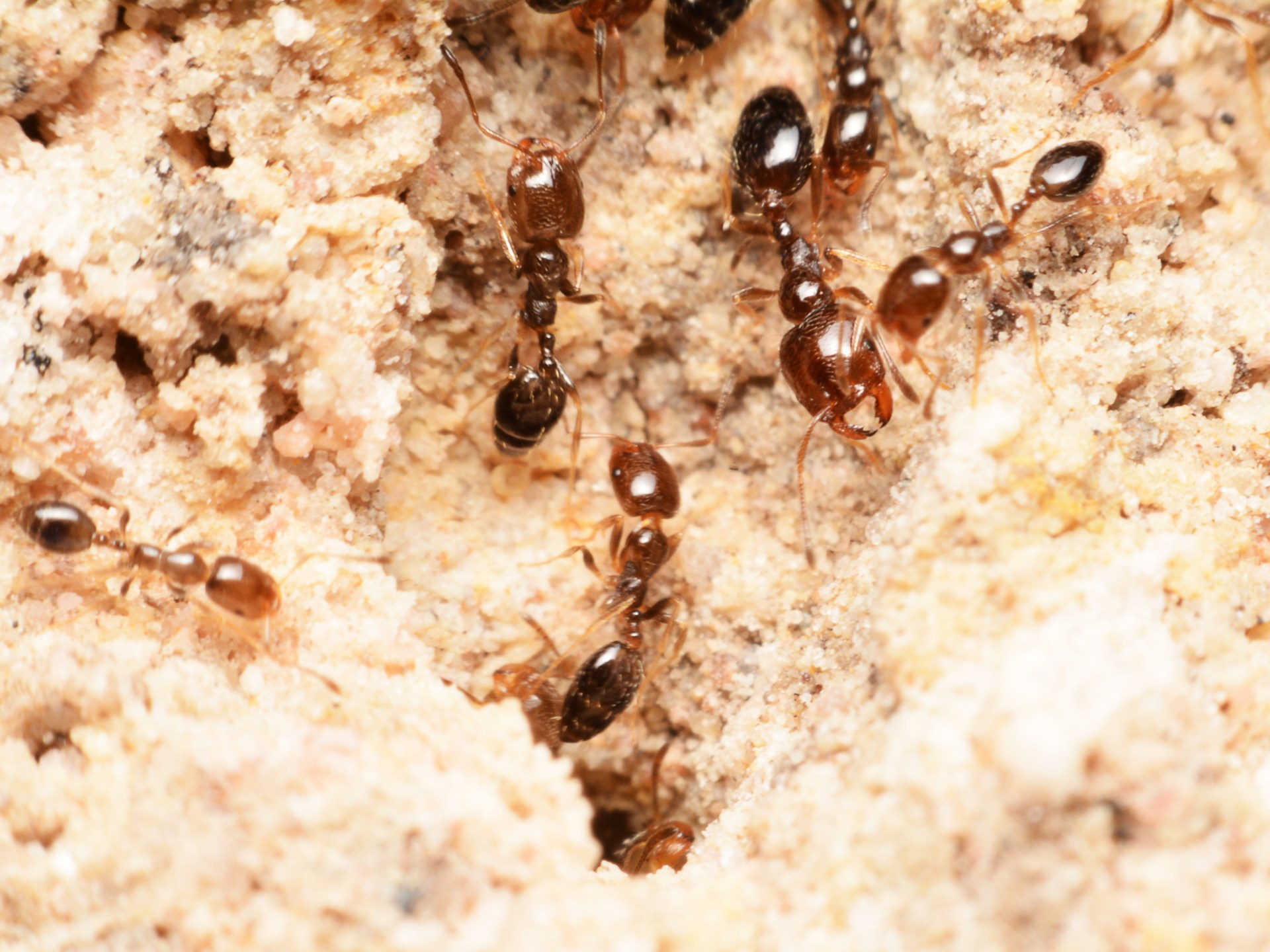
Sharjah Ant: A Fascinating Cross-Border Discovery
In the Wadi Shis area, located in the Hajar Mountains of Sharjah, a team from the Al Dhaid Wildlife Center, part of the Environment and Natural Reserves Authority, has made a significant scientific discovery. This discovery pertains to a new species of ant named “Caribara sharqahensis,” which marks the first record of the ant genus “Caribara” in the United Arab Emirates. Documented in the Journal of Natural History, this species reveals considerable importance that extends beyond its local habitat, reflecting the biodiversity present in this region.
Importance of the Scientific Discovery
The ant genus “Caribara” is characterized by its small size and subterranean lifestyle, playing a vital role in breaking down organic materials and recycling nutrients. The discovery of “Caribara sharqahensis” is a significant step in studying insect diversity, as this species consists of both smaller individuals and larger ones known as soldiers, making it an important model for research in evolutionary adaptations and social organization.
Morphological Specifications of the Discovered Ant
The discovered ant possesses unique morphological traits that distinguish it from other species. According to the study, the soldier form resembles “Caribara khamiensis,” recorded in Zimbabwe, but features several distinctive characteristics such as well-developed lateral hind horns and a unique head shape. All these traits make “Caribara sharqahensis” an intriguing example for comparison with other species in different regions.
Expanding Environmental Knowledge and Global Relations
The discovery of the Sharjah ant highlights the importance of studying entomology, as its impact goes beyond merely classifying a new species. Dr. Amr Abdel-Sami, an entomology professor, explains that new species represent “missing pieces in the mosaic of the tree of life,” contributing to our understanding of evolutionary links and genetic differences. Additionally, the presence of this species in a fragile desert environment indicates how environmental adaptations reflect biodiversity.
Call to Invest in Scientific Research
This discovery underscores the importance of fieldwork and meticulous monitoring of biodiversity. The entomology professor emphasizes that progress in environmental studies requires ongoing efforts in repeated surveys and the use of advanced methods for data collection. Investing resources in field research should be a priority to provide accurate information leading to effective environmental policies for wildlife protection.
Undoubtedly, the discovery of “Caribara sharqahensis” serves as an urgent call to continue supporting scientific research and to work towards policies that provide necessary protection for fragile environments, ensuring the preservation of biodiversity in the future.