
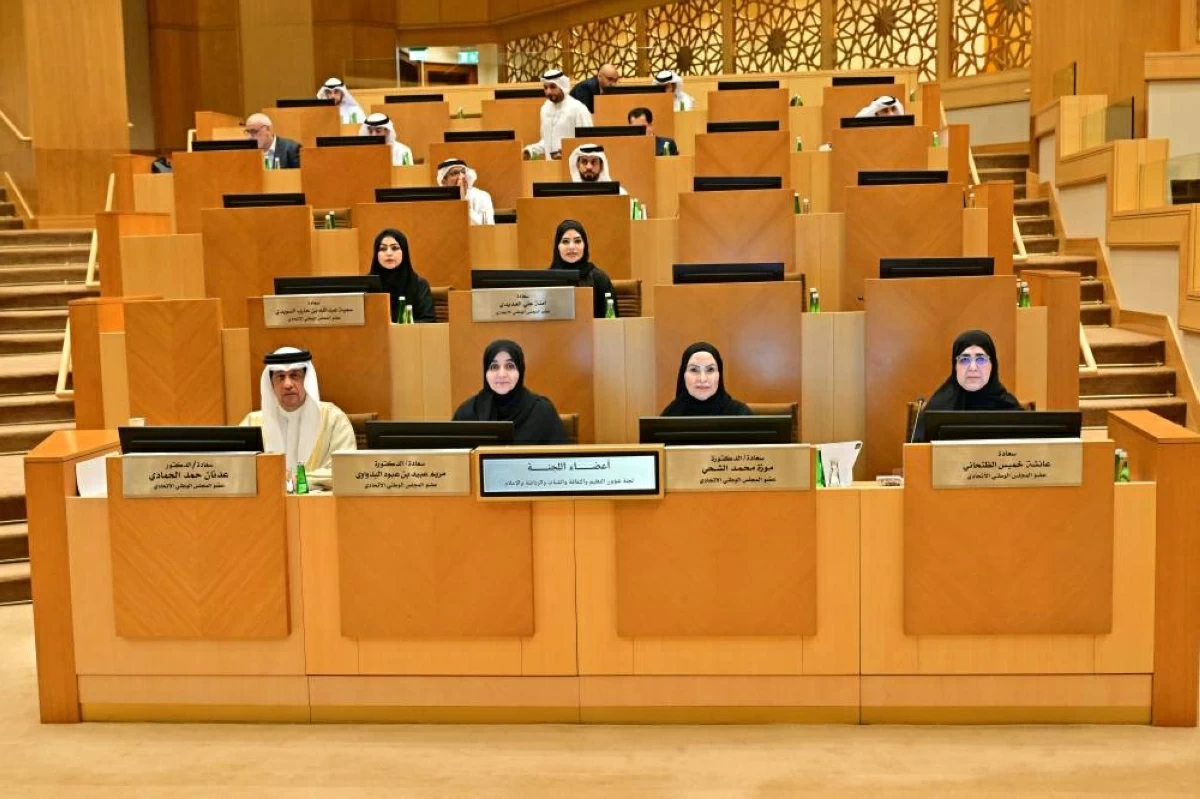
The National Council has called for the establishment of independent legislation aimed at protecting the Arabic language, a significant step towards preserving its status as the official language of the state and a core component of national identity. With this demand, the council emphasizes the necessity of implementing measures that ensure the prominence and use of Arabic across various sectors in society while reinforcing its cultural importance. This call to action is crucial for fostering a robust environment where the Arabic language can thrive.
Recommendations for Institutional Compliance
On June 12, 2026, the Federal National Council adopted two key recommendations related to the government’s policy on promoting the Arabic language’s role and importance as the state’s official language and a fundamental aspect of national identity. Following discussions in the council, Sagher Ghobash, the Council President, sent a message to Abdul Rahman bin Mohammed Al Owais, Minister of State for Federal National Council Affairs, to present these recommendations to the Cabinet for appropriate action. The Gulf newspaper obtained a copy of this message.
The first recommendation explicitly demands the preparation of independent legislation aimed at protecting the Arabic language. This legislation includes six essential requirements: mandating government and official institutions to utilize Arabic in their operations, correspondence, official documents, activities, and events, alongside providing Arabic translations for foreign documents when necessary. Furthermore, it seeks to enhance the use of Arabic in education as a primary language of instruction, establishing a binding linguistic policy for educational and scientific institutions, training teachers, and requiring research and theses to include summaries or abstracts in Arabic.
Strengthening Media and Academic Use
The recommendations also require the media and advertisements to use Arabic in programming, advertisements, and publicly available content across transportation channels, while giving clear priority to the Arabic language when using foreign languages. Additionally, a national mechanism for Arabicization is proposed, which would focus on translating scientific and technical terms and disseminating them across academic and scientific institutions. The plan involves creating a measurable program for teaching scientific subjects in Arabic, supporting technology in Arabic by encouraging the development of software, applications, websites, and social media in the language, and enhancing protection and awareness regarding the significance of the Arabic language as the national and official language. The National Council for National Identity and the Arabic Language will oversee the implementation of this legislation and ensure adherence to its provisions.
Establishment of a National Council
The second recommendation emphasizes the establishment of a National Council for National Identity and the Arabic Language, which will undertake seven crucial responsibilities. This council will function as an independent legal entity under the Prime Minister, possessing financial and administrative autonomy, along with a budget approved by the Cabinet. The advisory responsibilities for the Arabic language will be transferred to this new body, augmenting its scope to encompass national identity matters.
This National Council will formulate policies, strategies, and national programs aimed at safeguarding national identity and protecting the Arabic language in collaboration with relevant ministries and authorities. It will also be responsible for developing a comprehensive national policy for the Arabic language, addressing education, media, culture, technology, artificial intelligence, and family upbringing. Monitoring the implementation of policies and plans that promote national identity and the Arabic language, as well as overseeing compliance with these initiatives, will be central to the council’s mission. Additionally, it will present studies, proposals, and projects to the Cabinet concerning the protection and enhancement of national identity and the Arabic language.