
Poems from 4 Countries at the House of Poetry
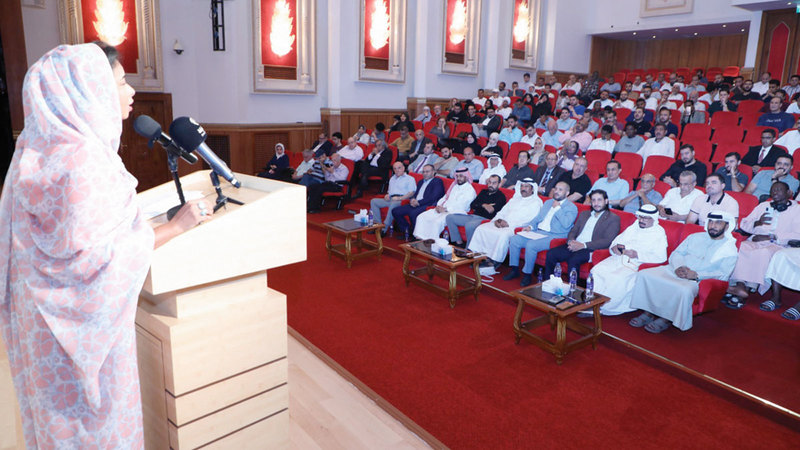
The House of Poetry in Sharjah recently hosted a special poetry evening titled “Poems from 4 Countries at the House of Poetry.” The event showcased a rich literary diversity and a variety of poetic styles from prominent poets representing four Arab countries, adding cultural depth and linguistic richness for the audience.
A Poetry Evening Rich in Diversity
The House of Poetry in Sharjah organized a poetry evening featuring a constellation of poets, including Raddad Al-Hudhali, Mahmoud Abu Ashour, Wiam Kamal El-Din, and Wael Al-Mir. The evening was overseen by the director of the House of Poetry, poet Mohammed Abdullah Al-Breiki, and was well-attended by critics, poets, and poetry enthusiasts.
Distinctive Poetry Readings
Poet Raddad Al-Hudhali, representing the Kingdom of Saudi Arabia, opened the readings with his fluid style that characterizes his work. Al-Hudhali explored various topics, captivating the audience’s attention. Following him, poet Mahmoud Abu Ashour from Jordan presented a collection of emotional poems that express the struggles of the self, allowing the audience to feel the depth of the emotions tied to those themes.
Poetic Reflections from Sudan and Syria
The spotlight then shifted to poet Wiam Kamal El-Din from Sudan, who enriched the evening with contemplative poems that embody a dialogue with thoughts and concerns. Among her notable works was a poem titled “The Absolute Nothing,” reflecting the depth of her poetic thought. The evening concluded with distinctive verses from poet Wael Al-Mir from Syria, dedicated to Sharjah, in which he said:
What the days have hidden from me before…
Sharjah has embroidered it on her hands.
I walk as if I am immersed in her fragrance…
Or as if she is drowning in the water of my face.
My heart is always with me, but here…
The lovesick forgets where he walks, fluttering.
“Poems from 4 Countries at the House of Poetry” is a cultural event that signifies the literary richness of the Arab world and reflects the exchange of artistic experiences among poets from different countries. With this poetic diversity, the House of Poetry remains a vibrant space for the literary arts and the consolidation of cultural identity.