
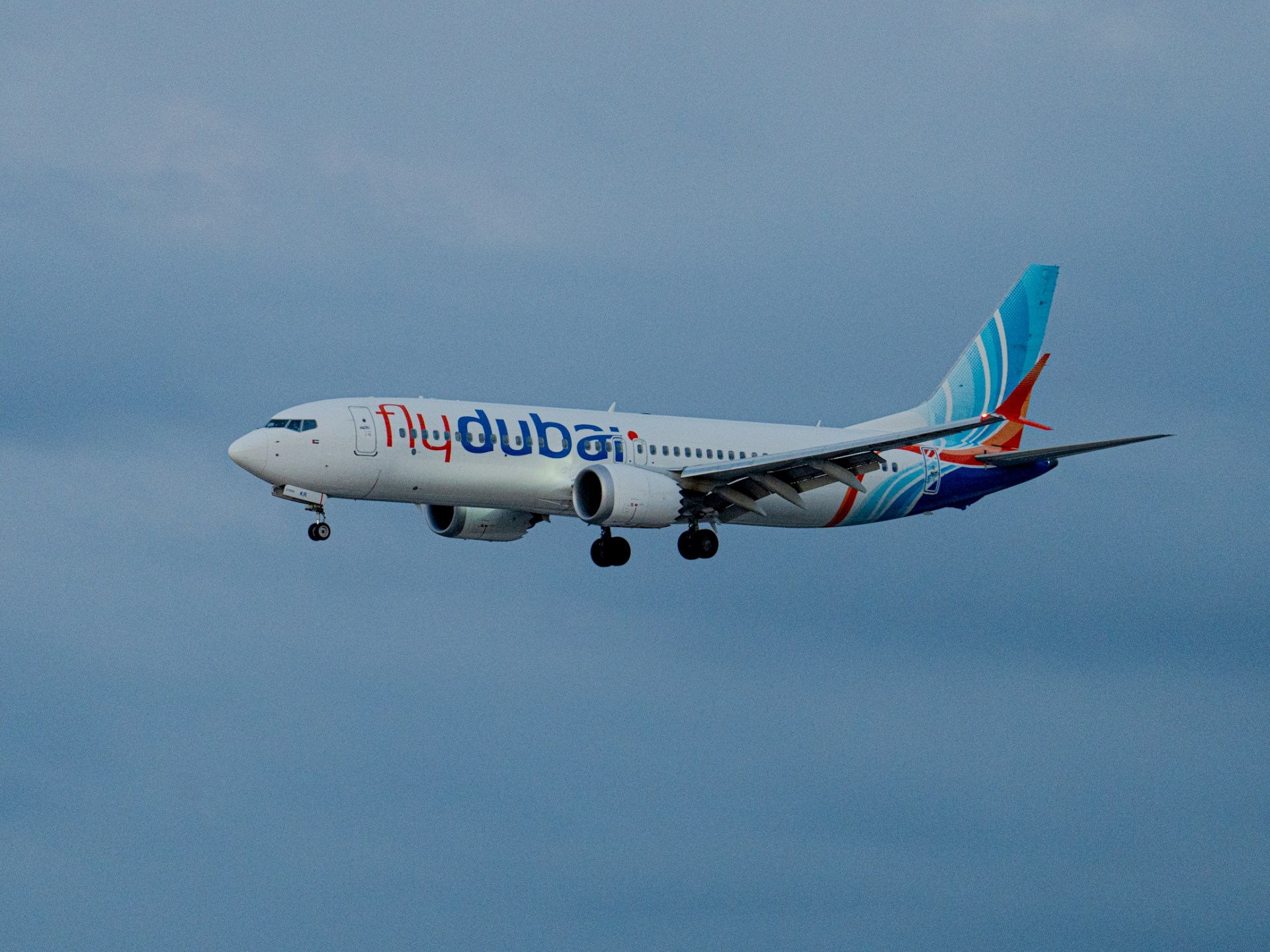
Published On 2/10/2026
|
آخر تحديث: 13:05 (توقيت مكة)
Israeli media reported on Friday that the Israeli Ministry of Transportation expects delays in the evacuation flights intended to bring Israelis back from Dubai, which were originally set to commence today. According to Channel 12 in Israel, the United Arab Emirates has not yet permitted Israeli airlines to land in Dubai for these evacuation efforts.
The Israeli airline El Al previously announced the cancellation of its rescue flights to Dubai after the UAE authorities revoked the permits granted to Israeli airlines for landing. Meanwhile, Israir has not yet outlined its return flights due to uncertainties surrounding departure and landing timing, leading the company’s management to postpone ticket sales.
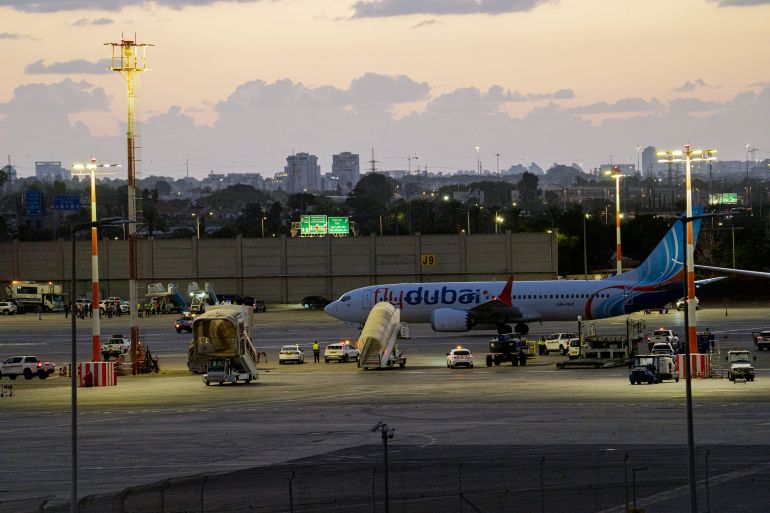
Incident Involving Flydubai Flight
This situation follows a troubling incident involving Flydubai flight FZ 1073, which departed from Dubai International Airport towards Tel Aviv but was forced to divert to Tabuk Airport in Saudi Arabia on Wednesday due to an altercation in the cockpit. Accounts suggest that the co-pilot assaulted the captain, necessitating the emergency landing after passengers intervened.
Investigations are underway in both the UAE and Israel to uncover the specifics of the incident and its motivations. Preliminary results from an investigation by the Saudi Ministry of Interior indicated that an assault on the captain had occurred. The Saudi authorities confirmed that both the captain and the co-pilot were transported to Abu Dhabi for further assessment following their treatment.
On Thursday, the Emirati Attorney General, Dr Ibrahim Al-Shamsi, ordered an investigation into the event, which will explore the incident’s circumstances and whether it was linked to any terrorist activity or premeditated planning.
Pilot Recalls the Incident
In a revealing account of the distressing moments following the attack, the Indian pilot, Smit Machhar, detailed his struggle for survival on a video call with Indian Prime Minister Narendra Modi from his hospital bed in Abu Dhabi. He recounted how he knew he had to regain control of the aircraft to ensure the safety of his passengers.
Machhar, who was visibly shaken and bandaged, described the harrowing experience of being stabbed and collapsing during the attack. He broke down in tears while sharing his memories, acknowledging the gravity of the situation. Prime Minister Modi praised Machhar for his courage, composure, and quick thinking that saved many lives.
According to a source privy to the communications between the Flydubai flight and air traffic control, the authorities in Saudi Arabia and Jordan initially hesitated to allow the aircraft to land after a crew member reported a hijacking and requested ambulances. Eventually, a crew member managed to persuade Saudi officials to grant permission to land at Prince Sultan bin Abdulaziz International Airport in Tabuk.
It is likely that investigators in the UAE and Israel will scrutinise how distress signals from the Flydubai flight were handled, especially after the plane experienced a significant drop in altitude.
Israeli Security Concerns
Former Israeli National Security Advisor Eyal Hulata noted that prior to this incident, the prospect of a threat emerging from a pilot or crew member was not considered a realistic scenario, as security measures typically focused on passengers and their baggage. Following this shocking event, however, it is anticipated that crew members will now face stricter screening and scrutiny.
The Wall Street Journal reported an Israeli official stating that Israel has long urged Dubai airport officials to bolster security measures for incoming flights. This official raised concerns regarding the adequacy of security protocols at foreign airports in relation to flights to and from Israel, highlighting a secret report released by Israel’s State Comptroller in May 2024, which pointed out significant security vulnerabilities associated with these routes.