
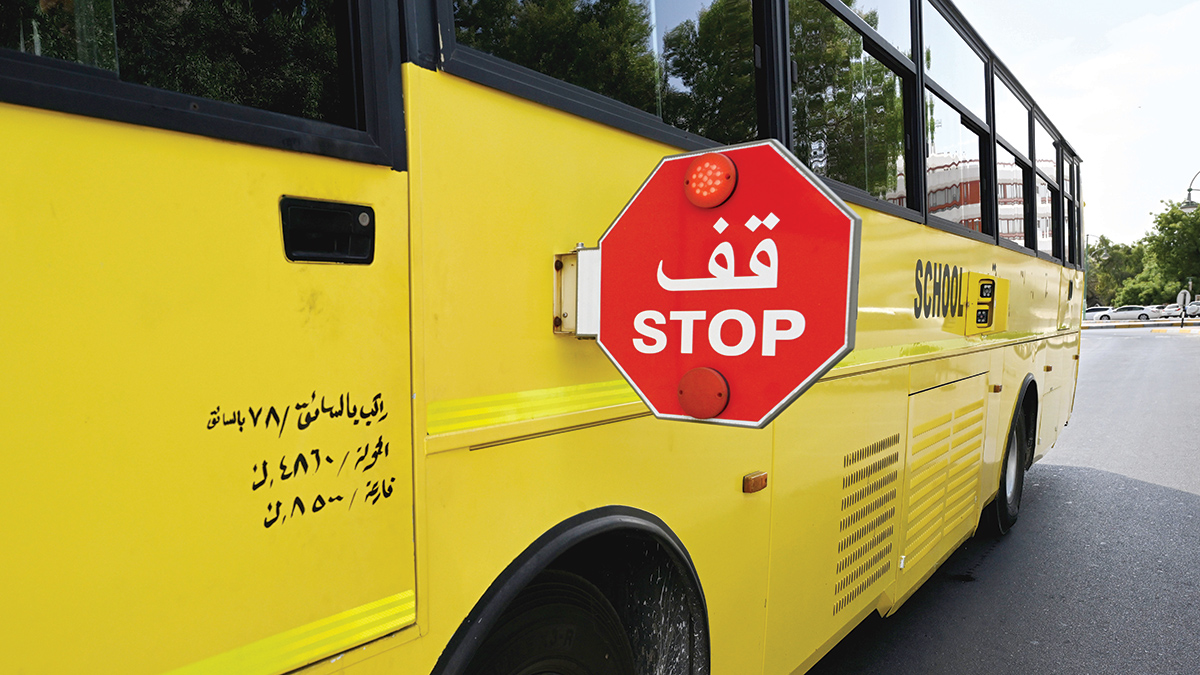
As the 2026-2027 academic year kicks off, the choice of transportation for schoolchildren has seen a clear frontrunner among parents: the school bus. A recent survey conducted by “Emirates Today” revealed that 52% of respondents favoured school buses for their children’s daily commute, leaving family cars at 35%, with the remaining preferences divided among other transport options.
Survey Insights and Parental Preferences
The survey, which gathered insights from nearly 4,000 participants across various digital platforms, posed the question of how children reach school just days before the new term began. The options included the school bus, family car, private transport, and other means. In one particular platform’s findings, 52% of 881 respondents chose the school bus, compared to 35% for family transport, with private transport accounting for 9% and other methods just 4%.
The data underscores the school bus as the most popular choice among families, significantly ahead of family vehicles. Parents expressed that safety remains the top priority when selecting a mode of transport, with many highlighting the organised nature of school bus services. One parent succinctly noted: “School bus… safety and security,” emphasising the peace of mind such services provide, especially for working parents.
Key Considerations for Parental Choices
When evaluating transport options, parents weighed four primary factors: safety, cost, traffic congestion, and the time taken for the round trip. While the school bus is viewed as a secure and structured means of travel, some parents argue that the associated fees are a burden, particularly for families with multiple children, which can lead them to opt for family cars instead. However, they acknowledge that family cars allow for greater flexibility in scheduling and avoiding transport fees, especially for families living near schools.
The flexibility of using a family car does not come without challenges. Many parents noted the considerable traffic congestion around schools during pick-up and drop-off times, which complicates morning commutes. This has led some to advocate for improved public transport solutions that can reduce the number of vehicles around schools, thus easing the traffic burden during peak hours.
Emergence of Private Transport
Ranking third in popularity, private transport received only 9% of votes in one survey, reflecting a limited yet present choice for families. It serves those whose schedules or locations do not align with the school’s bus schedules, presenting a middle ground between structured bus services and direct family transport.
However, lesser-used alternatives, such as bicycles or other methods, garnered only 4% of preferences. Though diverse options were suggested, the low engagement illustrates that these alternatives have yet to compete effectively against the leading modes of transport for school children. Factors such as proximity to schools, infrastructure, student age, weather conditions, and safety requirements restrict their broader adoption.
The Impact of Time and Cost
The survey highlights that transportation costs involve more than just monetary expenses; the time investment plays a crucial role in decision-making. Families effectively consider three forms of cost: the financial cost of transport fees, the time cost related to commuting and traffic, and the organisational cost linked to aligning school timings with parental work commitments.
The Role of Organised School Transport
Mohammed Ramadan, a school transport safety and security official, noted that the prominence of school buses reflects a growing trust in organised transport systems. He explained that these services offer enhanced supervision, discipline, and safety compared to private drop-offs. Organised school transport ensures structured boarding and alighting, ongoing monitoring during commutes, and management of emergencies, contributing to parental reassurance.
Both Mohammed Ramadan and Mohammed Issam, another authority in school transport safety, reiterated that the decision-making process encompasses more than just the cost of bus fares; it involves a broader spectrum of expenses, including time and fuel amidst traffic congestion. Families managing daily drops off face additional pressures, whereas the school bus provides a consistent service, alleviating the burden, especially for those with several children.
Encouraging Bus Utilisation
Heheam Abdullah, another safety and transport representative, posited that increasing the appeal of school buses will require enhancing service quality while managing costs. This can be achieved by optimising routes, minimising travel times, and efficiently distributing pick-up points. More effective school transport could not only ease pressure on families but also diminish vehicle numbers in school vicinity, thereby reducing traffic congestion during peak times.
Conclusion
The findings from the survey encapsulate key elements of school transport in four decisive factors: safety, cost, time, and traffic congestion. While the school bus leads family choices, family cars maintain a strong presence, and private transport along with alternative methods remain marginal. Expanding reliance on school buses has the potential to mitigate the number of vehicles surrounding schools, but its ongoing attractiveness hinges on affordable pricing, secure and efficient services, and reliable travel experiences. Ultimately, the journey from home to school influences families profoundly, shaping not just the choice of transport but also the daily dynamics of time and financial commitment.