

In the evolving landscape of the luxury watch industry, the tension between hype and heritage has reached a boiling point, prompting significant debate among industry insiders as the market adjusts. This ongoing discourse reveals how modern trends impact traditional values, questioning whether the allure of exclusivity still holds against the backdrop of rapid speculation and market corrections. In this context, the conversation around “Luxury watch industry debates hype versus heritage as the market corrects” takes center stage, calling into question the future direction of this esteemed industry.
Tradition Meets Trend at Dubai Watch Week
During the Dubai Watch Week forum titled ‘When Labubu Beats the Birkin: Luxury in the Age of Hype,’ industry experts such as George Bamford of Bamford London, Richard Benc, and Misha Doud discussed the friction between classic luxury and the current culture of hype.
“Hype is not luxury,” said Doud, who had two limited edition Labubus gracefully resting beside her on stage, alongside her striking red ostrich Birkin. “Hype is access – can you get something at the right time because everyone wants it? Luxury is ownership.”
Market Correction and Changing Strategies
As the global luxury watch market, valued at $53.6 billion in 2024, grapples with the fallout from pandemic-driven speculation, the question of hype versus heritage becomes even more pressing. After witnessing dramatic price inflations—some models trading at 200 percent above retail—market corrections have begun, with secondary market prices for luxury watches dipping nearly 1 percent in Q2 2024. The Chrono24’s ChronoPulse index reports declines of 6.31 percent for Vacheron Constantin, 6.04 percent for Panerai, and 1.74 percent for Rolex.
This correction compels brands to reevaluate their reliance on manufactured scarcity and tactical drops, strategies more commonly associated with streetwear brands. The mixed results of these tactics have left traditional watchmakers reconsidering their approach.
The Complexities of Scarcity and Craft
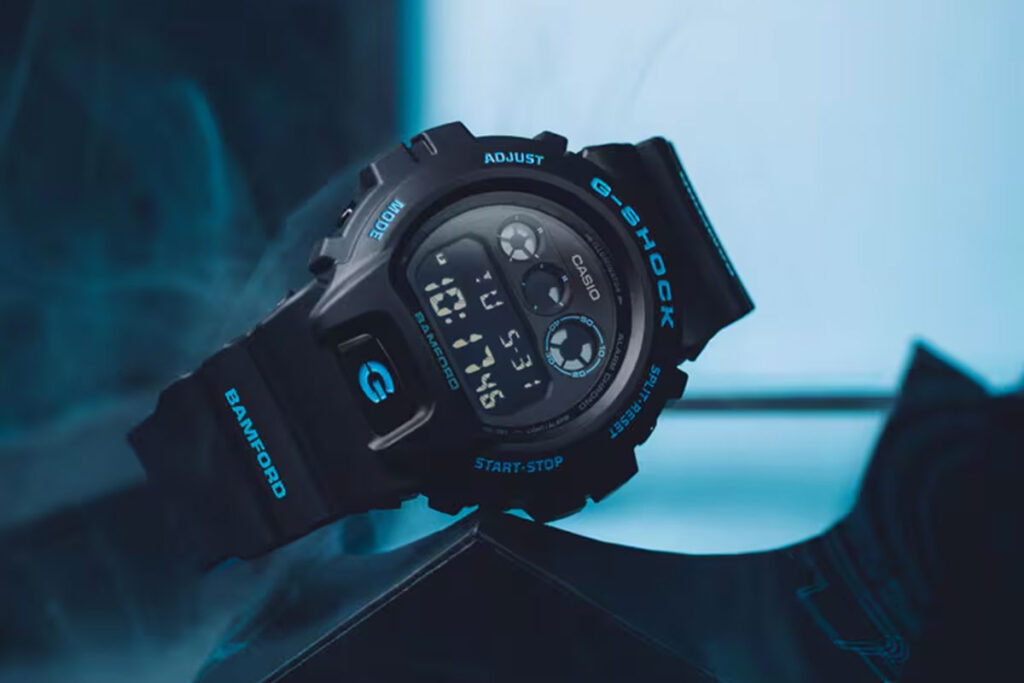
Bamford’s collaboration with G-Shock in 2023 epitomizes the allure and risks tied to limited releases. The product launched to immediate acclaim, selling out in just 90 seconds, but the overwhelming demand also led to chaos, with a broken window and police intervention on London’s Carnaby Street. “We had people sleeping outside beforehand,” he reflected, drawing comparisons to the similar frenzy surrounding the Swatch x Omega MoonSwatch launch.
Contrasting this are Benc’s insights, which suggest that true luxury is rooted in genuine craftsmanship rather than artificial scarcity. “When I launched my brand with limited production runs, the scarcity was driven by my financial constraints, not by a deliberate marketing ploy,” he noted. As his brand grew, he embraced a “sliding scale” model, harmonizing elements of both luxury and hype while emphasizing sustainability.
The Role of Social Media and Market Evolution
The changing dynamics of the luxury watch industry are further influenced by the rise of digital channels. While brick-and-mortar stores accounted for 66.82 percent of luxury watch sales in 2024, online sales are projected to grow at a 7.01 percent CAGR through 2030. Social media’s impact has also grown, especially among millennials who actively seek out product information through digital platforms. The buzz surrounding the Labubu exemplifies this trend, with its popularity largely propelled by celebrity endorsements and viral unboxing videos.
However, established brands must tread carefully when adopting hype-driven strategies. Doud highlighted Cartier’s relaunch of the Tank as a successful case, balancing cultural relevance while maintaining luxury integrity, unlike brands that merely chase viral trends and see fleeting consumer interest.
Brands like Bamford that collaborate with established names such as Girard-Perregaux find a unique path. This strategy enables them to explore narratives that resonate outside conventional boundaries. Yet, Bamford cautions against going too far in chasing trends, stating, “If you lean too far one way, while the going is good, it’s great, but that hype can turn quickly.”

As predictions project the secondary market for luxury watches to grow from $26.8 million in 2024 to $43.6 million by 2031, the industry faces new challenges. Platforms like StockX and Chrono24 democratize access to limited releases, encouraging consumers to view watches less as mere accessories and more as investments. Doud points out, “People always ask: should I buy this? This is trending now. Will it be worth something?”—showcasing the growing tendency to equate hype with value.
The recent market correction serves as a warning; products bought solely for expected appreciation have often not met expectations, reflecting the inherent risks involved.
In the Asia-Pacific region, which captured 40.51 percent of the luxury watch market share in 2024, educating millennials about horology through digital channels becomes crucial. Bamford described how teenagers show a remarkable understanding thanks to online resources. “Education is 20 times more because of the internet. The knowledge from strap hacking to movement details – they’re going, I love this brand because of this.”
Ultimately, as the luxury watch industry continues to evolve, experts believe that brands will gravitate toward hybrid strategies that integrate aspects of both hype and heritage, adapting to a complex and ever-shifting market landscape.