
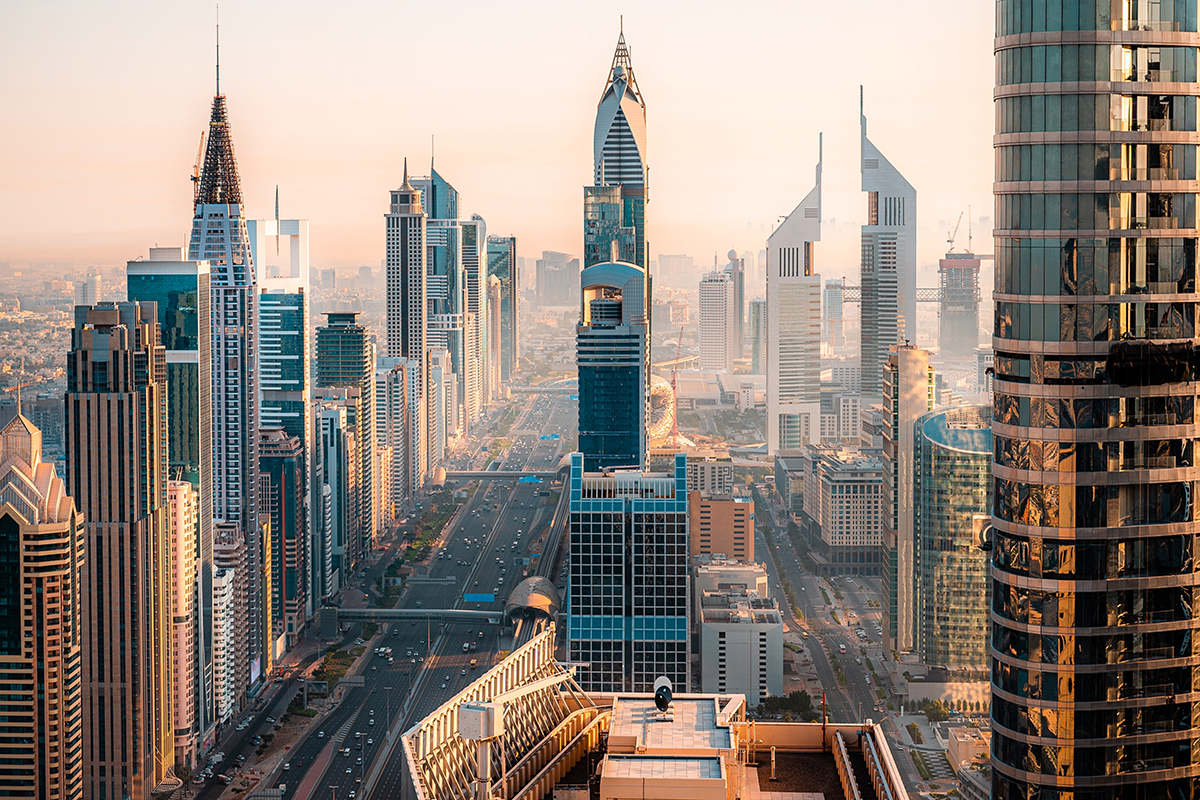
As Dubai‘s real estate market continues to evolve, many investors are questioning whether 2026 is the right time to buy property in this vibrant city. With significant price fluctuations and changing market dynamics, potential homebuyers and real estate investors must weigh numerous factors to make informed decisions. This article delves into the current landscape of Dubai real estate, exploring projected trends and opportunities for those considering investments in the coming years.
This has led to increased villa prices (54.7 percent) and apartment rates (20.3 percent) higher than their 2014 peak. But is 2026 a good time to buy property in Dubai?
For investors, experts believe that 2026 could be a “smart entry point if you’re patient and focused on long-term value rather than quick gains.”
“Deciding if 2026 is the right time to buy really comes down to a few big signals. Prices are expected to level off after years of growth, while a wave of new housing supply will give buyers more choice and negotiating power,” Zhou Yuan, Operations Director at Tomorrow World Properties, told Arabian Business.
“Rental demand looks steady thanks to Dubai’s growing population, but yields need to be weighed against mortgage costs,” he explained.
Investors Eye Dubai 2026 Opportunities
In addition, interest rates are set to play a key role in affordability, and wider economic policies continue to support confidence.
However, experts assert that Dubai does not move as a singular market. Conditions vary sharply by location, asset type, buyer profile, and supply timing. As a result, assessing 2026 requires a nuanced view of population growth, supply delivery, absorption rates, rental performance, and leverage levels rather than just overall price movements.
“This is the most important point; I never look at the market as one single market. There is no such thing as ‘the Dubai market,’” Firas Al Massadi, CEO of fäm Properties, said to Arabian Business.
He added, “Some pockets may be overheating while others are just beginning their growth cycle. Generic statements hide risk. Granular analysis reveals opportunity.”
Broad averages can obscure risks; hence, experts advise focusing on indicators that show whether demand is organic and sustainable.
Property Demand Soars in Dubai
“Beyond headline price movements, the most meaningful indicators are sustained population growth, strong job creation, rising mortgage uptake, and healthy supply-absorption rates as published by DLD and the Dubai Statistics Centre. These metrics show whether demand is organically expanding or artificially inflated,” said Navneet Mandhani, Founder & CEO of Karma Developers.
Additionally, the off-plan market serves as a significant indicator of confidence in the city’s property sector.
“Equally important is the behavior of the off-plan market. When new launches continue to achieve solid sell-through at realistic price points, it signals genuine end-user and long-term investor confidence. If these trends hold through 2025, they position 2026 as a stable and strategically timed entry point for buyers,” Mandhani explained.
Last week, Arabian Business reported that increasing supply in some areas of the market is giving buyers more choice, greater negotiating power, and even slowing price growth in certain communities.
However, Matt Gregory, Senior Director of Strategy at Dubizzle Group, emphasized that it’s crucial to pay attention to “who’s buying and whether people keep coming back to the same areas. This also helps show how confident the market really is, and whether demand is being driven by people planning to live there, long-term investors, or short-term opportunists.”
Certain property types outperform other segments, but the key factors influencing success vary based on population growth, supply, area, and more.
“There’s no one-size-fits-all answer when it comes to the best type of property. It really depends on what you’re looking for. Villas and townhouses are popular with families who want to settle long-term, while apartments tend to attract investors looking for easier resale or rental income. Off-plan properties appeal to buyers who are happy to wait and pay in stages,” Gregory explained.
“In general, the most reliable choices are the ones that match real lifestyle needs and investment goals.”
Early Signs of Price Fatigue
With immense demand, supply, and activity in the Dubai real estate market, certain segments are showing early signs of price fatigue. According to experts, this manifests in areas dominated by speculative buying rather than owner occupancy.
Entry-level apartments, mid-market stock with large upcoming handovers, and areas where products are repetitive and easily replaceable show the earliest signs of buyer resistance. Fatigue does not mean collapse but rather a shift in buyers from chasing prices to negotiating.
The moderation appears most visible in apartment sub-segments, particularly in areas with the highest supply concentration and in tertiary locations where community depth and amenities remain limited. This reflects Dubai’s uneven supply-demand dynamics rather than any market-wide shift, with overall demand remaining strong, even as specific pockets experience localized pressure.
“Secondary sales in a few areas are showing signs of slightly longer sales cycles, which could be attributed to the quality of offerings in the neighborhoods,” said Ajay Rajendran, Founder and Chairman of Meraki Group.
“This reflects Dubai’s uneven supply-demand dynamics. While overall demand remains strong, supply is concentrated in specific pockets, creating local pressure as new units come online,” Ahmed added.
Karma’s Mandhani believes that early signs of price fatigue are most visible in ultra-prime pockets and in segments driven more by speculative activity than genuine end-user demand.
Hidden Supply in the Off-Plan Market
A significant volume of off-plan inventory behaves like supply before handover, as it trades freely in the secondary market. This liquid, sellable stock within off-plan developments could create potential pressure if sentiment changes but remains largely invisible in standard pipeline analysis.
The distinction between ready and off-plan inventory becomes critical when assessing supply risk. Completed properties face limited oversupply in the immediate term, with demand from Dubai’s growing population absorbing available stock.
The off-plan segment, however, requires closer scrutiny, not just of projects currently being launched but also of accumulated inventory that can return to the market.
Ahmed contextualizes this 2025-2026 shift, “This resulted in a shortfall of roughly 43,000 units, which helps explain rising rents, low vacancy rates, and strong absorption despite higher prices. On paper, this suggests a modest surplus, which would point to a more balanced market rather than oversupply. It’s also important to note that scheduled supply is not guaranteed supply, as handover delays remain common and create large pockets of imbalance across the city.”
These delays cut both ways, temporarily tightening availability but subsequently creating pressure when projects complete. The pattern creates micro-market imbalances that affect pricing dynamics at the neighborhood level while leaving citywide aggregates relatively stable.
Localized Supply Pressure
Supply pressure concentrates in specific locations rather than evenly across Dubai. Jumeirah Village Circle and Business Bay face the highest volumes of upcoming inventory, with traffic congestion already challenging residents in both areas. The sheer number of new units elevates the importance of asset selection, with well-located buildings featuring strong layouts and credible developers likely to outperform generic stock.
Pipeline data reveals Jebel Ali showing the highest absolute supply volume, though the district’s massive scale means it can comfortably absorb what’s coming. The more pressing concern centers on Jumeirah Village Circle, where plans indicate more than 25,000 units will be handed over over the next three years.
This concentration does not automatically spell trouble, but it demands greater selectivity around building quality, layout, pricing, and differentiation.
The list of areas facing elevated supply includes Dubai Sports City, Dubai Silicon Oasis, Townsquare, Arjan, and Studio City, all characterized by massive new high-density apartment projects. The common thread links mid-market apartment developments concentrated in specific districts, creating localized rather than citywide pressure.
Yet, supply concentration alone does not determine outcomes. Many family-friendly, well-established communities maintain demand exceeding available homes while newer neighborhoods meet the needs of a growing population.
The market has become more carefully planned and regulated than in previous cycles, thereby avoiding the broad-based oversupply issues that characterized earlier downturns.
Villas continue to dominate growth and resilience in the property market.
Looking forward, pipeline data shows most upcoming supply concentrated in apartments, while premium villa inventory remains comparatively limited. This dynamic suggests villas will likely prove more resilient during market moderation, particularly in established communities.
Yet returns depend on more than asset type, with entry pricing, location, and quality remaining critical determinants of performance.
Massadi advised that, regardless of what you’re buying or selling, it’s crucial to avoid projects with a mass number of identical units, especially in the apartment segment. Scale kills scarcity, and scarcity is what protects value.
Whether it’s a villa, an apartment, or anything in between, the most important factor is pricing discipline. With the level of transparency available in the market today, buyers can clearly see:
- How much similar properties have sold for
- How much they are renting for
- How pricing compares within the same building or community
“When you do that comparison properly, it becomes very clear whether what you’re buying is well-priced or not,” he explained.
Top Picks for First-Time Buyers
For first-time buyers, experts suggest well-connected districts with strong value propositions. Communities such as DLRC, Arjan, Dubai Sports City, and DIP are recommended.
Areas such as JVC and Business Bay face oversupply constraints. “The highest concentration of upcoming supply is currently in Jumeirah Village Circle (JVC) and Business Bay. Traffic is already a challenge in these areas and a common pain point for residents,” Ahmed said.
“While both areas continue to attract strong demand, the sheer volume of new units means asset selection becomes critical. Well-located buildings with strong layouts and developer credibility should continue to perform well, while generic stock may face more pricing and rental pressure,” he explained.
Yuan argued, “The highest risk of oversupply is possibly the likes of Jumeirah Village Circle (JVC), Dubai Sports City, Dubai Silicon Oasis, Townsquare, Arjan, and Studio City, due to massive new high-density apartment projects.”
Overall, the city is expected to maintain its position as a safe haven, bolstered by strong economic diversification and supportive government policies.
For first-time investors, thorough research and due diligence are advised.
“Location first, always. Then the developer’s track record. Pricing comes after that. A cheap price doesn’t fix a weak location,” Rajendran explained.
Experts assert that Dubai is well-positioned even amid global slowdowns or geopolitical shocks.
“One key reason is that Dubai’s property market is not mortgage-dependent in the way Western markets are. Lower leverage means fewer forced sellers when conditions tighten. Another reason is positioning. Dubai is a lifestyle-driven city and a global hub for ultra-high-net-worth individuals. Even in a global financial crunch, wealth doesn’t disappear; it compresses,” Al Massadi explained.
“Someone with two billion may have one billion; someone with one billion may have five hundred million. But they are still buyers, and they still need safe, functional, and attractive places to live and invest,” he concluded.