
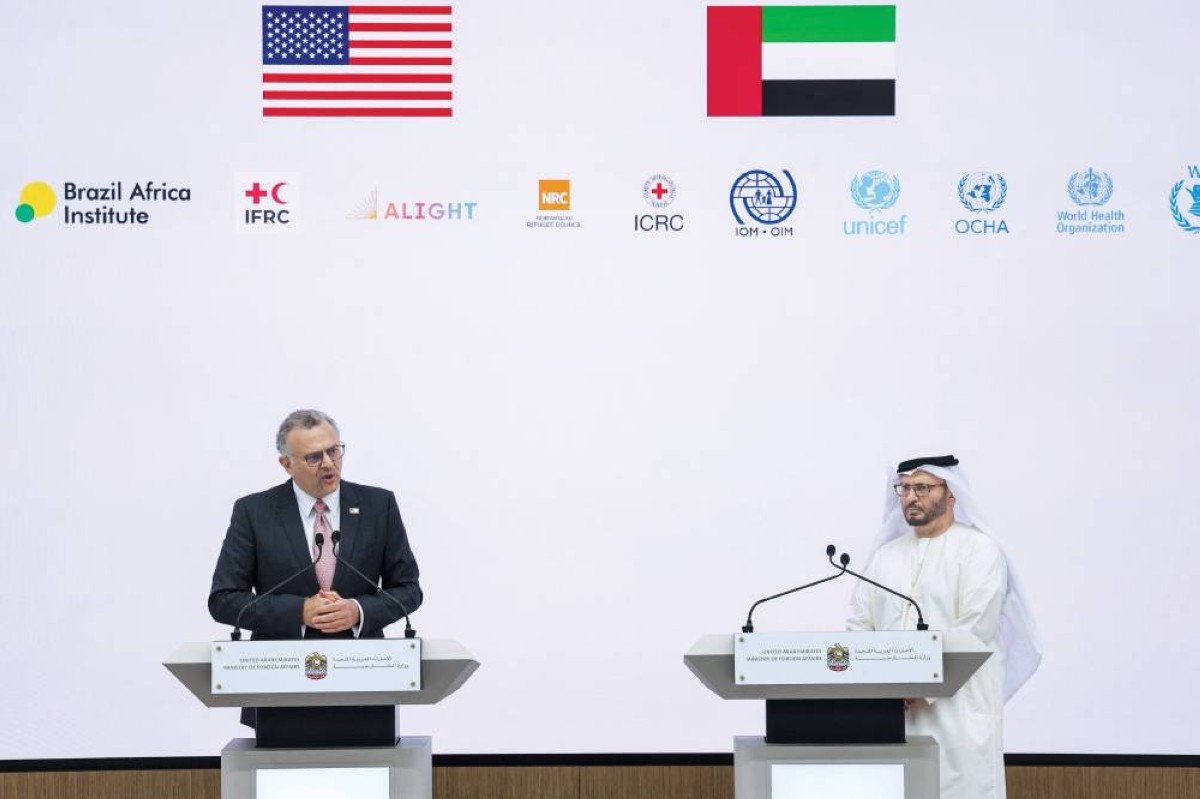
In a significant statement regarding the political landscape of Sudan, Dr. Anwar Gargash, the diplomatic advisor to the President of the United Arab Emirates, emphasized that groups with ties to the Muslim Brotherhood cannot dictate the future of Sudan. This firm declaration underscores the UAE’s commitment to work alongside international partners to address the ongoing conflict, focusing on restoring stability and promoting political dialogue that prioritizes civilian leadership in the nation.
Strong Stance Against Extremism
Dr. Gargash highlighted the danger posed by violent extremist groups with links to the Muslim Brotherhood during a joint press briefing with U.S. Africa and Arab Affairs Advisor, Missad Bolus, in Abu Dhabi. He stated, “The false claims and misleading information will not deter us from working with regional and international partners to end the war in Sudan.” His comments reflect a resolute position that dismisses attempts by such groups to steer Sudan’s political future.
Furthermore, he reiterated that there is no military solution to the ongoing conflict. “We welcome U.S. leadership and efforts to end the atrocities in Sudan,” he added. The UAE’s critical view of the actions taken by both the Sudanese army and the Rapid Support Forces underscores a significant condemnation of violence in the region.
A Focus on Humanitarian Issues
In conjunction with these discussions, Missad Bolus emphasized that peace in Sudan has been made a priority under President Donald Trump’s administration. He shared concerns over the rejection of a robust peace proposal by both the Sudanese military and the Rapid Support Forces, expressing hope that both parties would accept a comprehensive draft aimed at facilitating a ceasefire.
Bolus pointed out that humanitarian issues should not be tied to military or tactical concerns. His stance highlights the urgency for both sides to agree on a ceasefire to pave the way for further diplomatic negotiations. The UAE echoed this sentiment, calling for a halt to violence and urging both sides to prioritize humanitarian needs above all else.
Commitment to a Political Resolution
Since the beginning of the conflict, the UAE has adopted a steadfast approach, characterized by clear strategic messaging that combines a firm condemnation of serious violations and a call for an immediate end to hostilities. This includes seeking a political solution led by civilians, free from the influence of armed extremists.
With ongoing violations being reported, the UAE has consistently advocated for the protection of civilians and emphasized the need for the international community to take responsibility for addressing the growing crisis in Sudan. Recent statements condemned brutal attacks on civilians in the city of Al-Fashir as gross violations of international humanitarian law, demanding urgent humanitarian corridors and protection for affected populations.
Regional and International Cooperation
The UAE’s firm stance was further reinforced during its remarks at the Human Rights Council, where it called for an end to violations against women and children and stressed the need for comprehensive civilian protection under international law. The UAE remains committed to the belief that the political path is the only viable solution to the chaos in Sudan. This includes a push for a transition that fosters the establishment of a legitimate civilian government capable of restoring state institutions and ensuring national stability.
In a recent show of support, the UAE welcomed a statement from a quartet of international partners, viewing it as a significant advancement in the quest to revive the political process. They announced their pledge to alleviate the suffering of the Sudanese people and halt military escalation, underscoring collaboration with the global community to redirect the political trajectory.
Moreover, the UAE warned against the growing presence of extremist and terrorist groups within Sudan, asserting their potential threat to regional stability. During a security meeting, the UAE pressed for international cooperation to contain the sources of terrorism and prevent its expansion, reinforcing their belief that groups with links to the Muslim Brotherhood must not dictate Sudan’s future.