
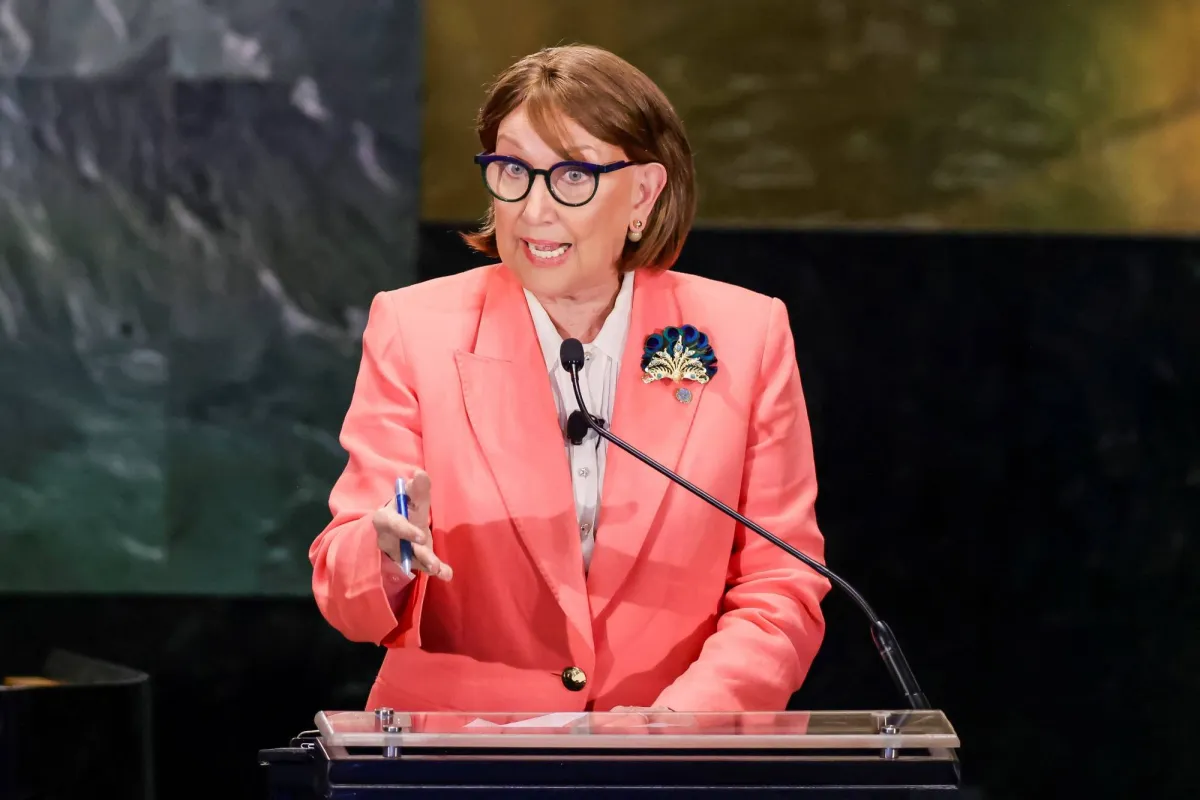
Rebecca Greenspan, the former Vice President of Costa Rica, is making significant strides in her campaign for the position of United Nations Secretary-General, according to unofficial results from a Security Council ballot held on Friday. This marks a pivotal moment for Greenspan, who, if successful, would become the tenth individual to hold this prestigious role.
Recent Advancements in the Election Process
In the latest round of voting by the 15-member Security Council, Greenspan secured 11 votes in favour, with just four votes opposing her. This outcome represents her strongest performance among the seven closed ballot rounds conducted in recent months, aimed at identifying a successor to António Guterres, whose five-year term concludes this year.
Challenges Ahead
The next UN Secretary-General will need to navigate a myriad of complex global challenges, including ongoing conflicts, reductions in contributions from the United States, and a diminished standing of the global body comprised of 193 member states, particularly following America’s withdrawal from dozens of affiliated organisations.
Moving Forward with the Selection Process
For Greenspan to receive an official recommendation from the Council, a formal vote will be required once a candidate appears to have a strong chance of winning. This process necessitates at least nine supportive votes and a lack of “discouraging” votes from the five permanent members: France, the United Kingdom, the United States, Russia, and China. The latest ballot did not disclose how these five nations voted.
Competitive Landscape
In recent months, five out of six polls indicated that Greenspan (70) has consistently led, albeit narrowly. In contrast, an August survey had positioned Caroline Rodríguez Burkett, Guyana’s UN ambassador, at the forefront. On the most recent ballot, Rodríguez Burkett received eight supportive votes, placing her in third position, while Rafael Grossi, director-general of the International Atomic Energy Agency, garnered nine supportive votes, taking the second spot. Additionally, the first poll involving the UAE’s Lanaa Nusseibeh revealed her ranking fourth with seven supportive votes, alongside six opposing votes and two abstentions.
Historical Context and Expert Insights
When Guterres was appointed in October 2016, it took the Council six rounds of polling to achieve consensus. Notably, no woman has ever held the position of UN Secretary-General in its 80-plus years of history. In a previous interview with Reuters, the Costa Rican economist emphasised the need for the next UN leader to be prepared to bear the costs of diplomatic failures and to persist in seeking resolutions.