
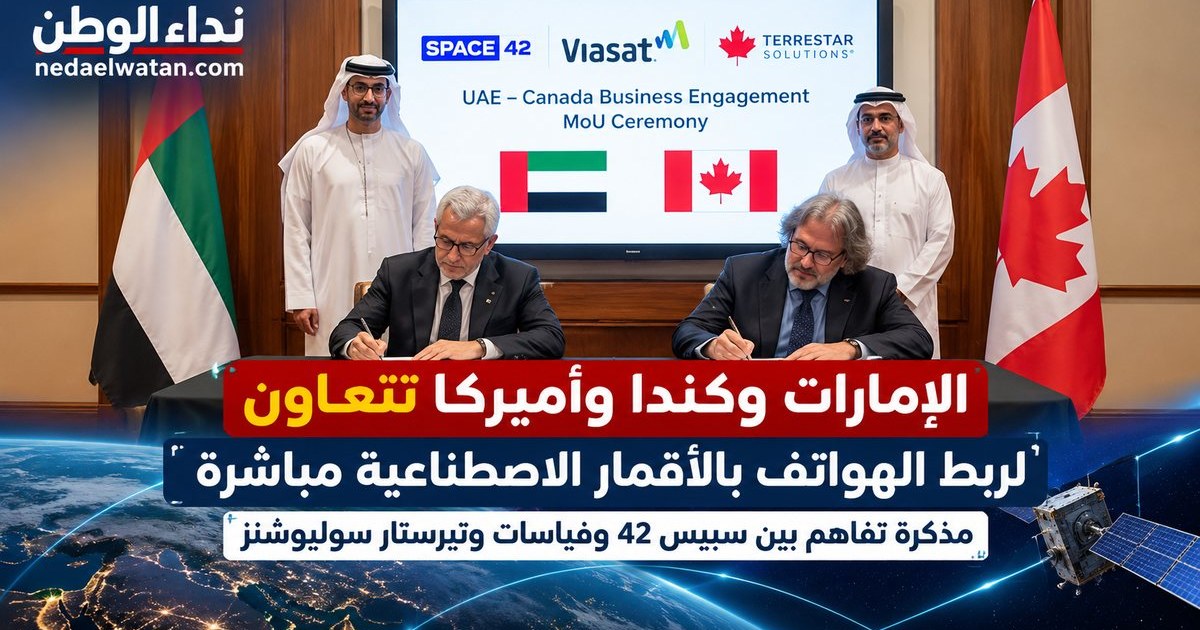
In a pioneering move aimed at enhancing communication capabilities, Abu Dhabi’s Space 42, American company Viasat, and Canadian firm Telesat Star Solutions have inked a memorandum of understanding (MoU) in Ottawa. This agreement was signed during the official visit of Sheikh Khaled bin Mohammed bin Zayed Al Nahyan, the Crown Prince of Abu Dhabi, to Canada, coinciding with his meeting with Canadian Prime Minister Mark Carney. The collaboration is focused on developing a technical framework to connect satellite networks, particularly to support direct communication services between smartphones and satellites in areas lacking traditional mobile network coverage.
Key Details of the Agreement
The MoU encompasses a strategic partnership between Space 42, Viasat, and Telesat, aiming to:
- Develop interoperability between Canada’s CaStar network and the global Equatys platform.
- Utilise open standards to enable seamless operation among satellite networks.
- Allow each operator to retain ownership of their satellites, infrastructure, and clientele.
- Facilitate direct connections between devices and satellites as a long-term goal.
Connecting Smartphones Directly to Satellites
The initiative seeks to establish satellite networks capable of communicating directly with compatible devices using Device-to-Device (D2D) communication technologies. This approach aims to extend connectivity beyond the reach of traditional mobile towers, potentially offering services in remote areas and during travel.
However, it’s important to note that this announcement does not imply that all current smartphones will have satellite connectivity capabilities. The availability of these services relies on compatible devices, network infrastructures, agreements with telecom providers, and regulatory approvals.
The Role of Equatys and CaStar
The MoU focuses on creating an open framework for interoperability between two planned satellite systems. The first is Equatys, a global infrastructure platform for satellite services being established by Space 42 and Viasat to support direct communication services. The second is CaStar, a satellite constellation that Telesat aims to deploy in low Earth orbit while managing its infrastructure within Canada.
Under this proposed framework, the two systems can share specific communication capabilities and operate according to common standards without merging into a single network owned by one entity.
Maintaining National Sovereignty in Space Communication
A central tenet of the project is the integration of a shared global satellite infrastructure with national networks that retain local control. In Canada’s case, Telesat plans to oversee the CaStar constellation and ground gateways within the country, ensuring compliance with local data protection, security, and regulatory requirements.
Simultaneously, the Canadian system can technically integrate with the global Equatys network through agreed-upon interfaces. This model aims to prevent the necessity for each operator to build fully separate global networks while preserving their operational and regulatory authorities.
Fifth Generation Technologies and Shared Operational Standards
The companies plan to develop a unified technical layer aligned with the 3GPP NTN standards for non-terrestrial networks, alongside interconnection frameworks established in the mobile telecommunications sector. If successful, this development will facilitate collaboration among various satellite networks and enhance resource utilisation, including communication capacities, ground gateways, and energy.
This initiative seeks to minimise the requirement for separate and costly technological solutions to connect two satellite networks.
The Equatys Project and Potential Investments of up to $1 Billion
This latest agreement follows the announcement by Space 42 and Viasat in September 2026 regarding the signing of a binding agreement to establish the Equatys platform, committing potential capital investments that could reach $1 billion. This figure pertains specifically to the establishment of the platform and the development of its infrastructure, distinct from the latest MoU with Telesat.
The project’s establishment and the development of its satellite system remain contingent on completing necessary requirements, agreements, and approvals.
Strengthening Technological Cooperation Between the UAE and Canada
Dr. Thani Ahmed Al Zeyoudi, UAE Minister of Foreign Trade, noted that this collaboration highlights partnership opportunities between the UAE and Canada, leveraging the expertise of companies from the three countries to develop a shared space communications infrastructure. Karim Michel Al Sabbagh, Managing Director of Space 42, emphasised that the future of satellite communications relies on the integration of national capabilities with global networks while preserving operators’ independence and sovereignty over their assets.
Representatives from Viasat and Telesat echoed the importance of adopting open standards to expand services and enhance integration between satellite and terrestrial networks.
Availability of the Service for Smartphone Users
The announcement did not specify a timeline for the launch of commercial services via the two networks, nor did it provide subscription pricing or a list of supported devices. The MoU signifies a step towards developing technical cooperation among the companies, rather than announcing a fully operational global satellite network.
The future benefits for users will depend on the implementation of the satellite infrastructure, completion of technical tests, and coordination with telecom companies and regulatory bodies in target markets.
This agreement does not imply that direct satellite internet is currently available on any smartphone or that the need for terrestrial communication networks is eliminated. The announcement pertains to the development of a technical framework that may support new services in the future.