
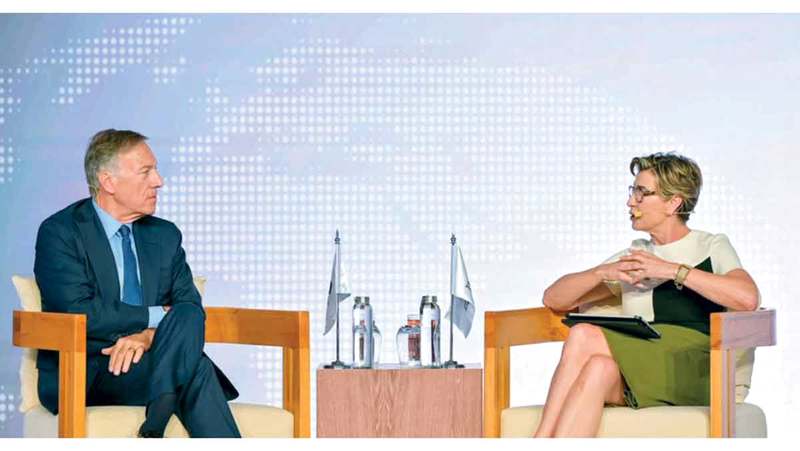
In a recently held strategic dialogue at the sixth annual “Trends” conference in Abu Dhabi, former U.S. Secretary of State and CIA Director Mike Pompeo emphasised the importance of effective deterrence and long-term strategic partnerships in ensuring sustainable security in the Middle East. He articulated that addressing regional threats necessitates a proactive approach that moves beyond crisis management to tackle the underlying factors that contribute to their emergence and persistence.
Security Imperatives for the Region
During his address, Pompeo outlined the salient issues of security and stability in the Middle East, highlighting critical topics such as Iranian policies, regional deterrence balances, and the future of the Abraham Accords. He also touched upon the prospects for normalisation and collaboration among nations in the region, the strategic rivalry between the United States and China, and the vital role of American military presence in the Middle East. He stressed the significance of defensive and security partnerships in confronting evolving challenges.
Concerns Regarding Iranian Policies
Iran’s role featured prominently in Pompeo’s discussion, where he expressed concerns regarding limited or temporary agreements that might facilitate broad sanctions relief in exchange for specific, time-limited nuclear commitments. He cautioned that such arrangements could fail to address the root sources of tension, potentially leaving the region in a prolonged state of “no war and no peace,” rather than establishing the groundwork for enduring stability.
The Need for Enhanced Security Frameworks
Pompeo asserted that creating a more sustainable security environment requires a multifaceted approach, integrating defensive capabilities with strategic pressure and alliance coordination. He underscored the need for enhanced information sharing and technological development to prepare for threats and mitigate escalation risks.
Prospects for Peace and Cooperation
Addressing avenues for peace in the Middle East, Pompeo remarked that the Abraham Accords were built on the convergence of the national and strategic interests of the participating states. The desire to foster stability and expand economic and technological collaboration was central to these agreements. He linked these accords to significant regional transformations, noting that opportunities for collaboration and regional integration are now crucial parts of the discussion on the future of relations among Middle Eastern countries.
The Role of American Military Presence
Emphasising the importance of ongoing American military presence in the region, Pompeo highlighted its role in bolstering defensive partnerships, enhancing joint capabilities, and improving coordination between American and allied forces. His reflections included insights into the relationship between deterrence and strategic partnerships, stressing that establishing a more stable security system demands persistent collaboration among allies, fortification of defensive abilities, and attention to sources of threats, all while maintaining long-term strategic relationships.
In conclusion, Pompeo’s insights at the “Trends” conference reflect his vision for a secure and stable Middle East, rooted in effective deterrence and robust partnerships that can adapt to the changing landscape of regional and global politics.