
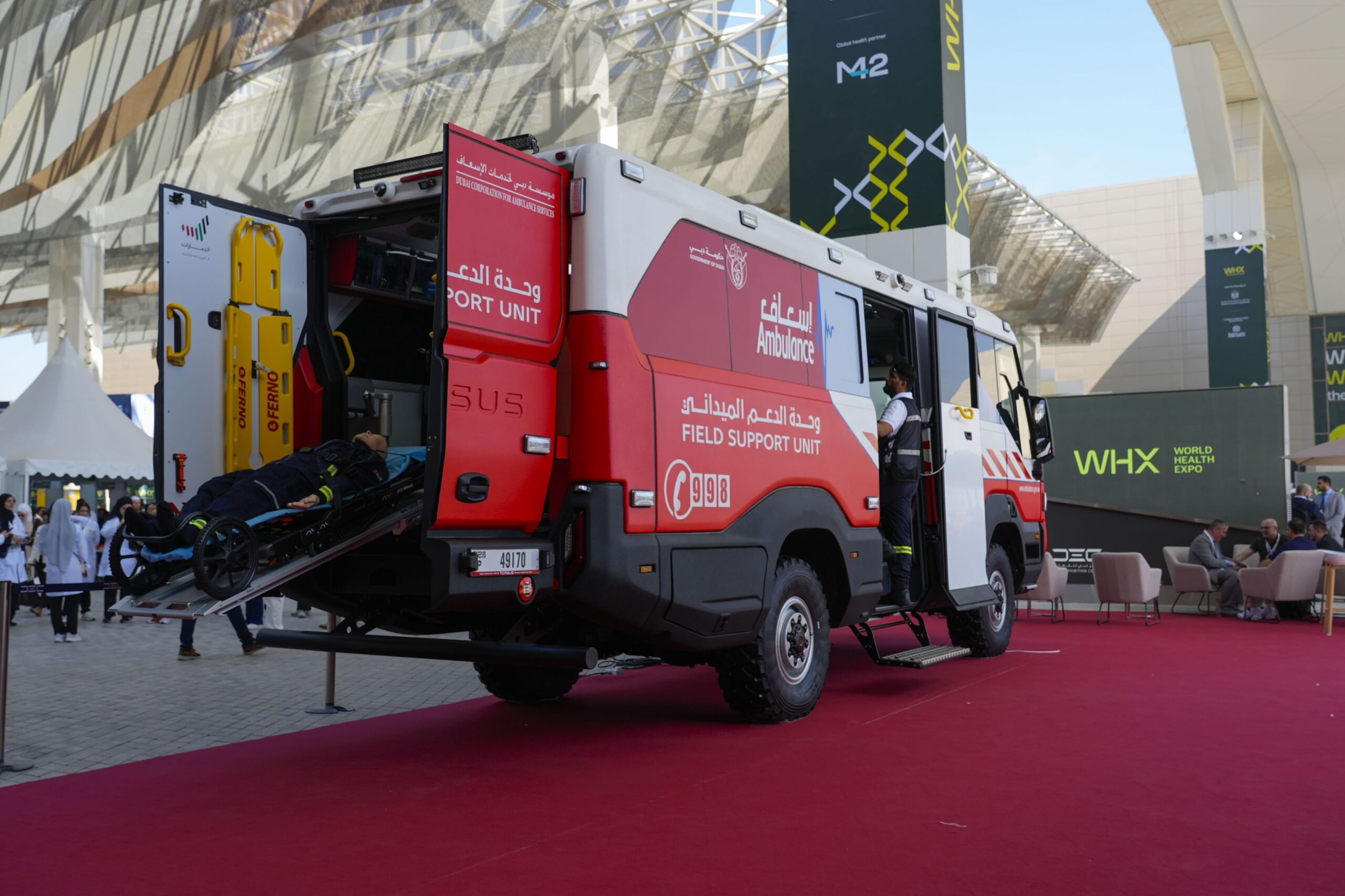
The Dubai Ambulance Service showcased its smart ambulance system at the World Health Exhibition 2026, presenting the latest technological solutions and improved mechanisms in the field of emergency services. This initiative is part of the organization’s efforts to enhance readiness and rapid response to emergencies, as well as to improve the quality of pre-hospital medical care. Through this participation, the organization highlights the significant advancements it has made in its smart ambulance system.
Qualitative Transformation in the Ambulance System
Mishal Abdulkarim Julfar, the Executive Director of the Dubai Ambulance Service, emphasized that participation in the World Health Exhibition aims to highlight the qualitative transformation in the ambulance system in Dubai. Julfar noted that the organization is showcasing a comprehensive model of a smart ambulance system that relies on digital data, which helps improve the quality of emergency services and response speed.
Innovative Response Stations
The organization’s participation includes two main stations. The first is a specialized platform that illustrates the journey of smart emergency response. This journey begins with proactive planning of ambulance resources based on the analysis of historical and current data. It also includes smart systems for receiving reports through digital applications and the Emirati identity, leading to field responses supported by digital alert systems.
Data Analysis for Efficiency
Julfar explained that the organization relies on integrating data from report locations, peak times, and population density for planning. This data is analyzed using geographic information systems and artificial intelligence to improve coverage and reduce response times across various areas of the emirate. These steps reflect the level of progress achieved by the smart ambulance system in Dubai.
Field Support Readiness
The second station showcases the field support unit, an ambulance equipped with the latest medical equipment to support teams in emergency situations. This unit highlights the high capability of the ambulance system to handle various scenarios, ensuring advanced medical care at accident sites.
The organization received over 279,000 emergency reports in one year, indicating an increased reliance on digital channels. It achieved an average response time of 7 minutes and aims to reach 4 minutes by 2033.
The Dubai Ambulance Service continues to invest in modern technologies such as artificial intelligence and remote medical communication systems to enhance care and expedite clinical decision-making. Julfar affirmed that participation in the World Health Exhibition is a valuable opportunity to exchange experiences and strengthen Dubai’s position as a global model in the quality of health services and emergency response.