
The Dubai luxury property market is reaching new heights, positioning itself among the world’s most prestigious real estate sectors as sales of homes priced over $10 million soar to record levels. In 2025, the emirate recorded an impressive 500 transactions in this ultra-prime bracket, including an extraordinary 68 sales exceeding $25 million. This surge clearly indicates that Dubai is not only attracting high-net-worth individuals (HNWIs) seeking opulent residences but is also establishing itself as a thriving long-term residential hub rather than a mere seasonal attraction.
The Surge in $10 Million Plus Sales
Dubai has become the world’s leading market for ultra-prime real estate, boasting 500 residential sales over the $10 million mark in 2025, including 68 homes sold for over $25 million. This trend highlights the unprecedented growth of the Dubai luxury property market, especially when compared to just 30 sales in 2020. The substantial rise signifies a shift in buyer preferences, as affluent individuals increasingly view Dubai as a permanent base.
The overall value of these high-end transactions reached an astounding $9.05 billion, reflecting a 27.7 percent increase year on year, according to Knight Frank. The final quarter of the year alone witnessed a remarkable increase in activity, with 143 ultra-prime deals, a 39 percent rise compared to the previous quarter.
Shifting Buyer Dynamics
Faisal Durrani, partner and head of MENA research at Knight Frank, noted that these statistics underscore Dubai’s allure among global wealth. “Dubai’s meteoric rise as the world’s busiest market for $10 million-plus homes, having increased from just 30 sales in 2020 to 500 by the end of 2025, is best reflected in the emirate’s growing reputation as a magnet for the global elite,” Durrani stated. Additionally, there has been a striking 45 percent year-on-year increase in sales within the ultra-prime segment of $25 million and above.
Experts suggest that the current market cycle distinguishes itself from previous peaks through a diversified demand profile. Rami Wahood, Executive Partner at fam Properties, explained, “What makes this structural is that activity was distributed across multiple locations and asset types and sustained across quarters, rather than concentrated in isolated trophy sales.” This new dynamic has fundamentally altered buyer behavior, with more cash transactions and significantly lower leverage now commonplace.
End-User Demand Fuelling Growth
Knight Frank highlighted a transformative shift in buyer profiles in the ultra-prime sector, with an increasing number of purchases made by end-users and long-term residents rather than speculative investors. This trend is bolstered by a higher ratio of cash transactions and longer holding periods, which also contribute to lowering market volatility amid record-setting transaction volumes.
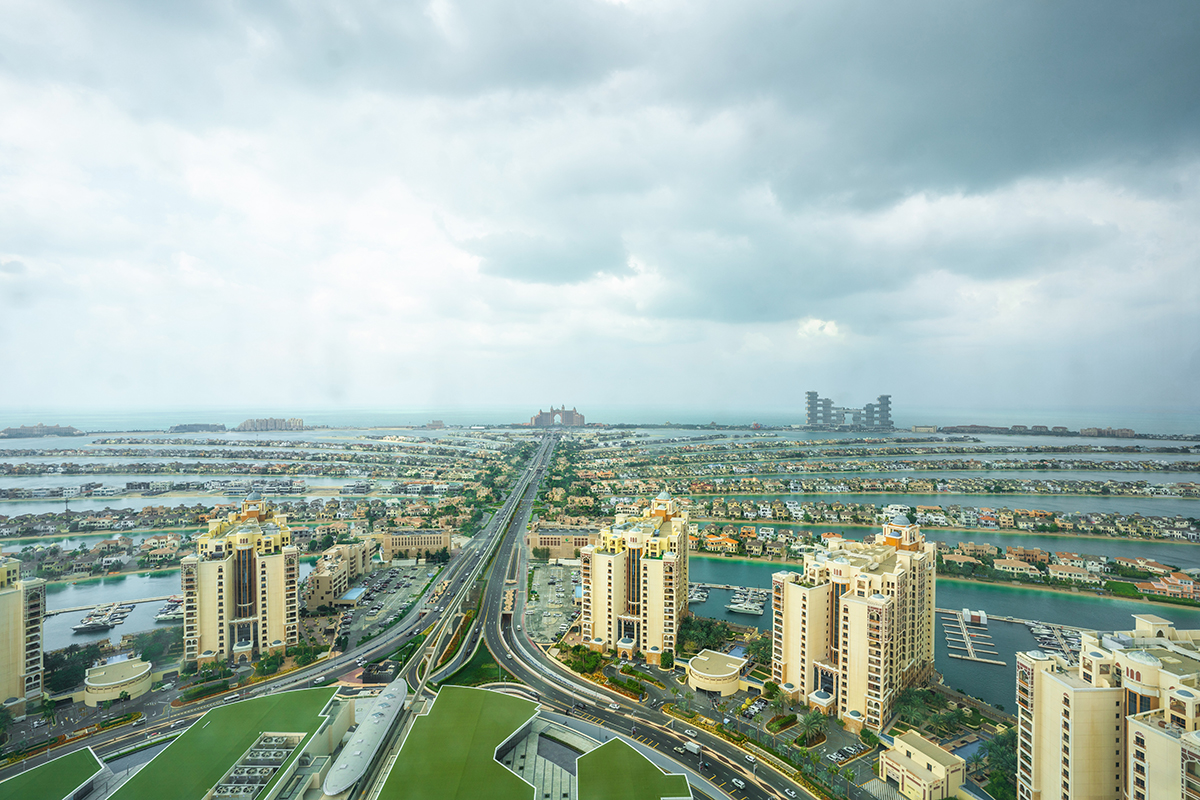
Prime locations such as Palm Jumeirah led the charge for $10 million-plus sales, with the area recording 28 transactions in the fourth quarter. Other noteworthy districts, including La Mer and Tilal Al Ghaf, also witnessed heightened interest from affluent buyers. The year saw the landmark sale of a six-bedroom penthouse at Bugatti Residences in Business Bay, which sold for $149.7 million—a record for the Emirates.
Market Maturity and Liquidity Improvements
As the Dubai luxury property market matures, industry experts have observed enhanced liquidity and price stability in its core ultra-prime corridors. Wahood noted, “From an execution standpoint, Dubai now operates at peer level in its core ultra-prime corridors. DXBInteract data shows that once listed realistically, $10-$25 million assets transact within approximately 60-120 days.”
This trend illustrates improved price discovery, a deep pool of repeat buyers, and liquidity levels comparable to renowned global prime markets. Dubai’s real estate scene, predominantly characterized by cash transactions, reinforces its appeal among wealthy global investors.
Knight Frank projects that while prime residential prices have seen drastic hikes since 2020, gaining nearly 194 percent since late 2020, growth rates may begin to stabilize, with an expected 3 percent increase in the luxury sector for 2026. This signals a pivotal transition for the Dubai luxury property market, moving from rapid appreciation to a more balanced and sustainable growth phase.