
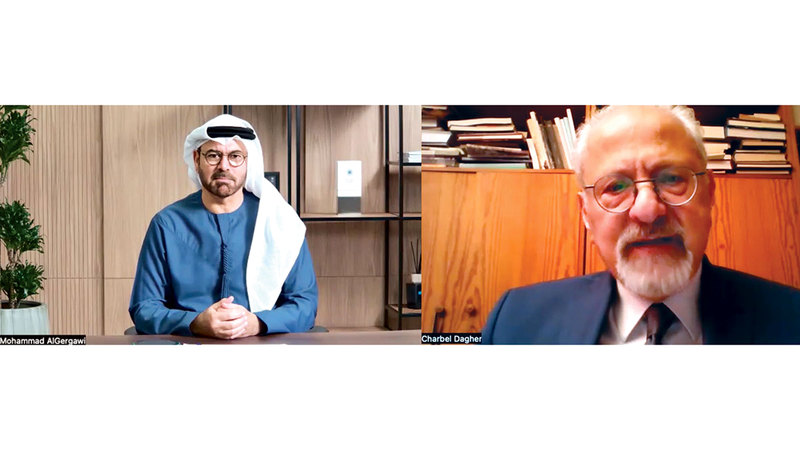
In the context of celebrating cultural achievements, the recent recognition of Professor Charbel Dagher as a recipient of the “Nobel Arabs” award emphasizes a vital message: those who created the greatest civilization in history are fully capable of building an even greater future. This sentiment, brilliantly articulated by His Highness Sheikh Mohammed bin Rashid Al Maktoum, resonates deeply throughout the Arab world, inspiring a renewed commitment to cultural and intellectual advancement. His remarks affirm the essential role of arts and literature as cornerstones of humanity, providing a significant platform for future growth and renewal.
Honoring Creative Minds
His Highness Sheikh Mohammed bin Rashid Al Maktoum extended his congratulations to Professor Charbel Dagher for winning the “Nobel Arabs 2025” award in the literature and arts category. He stressed that arts and literature have been crucial elements in the lives of nations throughout history. “We congratulate the winner of the Nobel Arabs for the literature and arts category for 2025, Professor Charbel Dagher from Lebanon, a professor of Arabic literature. He has contributed to various fields of literature for decades, including poetry, writing, novels, and criticism, while also exploring the depths and changes in Arab arts,” the Sheikh noted on his X platform.
Impact on Arab Literature and Arts
Professor Dagher’s prolific output of over 70 books has significantly enriched the fields of literature and art in the Arab world. His works serve as crucial references for the study of Arab literary and artistic heritage throughout history. “We celebrate all the winners of the Nobel Arabs award, and we tell all Arabs: those who created the greatest civilization in history can today build an even greater future if they believe in themselves, their capabilities, and their roles in resuming the civilization,” Sheikh Mohammed added.
A Forum for Exceptional Talent
The “Nobel Arabs” award has established itself as a premier initiative for celebrating exceptional Arab intellects. Since its inception by Sheikh Mohammed bin Rashid, it has spotlighted remarkable contributions across six main categories: literature and arts, architecture and design, engineering and technology, medicine, economics, and natural sciences. This initiative is essential for revitalizing the Arab narrative within the broader context of human civilization.
A Bridge to the Future
Among Professor Dagher’s notable international works are essential texts in the study of Islamic and Middle Eastern arts. His books, including titles like “Islamic Art in Arab Sources: The Crafting of Beauty,” provide profound insights into the evolution of these art forms. As a prominent cultural figure in Lebanon and the Arab world, Professor Dagher embodies a blend of creative sensibility and research rigor, crucial for fostering a deeper understanding of the arts.
In dialogue with various cultural institutions and an extensive academic network, he has remained a pivotal force in shaping contemporary dialogues surrounding Arab identity and artistic expression. The recognition of his work not only honors his individual contributions but also underscores a broader call for Arab intellectuals to continue pushing the boundaries of creativity and thought.
This honorable recognition is not merely an accolade for Professor Dagher; it is part of a larger vision laid out by Sheikh Mohammed bin Rashid, showcasing a steadfast belief in the potential of Arab minds. The ongoing efforts of the “Nobel Arabs” initiative serve as a beacon for future generations, guiding them toward realizing their roles in the continuous evolution of culture and civilization.