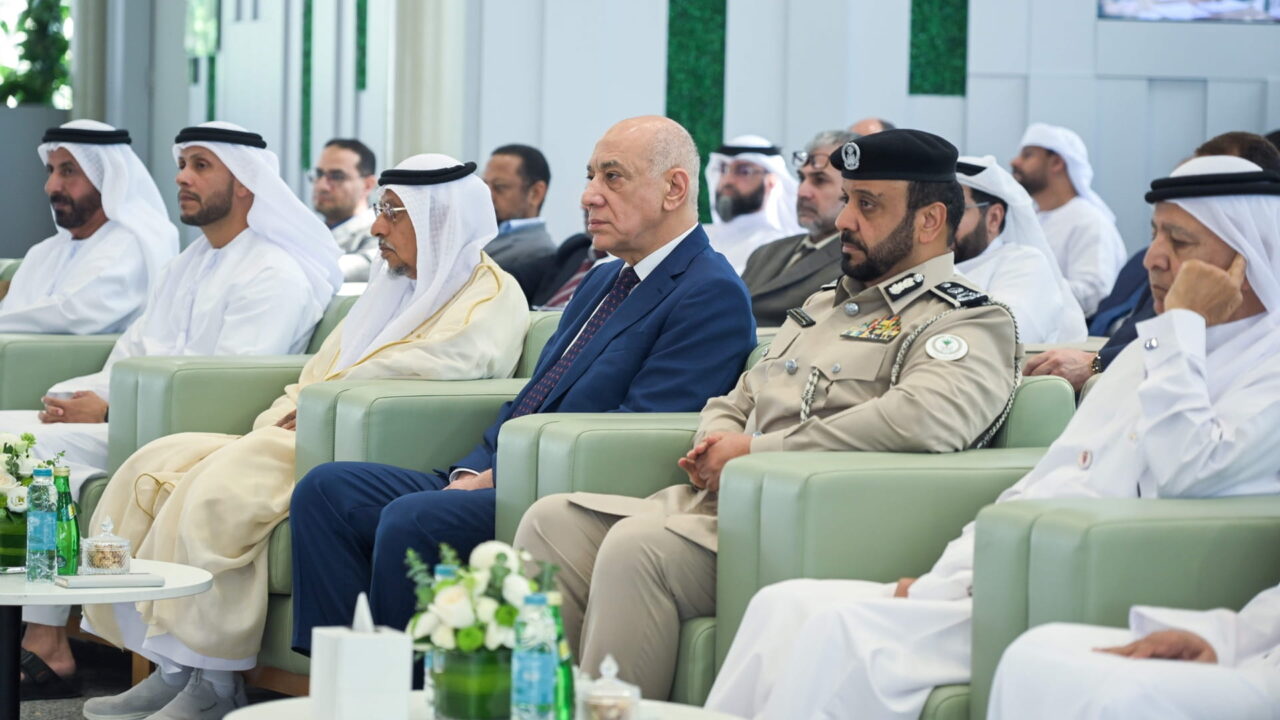
The University of Sharjah has hosted a symposium examining national unity from an Islamic legal perspective, with speakers highlighting the role of families and institutions in safeguarding social cohesion and stability. Organised by the university’s College of Sharia and Islamic Studies, the event was held alongside the UAE’s 55th Union Day celebrations under the patronage and in the presence of Professor Issam Al-Ajami, the university’s director.
Speakers call for social cohesion and reliable information
Participants included Major General Dr Mohammed Khamis Al Othmani, director-general of the Sharjah Police Academy; Judge Dr Salama Rashid Al Ketbi, head of the Judicial Inspection Department in Sharjah; Dr Ahmed bin Abdul Aziz Al Haddad, director of the Fatwa Department at Dubai’s Department of Islamic Affairs and Charitable Activities; and Professor Qutb Al-Raysuni, dean of the College of Sharia and Islamic Studies.
The programme opened with the UAE national anthem and a recitation from the Holy Quran. Speakers at the opening session stressed the family’s central role in protecting the nation’s achievements and strengthening its stability. They also highlighted the importance of upholding justice and equality, and avoiding discrimination among all those living in the UAE.
They said these values reflect the approach established by the late Sheikh Zayed bin Sultan Al Nahyan and the UAE’s founding fathers, and continued by the country’s leadership. Speakers also called for educational and official institutions to work together to protect society, and urged the public to verify information through trusted sources rather than follow rumours on social media. They described obedience to the ruler and rallying around the leadership as essential foundations, in Islamic law, for security, social cohesion and national unity.
Research sessions examine Islamic and social principles
The symposium featured three academic sessions. The first, chaired by Professor Abdul Halim Mansour, considered the values of benevolence and their effect on belonging and national unity; national unity in light of the objectives and overarching principles of Islamic law; and human diversity in Islam and its contribution to security, coexistence and unity.
Chaired by Professor Hassan Habshan, the second session explored principles of social cohesion in the Quran and their bearing on unity. Its papers also addressed the application of the Islamic legal principle of preventing harm and securing benefits to protect national unity, tolerance as a means of strengthening national cohesion—with the UAE presented as a leading example—and the unification of fatwas and sermons as a prominent expression of national unity in the country.
The third session, chaired by Professor Mohammed Samai, examined national unity through the Quranic concept of human stewardship and development, offering a foundational perspective. It also considered social values in Islam and their role in supporting unity, as well as the values of solidarity and coexistence and the principles needed to preserve national unity from an Islamic legal and objectives-based perspective.
University highlights its academic and community role
The symposium forms part of the University of Sharjah’s efforts to strengthen its academic and community role and produce contemporary Islamic legal research that supports national identity and deepens the values of loyalty and belonging, in step with the UAE’s development and prosperity.