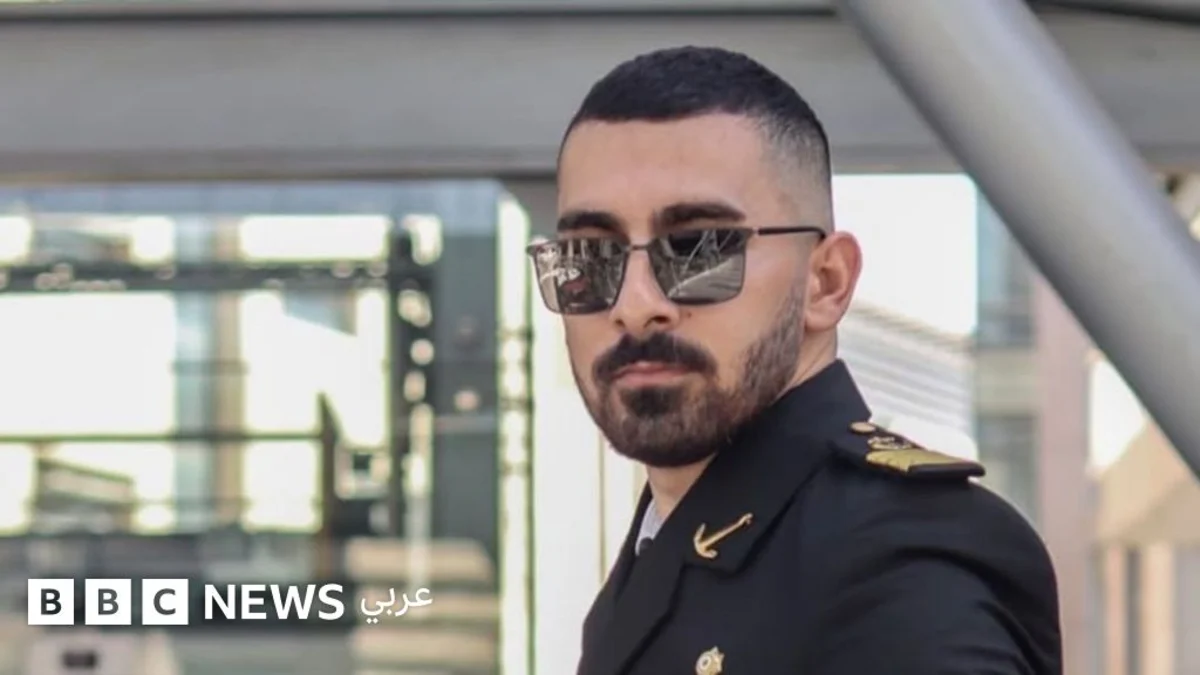
Six days after a tanker was attacked in the Strait of Hormuz, the fate of Jordanian seafarer Mohammad Hossam al-Din al-Otaibi remains unknown. His family is waiting for news as search efforts continue, with authorities from the United Arab Emirates and Oman involved.
Al-Otaibi was the third navigation officer aboard an oil tanker operated by Adnoc Logistics and Services, part of the Abu Dhabi National Oil Company. His father, Hossam al-Otaibi, told the BBC that he last spoke to his son at 19:00 on 17 November.
“He told me he was following his usual route from the UAE aboard an oil-laden vessel,” his father said. “We lost contact at around 23:00, and the following day the company called to tell us he was missing at sea.”
What happened aboard the ship?
Adnoc said in a statement on 18 November that one of its vessels had been attacked while passing through the Strait of Hormuz the previous evening. It said one crew member remained missing and search-and-rescue operations were continuing in coordination with the relevant authorities. The rest of the crew had been evacuated safely, while 11 people were injured and received medical care.
Omani authorities rescued 24 crew members and continued searching for one missing person, Reuters reported. Neither the company nor the authorities identified who was responsible for the attack.
Al-Otaibi’s father said his son’s duties included protecting the safety of the crew. “When the attack happened, he had to secure the vessel itself, which is about 300 metres long. After securing it, he jumped into the sea wearing full safety equipment, but the waves and currents carried him away from the other crew members,” he told the BBC.

Image source, Getty Images
Search and rescue efforts
Jordan’s Foreign Ministry said it was following the case through the country’s embassies in Abu Dhabi and Muscat, in coordination with authorities in the UAE and Oman. Ministry spokesman Fuad al-Majali said the ministry had been tracking developments since the incident and remained in contact with the missing man’s family.
“The ministry, through its operations directorate and the Kingdom’s embassies in Abu Dhabi and Muscat, is following up on the disappearance with the relevant authorities in the UAE and the Sultanate of Oman,” al-Majali said. He added that the family would be updated as soon as information was received from the Emirati and Omani authorities.
Ahmad al-Assasleh, director general of the Jordan Maritime Commission, said search operations were continuing, with coordination under way between maritime administrations in the UAE and Oman and search-and-rescue centres in the region.
The commission circulated information about al-Otaibi’s disappearance through its maritime alert platforms, reaching maritime organisations operating in the southern Red Sea, the western Indian Ocean and surrounding areas. It also contacted search-and-rescue centres in the Red Sea in Saudi Arabia and in the western Indian Ocean, and alerted military and civilian maritime bodies, asking them to share any information that could help locate him.
Al-Otaibi’s father said coastguard authorities in the UAE and Oman were involved in the search. “There is direct cooperation at the highest levels to intensify the search for my missing son, using drones to survey areas at sea and marine sonar to explore the depths and locate objects underwater,” he said.
He added that Adnoc was hosting him and his family and keeping them regularly informed of developments.
Al-Otaibi’s mother has also appealed for help in a video posted on social media, calling on the Jordanian and Emirati authorities and people around the world to help find her son. She spoke of the family’s anxiety and the difficulty of waiting, and said she hoped he would return home safely as soon as possible. She urged people to share her appeal and contact the family if they had information that might help locate the missing seafarer.

Al-Otaibi’s disappearance has drawn attention to the conditions facing seafarers, including Jordanians working aboard ships abroad, particularly in areas exposed to security risks.
Since the US-Israeli war with Iran began on 28 February 2026, shipping through the Strait of Hormuz has faced growing disruption. Several oil tankers have been hit by explosions caused by sea mines or projectile attacks.
The Strait of Hormuz is one of the world’s most important and busiest maritime routes, carrying a fifth of global oil and gas production. Any security escalation there is a concern for the shipping industry and the people who work in it.
As official contacts and search efforts continue, al-Otaibi’s family remains in limbo, hoping the coming hours will bring news that clarifies what happened to the missing seafarer.