الشارقة 24 – وام:
In a significant celebration of Dubai’s rich history and cultural heritage, His Highness Sheikh Mohammed bin Rashid Al Maktoum, Vice President of the UAE, Prime Minister, and Ruler of Dubai, recently visited the Al Fahidi Fort Museum, the oldest standing historical building in Dubai. During this visit, he asserted the importance of preserving the nation’s history and cultural legacy as a national responsibility that reflects pride in roots and commitment to keeping the stories and values of the nation alive for future generations.
Historical Significance of Al Fahidi Fort
Sheikh Mohammed highlighted that Al Fahidi Fort embodies historical and civilisational continuity, having served as a bastion of protection for Dubai for over 230 years. Once a stronghold and centre of governance, it now stands as a cultural landmark that safeguards the emirate’s memories and chronicles its journey from its modest beginnings along the creek to its current global stature.
He stated, “Al Fahidi Fort connects generations to Dubai’s history through its museum and cultural experiences, showcasing the humanitarian and civil values that shaped our society and providing our children with insight into the foundations from which the emirate has arisen.”
Transformation into a Cultural Hub
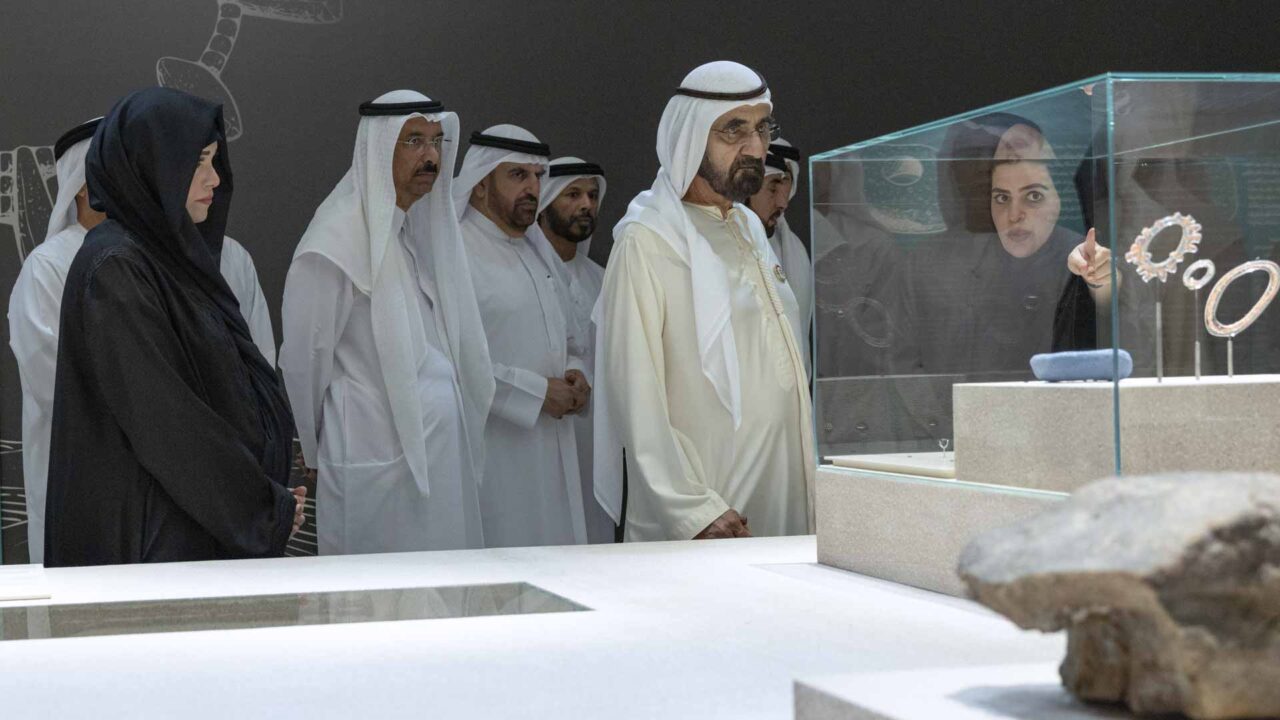
Accompanied by Her Highness Sheikha Latifa bint Mohammed bin Rashid Al Maktoum, Chairwoman of the Dubai Culture and Arts Authority, Sheikh Mohammed’s visit marked the beginning of a new chapter for this historic edifice following its renovation and development. The museum is now equipped to offer an interactive experience, blending historical artefacts with immersive engagements that narrate Dubai’s evolution and provide visitors from around the world the opportunity to learn about the emirate’s pivotal moments.
“Our museums are cultural beacons that preserve our memories and narrate the stories of a people who have steadfastly maintained their values while building their homeland with determination and resolve,” he remarked. “Today we reopen the doors of Al Fahidi Fort as a living monument that tells the story of Dubai and its people. We want our children to know where we began, and we want the world to understand our culture and history, which empower us to continue building and shaping the future.”
A Historical Journey Through the Museum
During the tour of the museum, Sheikh Mohammed, along with dignitaries such as His Excellency Mattar Al Tayer, Director General and Chairman of the Board of Executive Directors of the Roads and Transport Authority, and His Excellency Helal Saeed Al Marri, Director General of the Dubai Economy and Tourism Department, explored the various exhibition halls that showcase a rich collection of artefacts, documents, and multimedia materials recounting the history and evolution of the fort since its construction in 1787.
Notably, he inspected key exhibits that capture different phases of Dubai’s history, shedding light on the daily lives, crafts, and cultural exchanges that have characterised the region over time. He also visited the “Treasury” hall, which presents an innovative museum display that highlights his contributions to developing Dubai and the UAE’s defensive capabilities, featuring a unique collection of military attire, communication devices, and traditional military instruments, as well as weapons and equipment used by the people of Dubai throughout various periods.
Commitment to Cultural Preservation
Sheikha Latifa reaffirmed that Al Fahidi Fort embodies Sheikh Mohammed’s vision of preserving the emirate’s cultural and historical heritage. She acknowledged the wise leadership’s commitment to maintaining Dubai’s history, highlighting the transformation of the fort into the first museum in the emirate in 1971 under the guidance of the late Sheikh Rashid bin Saeed Al Maktoum. She noted the comprehensive rehabilitation project that was initiated under the direction of Sheikh Hamdan bin Mohammed bin Rashid Al Maktoum, Crown Prince of Dubai.
She added, “Dubai Culture is keen to protect this heritage and make it accessible to the community and visitors from all over the world through cultural experiences that reflect Dubai’s authentic identity and evoke significant milestones from its history.”
Legacy of Al Fahidi Fort
Al Fahidi Fort, located in the heart of historical Dubai, serves as an essential source of knowledge and a foundational pillar in documenting the patterns of life and the developments within the city. Throughout its history, it functioned as a ruling authority until 1896 and served administrative purposes while also acting as a repository for the city’s needs and possessions.
In 1971, it opened a new chapter by becoming the first museum in Dubai, thanks to the directives of the late Sheikh Rashid bin Saeed Al Maktoum, transforming its spaces into a haven for those seeking to discover the city’s history and heritage. The museum now houses six main halls illustrating the fort’s narrative, featuring more than 700 diverse historical and heritage items, including elements from both tangible and intangible heritage, oral traditions, archaeological finds, and Islamic arms and armour.
The “Treasury” hall employs sound and visual technology to showcase significant moments of Sheikh Mohammed’s military narrative and document the evolution of Dubai’s defence framework, while the “A Monument Through the Ages” hall elaborates on the fort’s history and its multifaceted roles in preserving Dubai’s cultural heritage. Additionally, the “Islamic Arms and Armour” exhibit displays objects that illustrate the craftsmanship of weaponry and armour in Islamic history.
Future of the Museum
Visitors can explore the “Memories of Al Fahidi Fort” hall which delves into the human aspect of the fort’s history through testimonies and recollections of those who lived and worked within its walls. An audiovisual display invites guests to connect with the everyday life experiences that took place there, while the “Defensive Fortifications” hall showcases architectural designs from various Emirates, highlighting their distinctive features. The journey culminates in the “The Fort Today and Tomorrow” hall, which invites reflection on the fort’s main entrance as a pivotal element of its narrative, encouraging an understanding of its legacy across various phases and an outlook toward its future as one of Dubai’s iconic historical landmarks.
The fort, alongside the “Murbah” tower, remains one of the most prominent features of this experience, characterised by its thick walls, approximately two metres wide, built using coral and plaster. Standing resilient for over two centuries, it exemplifies the continuity created by craftsmanship and preserves the memory of the place for future generations.
The partners in the Al Fahidi Fort Museum rehabilitation project include the Ministry of Defence, the Roads and Transport Authority, the Dubai Municipality, and the Dubai Economy and Tourism Department.