
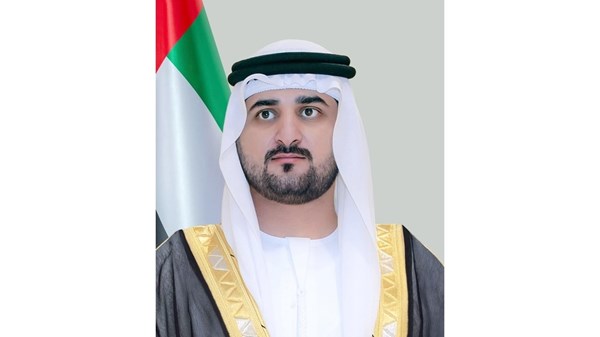
His Highness Sheikh Maktoum bin Mohammed bin Rashid Al Maktoum, the First Deputy Ruler of Dubai, Vice President of the Council of Ministers, and Minister of Finance, has emphasised that the appointment of national talents to key positions in international financial institutions reflects the visionary leadership of the UAE in establishing the nation’s pivotal role as a major contributor to global economic growth and prosperity, while also being an active partner in shaping the future of international financial governance.
A Historic Appointment for the UAE
This statement comes in light of the recent election of Ali Al Hosani as the Executive Director of the International Monetary Fund (IMF), marking him as the first Emirati to hold this prestigious international position. His appointment underscores the UAE’s commitment to enhancing its representation in leadership roles within international financial organisations, thereby demonstrating the esteemed status of local expertise and the global confidence in its capability to manage pertinent economic and financial issues.
National Expertise at the Forefront
Sheikh Maktoum noted that the UAE’s representation of the Arab Group and the Maldives on the IMF’s Board of Executive Directors places national expertise in a key position to support policies aimed at financial growth and stability. He added that this move sends a clear message about the strength of the UAE’s economic model and its ability to transfer successful national experiences in financial development to benefit the economic interests of friendly and brotherly nations in the region.
A Strong Endorsement from Financial Leaders
In support, His Excellency Mohammed bin Hadi Al Hussaini, Minister of State for Financial Affairs, remarked that the election of the first Emirati to the Executive Director position at the IMF reflects the wise vision of the UAE’s leadership in solidifying the nation’s presence at the heart of financial and economic decision-making globally. He reaffirmed that this significant international appointment showcases the growing international trust in the capabilities and expertise of national professionals to lead financial dialogues and manage complex economic files.
Commitment to Regional Development
Al Hosani expressed profound gratitude for the trust bestowed upon him by the leadership to represent the UAE and the Arab Group at the IMF. He stressed that the UAE’s selection to lead the group illustrates member nations’ confidence in the state’s wisdom and its ability to support developmental issues and financial reform programmes. He acknowledged the critical nature of the Executive Director’s role within the Board, highlighting that the IMF is the world’s most significant monetary financial institution, with a financing capacity approaching one trillion dollars.
Focus on Shared Priorities
Looking ahead, Al Hosani indicated that the forthcoming phase will require a concentrated effort on supporting the priorities of the member nations. He outlined plans to enhance the role of the IMF in financing, economic assessment, and capacity building, with a particular focus on countries facing crises or extraordinary economic circumstances through interactive frameworks that meet their developmental aspirations.
Building Strategic Partnerships
He also mentioned the goal of fostering strategic partnerships with representatives of other nations and groups to exchange experiences, including the successful UAE model in building a robust and integrated financial and monetary system. Al Hosani noted that assuming this position aligns with the UAE’s successful bid to host the annual meetings of the World Bank Group and the IMF in 2029, showcasing the long-term vision established by the nation’s leadership to elevate the UAE’s global status.
A Prominent Role in Global Financial Governance
Executive Directors play a vital role in the IMF’s governance structure, forming part of the 25-member Executive Board elected by member countries or groups of countries. They contribute strategic guidance in managing the fund and engage in discussions and approvals of financing programmes for member states, including support initiatives for countries represented by the Arab Group.
A Wealth of Experience
Al Hosani brings a wealth of experience in economic and financial policies from prominent local and international institutions. Prior to his new role, he served as the Alternate Executive Director at the IMF since 2021 and worked as a consultant for the Executive Director at the World Bank Group. His background includes a position as the Director of Investment Portfolio at the International Finance Corporation (IFC) in Washington, as well as previous roles with the Abu Dhabi Crown Prince’s Diwan as a member of the Strategic Affairs Office and the Abu Dhabi Investment Authority.
Al Hosani holds a Master’s degree in Commerce and International Policy from George Mason University in the United States, a Bachelor’s degree in Economics from The American University in Washington, and has completed an Executive Leadership Programme at Harvard University.