
8 September 2026 20:31
|
Last updated: 8 September 21:39 2026
ثاني الزيودي: منتدى هيلي يرسم ملامح مستقبل الإمارات والمنطقة

الخلاصة

The conclusion of the Heliyon Forum 2026 in Abu Dhabi featured over 75 speakers and 2,000 participants from 35 countries, concentrating on geotechnology, the role of the UAE as a trading bridge, and enhancing Gulf security.
The third edition of the Heliyon Forum concluded today in Abu Dhabi, organised by the Emirates Center for Strategic Studies and Research alongside the Anwar Gargash Diplomacy Academy. Spanning two days and themed “The Gulf at a Crossroads: Conflict, Implications, and Course Correction,” the event welcomed a prestigious lineup of decision-makers, officials, diplomats, academics, and international experts, including over 75 speakers and more than 2,000 participants from 35 countries worldwide.
The second and final day of the forum focused on geotechnological themes, discussing the transformations brought about by data, drones, and digital technologies in the global balance of power, as well as their implications for security, economy, and international relations.
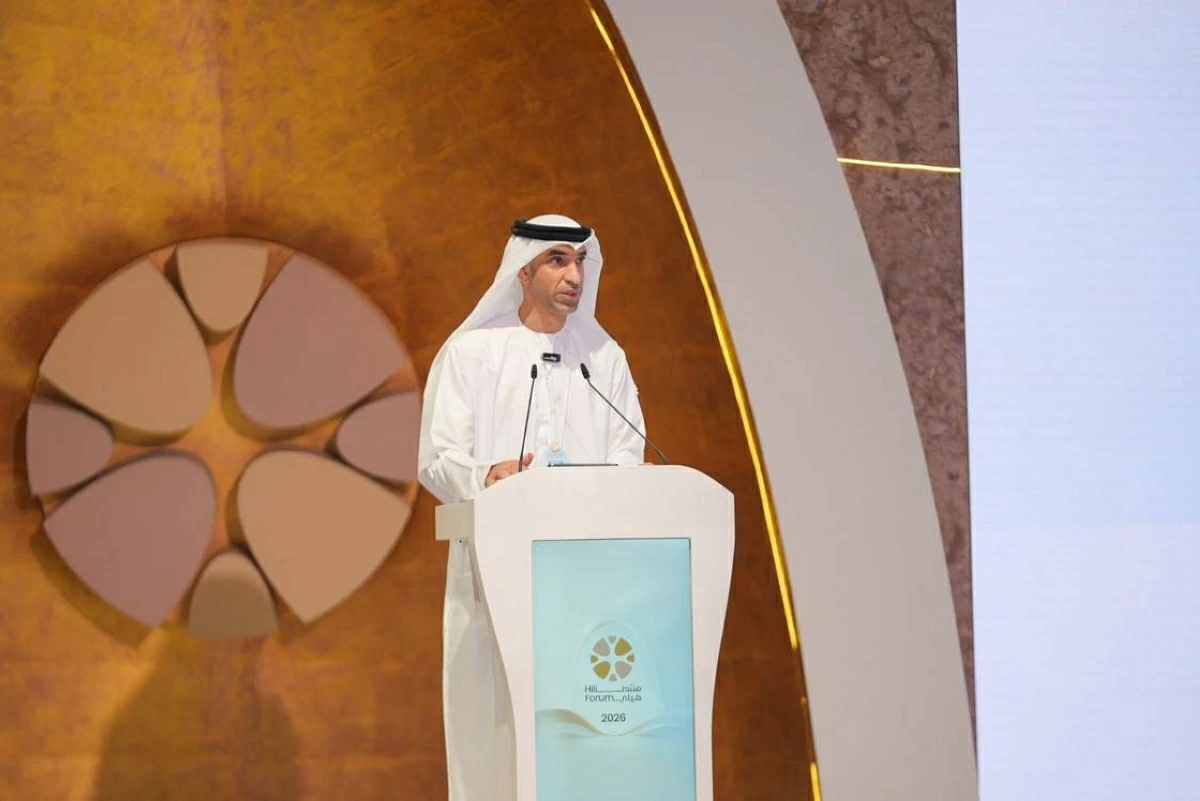
The day began with a keynote speech by Dr. Thani bin Ahmed Al Zeyoudi, Minister of Foreign Trade, who emphasised that the Heliyon Forum has established itself as a key platform for discussing geopolitical shifts that shape the future of the UAE and the wider region.
Dr. Al Zeyoudi stated, “The UAE has proven its ability to turn current challenges into strategic opportunities by diversifying its trade and logistics corridors, accelerating infrastructure development, and continuously investing in future technologies and industries. Despite the challenges the world faces, our vision for growth and prosperity remains steadfast as we continue to expand our network of trade and investment partnerships, enhance global trade flow, and solidify our position as a vital bridge connecting various continents.”
Dr. Mohammed Ibrahim Al Dhaheri, Deputy Director-General of the Anwar Gargash Diplomacy Academy, noted the significant contributions made by participants during the forum discussions, stating, “The active contributions of participants enriched the discussions with a variety of questions, ideas, and perspectives. Concurrent sessions facilitated direct communication with policymakers and experts, allowing for the exchange of ideas shaping the future of the Gulf and the world. This interaction highlighted the Heliyon Forum’s importance as an open platform for dialogue, learning, and knowledge exchange, deepening the understanding of current challenges and forecasting future opportunities.”
Dr. Ibtisam Al Teneji, Deputy Director-General of the Emirates Center for Strategic Studies and Research, remarked that this year’s Heliyon Forum took place at a moment when transformations around us are accelerating, making questions related to Gulf security, its economy, and international relations increasingly urgent. “What distinguished this forum is that it did not merely read these transformations but gathered a diverse group of experts and decision-makers to discuss their implications for the region and explore options to correct the course and enhance readiness for what lies ahead,” she added.
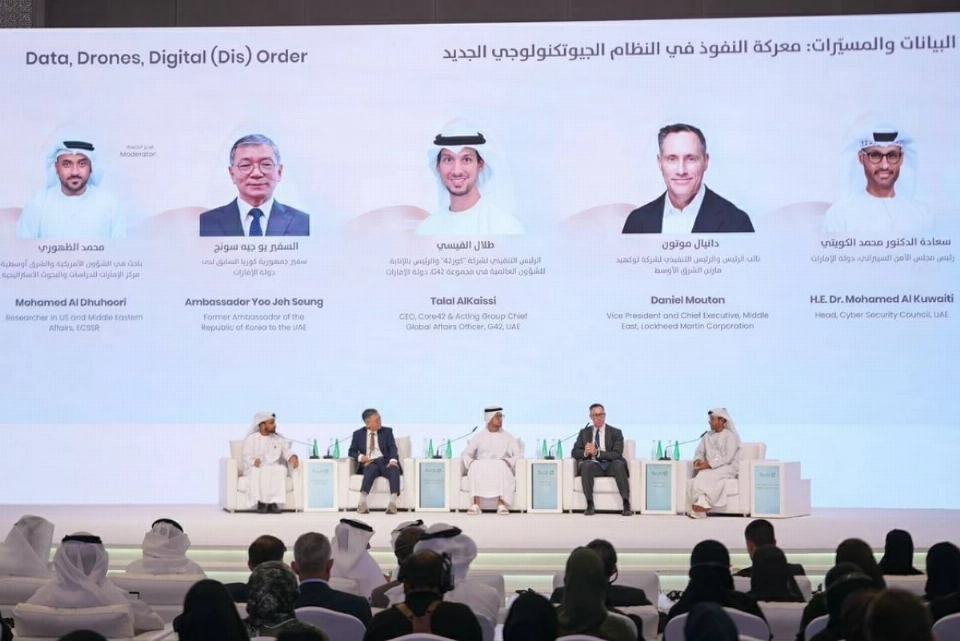
The second day included a main session titled “Data and Drones: The Battle for Influence in the New Geotechnological Order,” featuring Dr. Mohammed Al Kuwaiti, Head of Cybersecurity for the Government of the UAE; Yoo Jeong Sung, former South Korean Ambassador to the UAE; Daniel Muton, Vice President and CEO of Lockheed Martin in the Middle East; and Talal Al Qaisi, Acting Head of Global Affairs for Group 42.
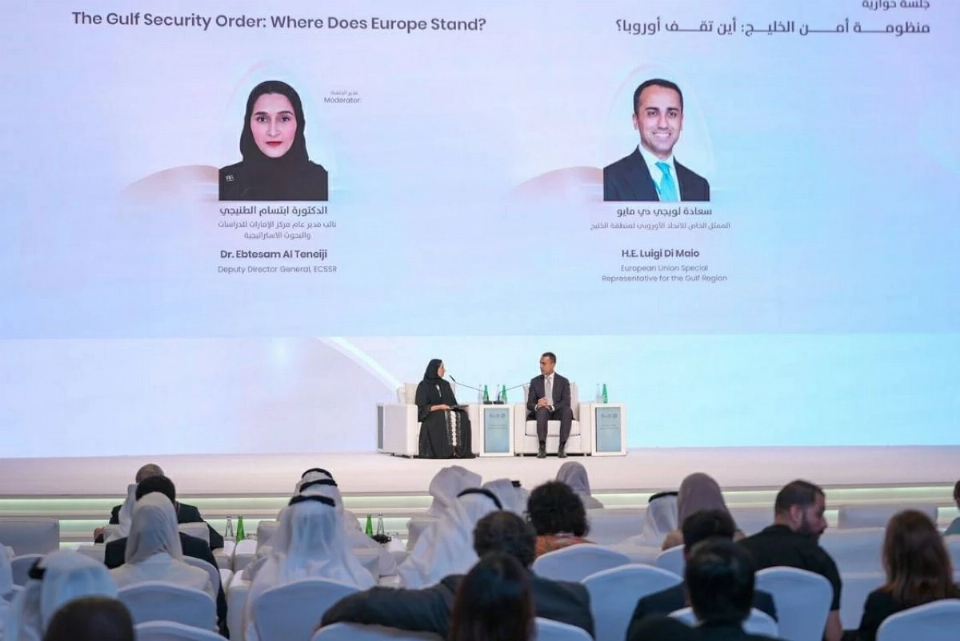
The programme also featured a presentation by Dr. David Sharia, Director and Head of the Executive Office of the UN Security Council’s Counter-Terrorism Committee, alongside a panel discussion with Luigi Di Maio, the EU Special Representative for the Gulf region.
The forum concluded with a pivotal session titled “The Role of Middle Powers in a Fragmented World Order,” featuring Carl Bildt, Co-chair of the European Council on Foreign Relations and former Prime Minister and Foreign Minister of Sweden; Vuk Jeremich, former Serbian Foreign Minister; and Zhandos Shimerdanov, Director of the Kazakhstan Institute for Strategic Studies under the President of Kazakhstan.
In conclusion, the forum underscored the importance of dialogue and the exchange of views in understanding the rapid changes occurring in the region and the world, alongside developing practical approaches to enhance Gulf security, stability, and prosperity, while supporting its role in shaping the future of the regional and international order.