
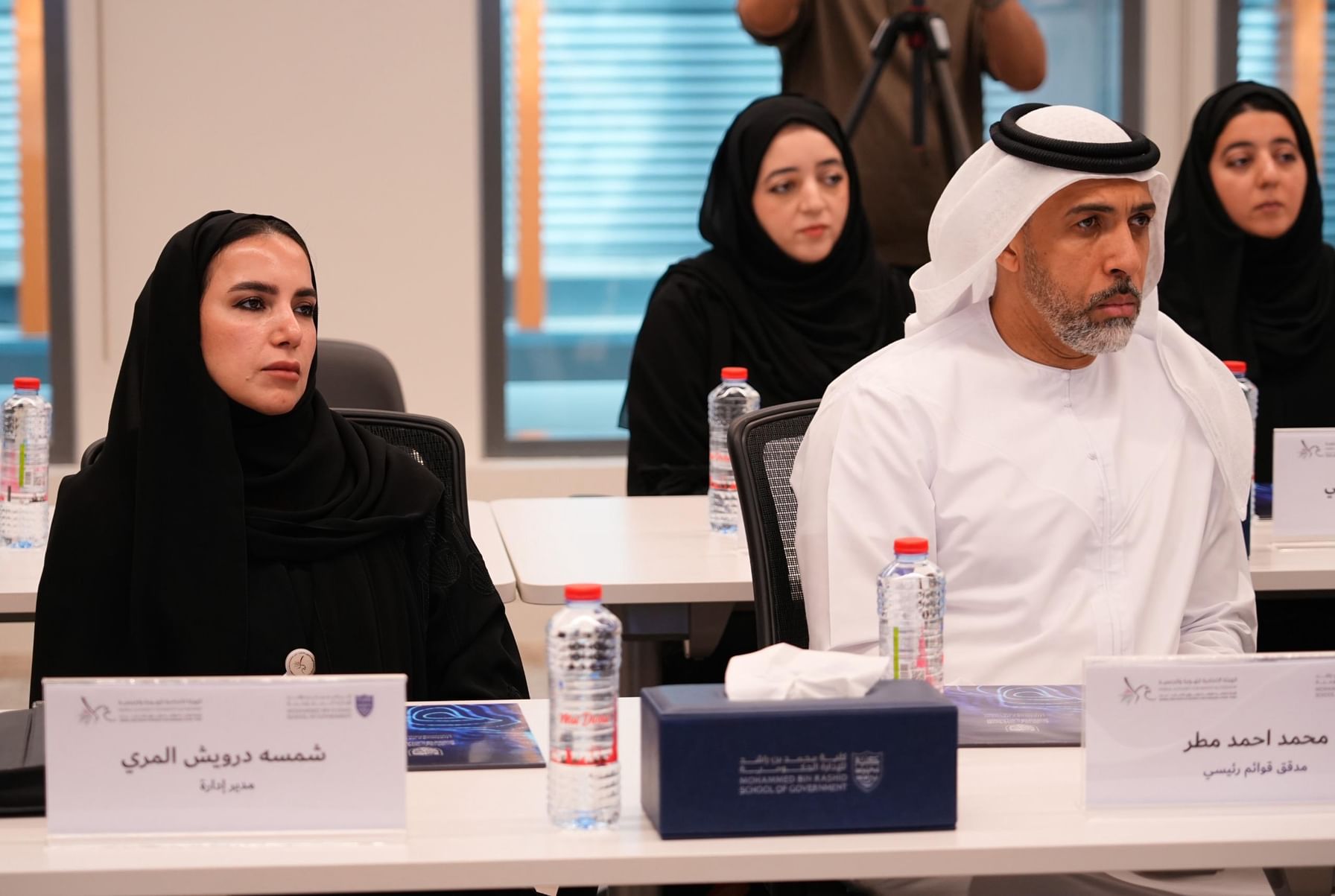
The General Directorate of Residency and Foreigners Affairs in Dubai, known as “Dubai Residency,” has launched a specialised training programme titled “Leadership through Values and National Identity,” in collaboration with the Mohammed bin Rashid School of Government. This initiative aims to enhance the competencies of 65 mid-level leaders, preparing them for their institutional roles with a strong sense of values and efficiency.
Programme Overview and Objectives
This training programme is being offered in two batches and includes department directors, their deputies, office managers, and shift supervisors. The experience combines theoretical knowledge with practical application through interactive lectures, case studies, activities, exercises, and research papers, culminating in a session with a leader to connect concepts with the realities of governmental work.
Investment in Leadership Development
Lieutenant General Mohammed Ahmed Al Marri, Director General of Residency and Foreigners Affairs in Dubai, emphasised that developing leadership skills is a direct investment in an organisation’s ability to achieve its mission and maintain performance sustainability. He pointed out that effective leadership is not merely measured by operational results; rather, it reflects the ability to translate national values into behaviours, decisions, and practices that enhance team dynamics and service quality.
Foundation of Leadership Values
Al Marri noted that national values and identity are fundamental to effective leadership and serve as a guiding reference for decision-making and responsibility. The programme facilitates the capability of leaders to build diverse, high-performing teams, make sustainable strategic decisions, and translate the values of the UAE and its wise leadership into tangible outcomes within the workplace and client experiences.
Continuous Responsibility in Leadership Development
He added that building leadership is an ongoing institutional responsibility that ensures knowledge transfer, bolsters future readiness, and cultivates national models capable of driving development and responding to changes while maintaining public trust.
Collaboration in Capacity Building
Dr Ali Bin Sebaa Al Marri, CEO of the Mohammed bin Rashid School of Government, highlighted that the “Leadership through Values and National Identity” programme reflects the UAE’s vision of establishing a leadership system rooted in national values. This initiative enhances governmental leaders’ abilities to translate these values into impactful practices and initiatives in the workplace. He also emphasised the importance of partnerships in supporting efforts to develop government competencies and readiness to tackle future demands amid rapid changes.
Holistic Approach to Leadership Training
Through various programmes and collaborations, the school designs educational experiences that blend academic knowledge with practical applications, responding to governmental priorities and the needs of leaders. This approach enhances their decision-making abilities, enabling them to handle changes and achieve sustainable impact while supporting the UAE’s aspirations in investing in human capital and fostering a culture of excellent governmental performance.
Focus Areas of the Programme
The training programme emphasises embedding national values into leadership mindset and professional behaviour, connecting national identity with daily practices. It addresses sustainable development, green economy principles, green innovation, and making strategic decisions that consider environmental, social, and economic dimensions. Additionally, the programme discusses inclusive leadership and diversity, building high-performing teams that foster communication, collaboration, and innovation in diverse work environments.
Training Format and Future Impact
The programme is being conducted in person at the Mohammed bin Rashid School of Government over two days, with five hours of instruction each day. It follows a methodology that merges academic knowledge with practical applications, aiming to cultivate national leadership models capable of making value-based and sustainable decisions while effectively leading diverse teams, thereby enhancing the institutional capabilities of “Dubai Residency” and its future readiness.