
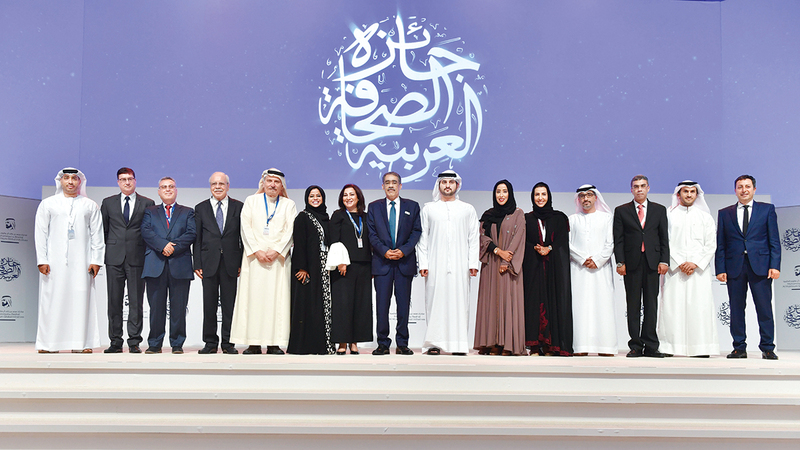
The Arab Journalism Award has traversed a remarkable journey, reflecting one of the most profound transformations in the history of the media profession. Launched in an era dominated by printed newspapers, the award has evolved alongside the transition of news to websites, platforms, and mobile screens. Today, algorithms play a pivotal role in content distribution, while artificial intelligence is becoming an increasingly vital partner in content creation.
From Print to Digital
At its inception, the award was set against a backdrop where print journalism reigned supreme, with the quality of work being gauged within an editorial environment centred around text, images, investigations, dialogues, and articles. However, the emergence of the internet reshaped this landscape, turning newsrooms into continuous news-making entities. News became real-time, accommodating images, videos, links, documents, and data directly into the fabric of journalistic storytelling.
As the digital landscape expanded, so did the definition of a competitive media product. Exceptional journalism can no longer be viewed in isolation from the transformations in storytelling methods and audience engagement. Hence, the Arab Journalism Award has kept pace with the profession’s evolution from a single-medium output to dynamic content seamlessly shifting among text, images, sound, and video.
A New Language for the Award
The transformation did not stop with the transition to online journalism; the smartphone revolutionised audience engagement with content. News that readers previously awaited is now delivered through apps, notifications, and social networks. The competition has shifted from the front page to smaller screens, allowing only seconds to capture attention. This shift has fundamentally altered the nature of media work. Stories are no longer mere texts; they encompass headlines, images, videos, data, and an integrated user experience.
For the Arab Journalism Award, this evolution suggests that creativity extends beyond superior writing or striking imagery. Instead, it hinges on a journalist’s ability to select the optimal format for storytelling while ensuring depth and accuracy are preserved.
The Influence of Algorithms on Access
While algorithms have transformed access points to content, the more significant shift lies in who controls this access. In traditional journalism, editors dictated what headlined the pages and the ordering of stories, whereas today, search and social media algorithms play a role in determining what content is displayed, when, and to whom. This has thrust media organisations into a race for views and interactions, wherein catchy headlines, short clips, and access optimisation techniques have become integral to content dissemination.
Here, the significance of professional awards comes to the fore in recalibrating the equation, as the most widely shared work is not automatically the most quality-driven. Millions of views do not inherently validate the authenticity or precision of journalistic material. Thus, the Arab Journalism Award plays a crucial role in distinguishing between virality and excellence, and between content rewarded by algorithms and work worthy of recognition for its journalistic value.
The Expanding Landscape of Competition
With the ascendance of video, podcasts, and visual content, the media product is no longer confined to a single format. A story can now be manifested as a written news piece, short video, infographic, podcast, or interactive report. The Arab Journalism Award has embraced this diversification, illustrating the shift from single-format products to a media environment characterised by multiple shapes and platforms.
The definition of a journalist is also evolving, as skills once distinct—writing, photography, production, and data analysis—now converge. The ability to operate across various mediums is an increasingly vital aspect of modern journalism. Consequently, the award’s adaptation involves not just recognising new content forms, but also assessing the journalistic value inherent in those forms, as technological prowess alone does not constitute exceptional journalism.
The Audience as a Partner in Excellence
Simultaneously, the evolution of the award has paralleled a fundamental shift in audience nature. Readers have transitioned from passive consumers to active participants who comment, share, critique, correct, and disseminate information. Audiences can now cross-examine narratives and verify sources within minutes, but they are equally capable of spreading misinformation just as quickly. This underscores the enduring significance of elements pivotal to journalism from the outset: sources, accuracy, validation, and transparency.
For media awards, the audience’s impact becomes a more intricate metric. It is no longer sufficient to measure just the level of engagement; what matters now is the quality of the influence exerted by the work, the knowledge imparted, and how responsibly it adheres to its obligations towards the audience.
A New Test Ahead
As the internet revolutionised publishing, smartphones transformed consumption, and platforms altered distribution, artificial intelligence now presents the most complex challenge to the Arab Journalism Award. Smart tools are capable of transcribing interviews, summarising documents, translating texts, analysing data, suggesting headlines, and even aiding in content creation within seconds.
This evolution reshapes the questions posed to awards: evaluations may need to encompass not only the final product as perceived by judges but also the methods of production.
Authorial Integrity in Judging
Artificial intelligence thereby poses an unprecedented challenge to the concept of media authorship. Employing a tool for interview transcription does not equate to commissioning it for investigative writing. Analyzing thousands of records with AI assistance differs fundamentally from generating an image presented as documentation of a real event.
Such distinctions could become increasingly significant in future media evaluation systems, paving the way for criteria related to the disclosure of generative tool use, the extent of human contribution, and verification processes for outputs. Thus, the challenge for the Arab Journalism Award lies not in rejecting or merely rewarding AI, but in discerning the use that enhances journalism from that which diminishes its authenticity.
Authenticity versus Machine Capability
The greater AI’s ability to generate text, images, and videos, the more valuable authentic journalistic contributions become: interviews conducted, documents obtained, information revealed, scenes captured, databases built, and original questions leading to new insights. In this landscape, authenticity may emerge as one of the foremost criteria for media awards in the coming era. Outstanding work will not merely showcase adept technological use but will present journalistic contributions that machines cannot replicate by recycling existing materials.
Consequently, human skills must regain prominence: curiosity, editorial judgement, trust-building with sources, contextual understanding, contradiction identification, and ethical decision-making.
Intellectual Property Rights
Artificial intelligence places the Arab Journalism Award, like other professional awards, in a complex position concerning intellectual property rights. Journalism generates texts, images, videos, and data daily that carry creative and economic value, while AI systems depend on vast amounts of content for their development. Thus, safeguarding rights becomes inseparable from defining work meriting recognition; there is no value in technological innovation predicated on breaches of others’ creative rights.
Upholding Professional Standards
Having journeyed through various phases—from print journalism to digital platforms and algorithm-driven content—over the years, the Arab Journalism Award now faces a particularly critical juncture. The challenge is no longer merely absorbing new content forms but rather preserving the essence of media excellence in an age when machines can write, design, analyse, simulate, and produce.
In this context, the award positions itself not just to keep up with technological advancements, but to establish criteria that differentiate rapidly produced content from authentic, investigative journalism, thus distinguishing between virality and impact, and between the professional use of AI versus reliance on it as a substitute for journalistic integrity.