
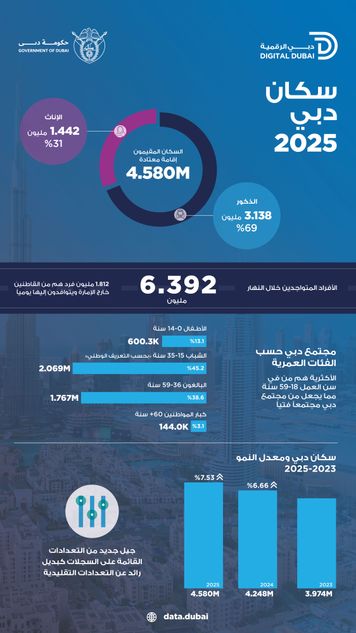
Dubai is set to witness significant demographic growth, with its population projected to reach 4.58 million by the end of 2025. This marks an impressive growth rate of 7.5%, influenced by advanced methodologies incorporating real-time data collection and artificial intelligence, as announced following the endorsement of the real-time population counting project by His Highness Sheikh Hamdan bin Mohammed bin Rashid Al Maktoum, Crown Prince of Dubai.
Real-Time Population Project Aims for Accurate Data
According to the Dubai Digital Authority, the initiative is not merely a statistical exercise; it represents a strategic tool aimed at enhancing understanding of demographic dynamics. Hamad Obaid Al Mansoori, Director General of Dubai Digital, highlighted that the project embodies Dubai’s vision of using advanced technologies to create an interconnected digital ecosystem reliant on accurate, real-time data. This will enable government entities to develop more precise policies and proactive services.
Economic Growth Drives Population Increase
The anticipated population increase reflects the broader economic vitality of Dubai. Younis Al Nasser, CEO of Dubai Statistics, noted that the population growth mirrors the dynamic economic landscape, reinforced by a real GDP growth rate of 5.4% in 2025. Dubai expects to welcome 19.6 million international tourists this year, representing a 5% increase from 2024. Such trends demonstrate the expanding job market and rising demand for services, enhancing overall quality of life.
Dynamic City: Daytime Population Peaks
Dubai sees a significant surge in its daytime population, which can peak at approximately 6.39 million when considering temporary residents for work and tourism. This figure combines the city’s resident population with over 1.81 million individuals present for various purposes, including students and shoppers. This influx underscores Dubai’s appeal as a thriving economic hub.
Modernising Population Count Methodologies
The shift to real-time census technologies marks a substantial advancement from traditional metrics. The Dubai Statistics Authority has implemented this innovative approach, aligning with international best practices and leveraging vast governmental datasets. This enables continuous, accurate population tracking, enhancing strategic planning capabilities across sectors.
Collaboration for Combating Growth Challenges
The initiative exemplifies exceptional cooperation among several governmental agencies—including the Dubai General Directorate of Residency and Foreigners Affairs and the Roads and Transport Authority—to achieve the project’s milestones. Emphasising the importance of data sharing, Al Mansoori stated that this collaborative effort strengthens Dubai’s position as a leader in smart governance.
A Shift from Historical Counting to Contemporary Insights
Dubai’s history is marked by rapid population shifts tied closely to economic transformations. From a mere 12,000 residents in 1881, the city’s demographic landscape has evolved profoundly. The current projected growth rate of 7.5% is among the highest in its history, reminding observers of significant growth phases, such as the 8.2% increase noted in the 1980 census.
Embracing Future with Real-Time Insights
The “Now Population” project represents a pioneering leap forward, integrating administrative records with intelligence analytics to provide real-time demographic insights. By applying modern analytical techniques such as machine learning, the initiative seeks to anticipate demographic shifts and optimise urban planning to better meet the needs of the burgeoning population.
As Dubai continues to innovate and adapt, the importance of reliable, real-time data becomes ever more critical in facilitating informed decision-making, enhancing public services, and ultimately ensuring a balanced, prosperous future for all of its citizens and visitors.