
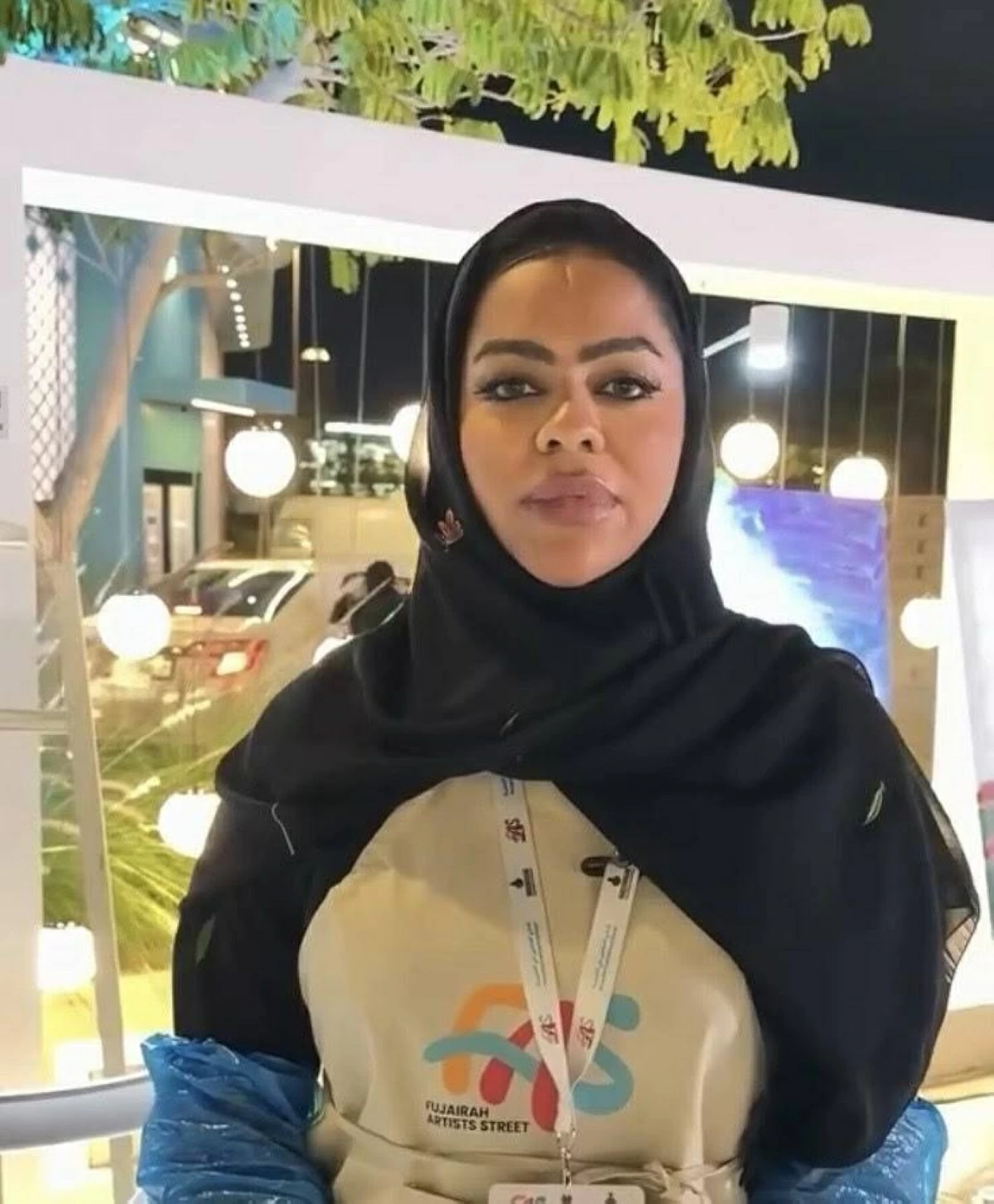
Emirati and Gulf women artists have long brought a distinctive perspective to visual art, drawing together the image of womanhood, the place that sustains it, and the heritage that gives it meaning. In this layered field, social customs, traditions and collective memory do not sit on the margins of the canvas; they become part of its emotional and intellectual centre. The work of Fatima Ali fits squarely within this artistic current, weaving nostalgia, identity and belonging into paintings that invite close reflection.
Ali has built a body of work focused on women, heritage and place, presenting carefully composed visual narratives that have been shown in exhibitions inside the UAE and abroad. Her handling of colour and idea gives her paintings a particular warmth, one that carries a sense of longing without losing the clarity of the concept. The result is an artistic atmosphere that feels intimate yet thought-provoking, drawing the viewer into a moment of contemplation. Her academic training at the Fujairah Fine Arts Academy also helped refine her talent and opened her to wider artistic experiences and international movements.
Visual echo
Among Ali’s notable works is a painting that explores the triangle of woman, heritage and place through a distinctly local Gulf lens. The scene features old mud-brick houses reminiscent of the fareej and traditional homes once common across the UAE. To reinforce the setting’s authenticity, the composition also includes barajeel, or wind towers, a form of architecture used to ventilate and cool homes. Straight lines and small square windows emphasise the realism of the old building style and its practical response to the country’s hot climate.
Two women appear in the painting, both turned towards the houses so that the viewer sees only their backs. They are dressed in traditional Emirati clothing, the abaya and shayla. Their presence gives the work a living pulse and suggests the woman’s everyday role within these older neighbourhoods. Above, the sky is rendered in clear blue, while the ground is coloured yellow, evoking sand and the desert environment.
The painting carries a range of meanings, especially through the choice to position the women in this way as they face the old houses. This visual decision speaks quietly but powerfully, carrying symbolic and psychological depth. The scene suggests connection, belonging and feelings of longing and nostalgia. When a figure looks towards something while turning away from the viewer, the eye of the observer is guided in the same direction; in this case, that gesture draws the audience into the houses themselves, urging them to uncover their stories and secrets, and to reflect on the place rather than on the women’s faces.
Presence
In this work, the female presence is shaped through her relationship with heritage and the memory of place. The woman is closely tied to the home, which stands as her kingdom and her world, holding her thoughts, memories and social relationships. Her gaze towards the houses therefore suggests a role as guardian of calm and custodian of place, while also evoking a return to the past and a meditation on what has been left behind. Their stillness and silence suggest reverence for the place’s dignity, as though they are reclaiming old memories and recalling a time long gone within these homes and within the wider setting.
The scene also reflects a contemporary desire to look back towards roots and authenticity, and to hold fast to ancestral heritage and identity. It can be read as a form of protection against a modern age that threatens older social bonds and erases the memory of customs and traditions once deeply rooted in daily life. At the same time, the two women create an added layer of ambiguity, prompting the viewer to interpret, imagine and build a personal narrative from the emotional force of the image. By withholding facial features, the artist turns the woman from a specific individual into a broader symbol: the mother, the sister, the aunt, the paternal aunt, and the grandmother.

اللوحة