
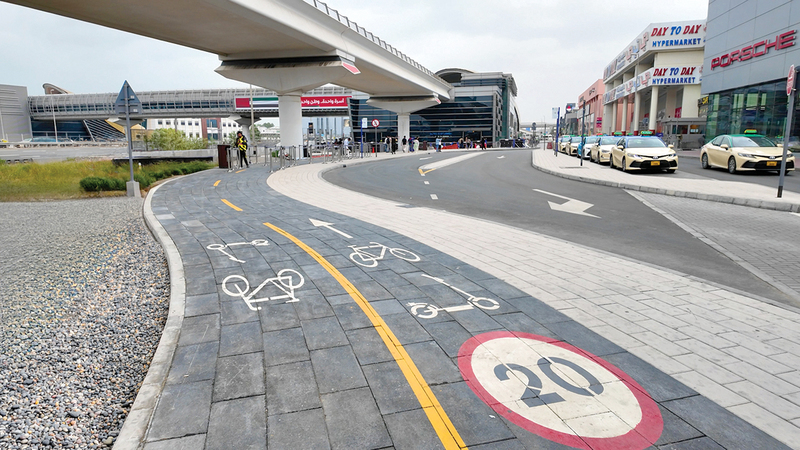
Dubai’s Roads and Transport Authority has approved a five-year plan to expand its flexible mobility system through 2030, in a move designed to improve links between residential neighbourhoods and mass transit stations, build an integrated urban mobility network, support first- and last-mile journeys, and make travel for residents and visitors easier and safer.
Targeted upgrades across residential areas and transit stations
The plan includes infrastructure improvements in 25 residential areas, along with enhancements around mass transit stations at 63 locations.
The areas selected for implementation are based on the availability of mass transit, a high proportion of users, population density, land-use mix — whether residential, commercial, or residential/commercial — the current state of pedestrian and cycling infrastructure in the area, as well as future development plans under the Dubai Urban Plan 2040.
Strengthening Dubai’s integrated transport network
Mattar Al Tayer, Director-General, Chairman of the Board of Executive Directors of the Authority, said the plan forms part of the authority’s efforts to consolidate Dubai’s position as the best city in the world to live in and to develop an integrated and sustainable transport system that keeps pace with urban and population growth and enhances quality of life.
He said: «التنقل المرن أصبح أحد الممكنات الاستراتيجية لمنظومة التنقل المستقبلية، وعنصراً رئيساً في تعزيز تكامل وسائل النقل، وترسيخ مكانة النقل الجماعي، باعتباره الخيار الأول للتنقل، ودعم مستهدفات دبي، في الاستدامة وجودة الحياة، بما ينسجم مع خطة دبي الحضرية 2040».
He added: «أصبح المعيار الرئيس للنجاح يقاس بقدرة منظومة التنقل على توفير رحلة متكاملة وآمنة وسلسة تتيح للسكان والزوّار الانتقال بين مختلف وسائل النقل بسهولة وكفاءة وأمان»، مؤكداً أن «دبي نجحت في بناء واحدة من أكثر منظومات النقل الجماعي تطوراً على مستوى العالم، عبر تعزيز التكامل بين شبكة الطرق ومختلف وسائل النقل الجماعي ووسائل التنقل الفردية، وارتفع عدد رحلات المشاة من 326 مليون رحلة عام 2024، إلى 342 مليون رحلة عام 2025، بنسبة نمو بلغت 5%، وارتفع مستوى نضج البنية التحتية حول محطات النقل الجماعي إلى 87%، وارتفعت نسبة رضا المشاة في إمارة دبي إلى 89%، كما ارتفع عدد رحلات الدرّاجات الهوائية من 46.6 مليون رحلة عام 2024، إلى 57.3 مليون رحلة عام 2025، بنسبة زيادة بلغت 23%، وارتفع عدد رحلات السكوتر الكهربائي من 32.3 مليون رحلة عام 2024، إلى 39.6 مليون رحلة عام 2025، بنسبة نمو بلغت نحو 23%».
Focus on first- and last-mile connectivity
He also said the authority views the development of the urban environment around mass transit stations as a strategic investment that maximises the value of transport infrastructure and increases the attractiveness of using public transport.
He noted that the next phase will focus on completing the final link in the customer journey by improving first- and last-mile requirements and connecting residential neighbourhoods, business centres and vital facilities to metro, bus and other mass transit stations, so that each station becomes an integrated mobility hub offering residents and visitors a more flexible, efficient and sustainable service.
Five-year rollout through 2030
The five-year flexible mobility plan includes developing flexible mobility elements in 25 residential areas, bringing the total number of targeted residential areas to 34 by 2030. Work is currently under way in five areas: Dubai Marina, Al Muraqqabat, Naif, Al Rigga and Al Muraqqabat.
The plan also includes improving infrastructure around 63 mass transit stations to make access to metro and bus stations easier and to enhance the efficiency of the integrated mobility system. It supports Dubai’s move towards greater reliance on public transport and sustainable mobility by implementing an integrated set of people-friendly infrastructure elements that strengthen links between development projects, destinations and mass transit stations through individual modes of travel such as walking, cycling and e-scooters.
This will be achieved by improving first- and last-mile requirements through a range of integrated transport elements and facilities, including cycling lanes, pedestrian crossings and rest areas, shaded routes and spaces, landscaping, parking, pick-up and drop-off points, and bicycle parking.
• 57.3 million cycling journeys and 39.6 million e-scooter trips were recorded in 2025, an increase of 23% compared with 2024.