
The Guardianship of the Jurist Has Infiltrated Muslim Communities with Religious Discourse… Betrayal Cannot Be Attributed to a Religion or Sect
In the ongoing discussions about national security, the issue of “The Guardianship of the Jurist” emerges as a crucial topic. Some extremist groups have infiltrated Muslim communities with covert religious rhetoric, raising questions about how to understand betrayal in religious and social contexts. In this context, Dr. Ali Rashid Al Nuaimi, Chairman of the Defense, Interior, and Foreign Affairs Committee in the Federal National Council, emphasized that “betrayal cannot be attributed to a religion or sect; rather, it is an individual responsibility that requires accountability.”
Countering Terrorist Activities
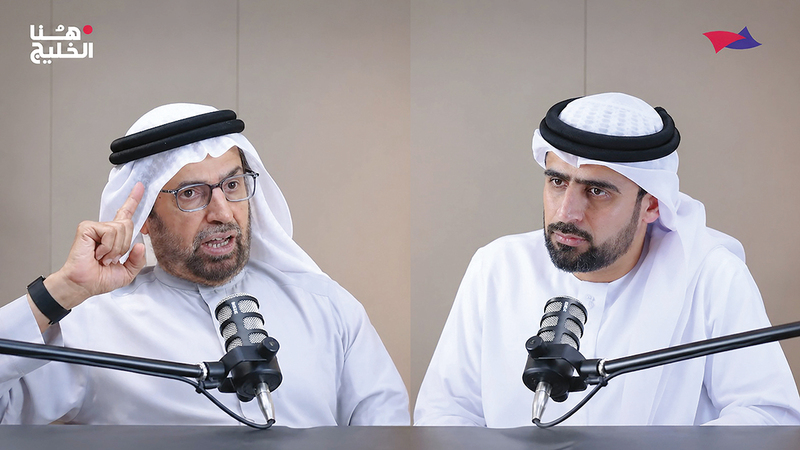
Al Nuaimi spoke on the “Here Gulf” podcast, noting that the arrest of members of a terrorist organization linked to the Iranian “Guardianship of the Jurist” system serves as a revelation of what is happening in society. He pointed out that betrayal comes from individuals, not from groups or sects as a whole. He stated, “When a member of a tribe exhibits unacceptable behavior, the tribe disowns him.”
Al Nuaimi clarified that the betrayal committed by some who hold Emirati citizenship or residency in the UAE is a national betrayal that cannot be considered related to a sect or denomination. “Some have chosen to be agents for other countries, jeopardizing the security of the nation.”
Community Relations and the Role of Family
Al Nuaimi called on families and society to take responsibility, emphasizing the importance of positive interaction with security institutions. He said, “We must send a clear message in which we reject the traitor. There is no place for the traitor among us.” He stressed the need to address any ideological deviation or suspicious behavior from individuals before it escalates into national betrayal.
He added that there are examples of families that have responded positively when faced with negative changes in their children, cooperating with relevant authorities to mitigate these changes. “Every family bears part of its responsibility in protecting the nation by monitoring their children.”
The Position of Sects and Denominations
Al Nuaimi explained that religious or sectarian affiliations should not be used as a justification for betrayal, noting that terrorist cells have been discovered in the Gulf states for a long time but have only begun to act recently. He rejected linking these terrorist acts to a sect or denomination, affirming that betrayal targets the nation as a whole.
“We must be cautious, as the Guardianship of the Jurist system seeks to infiltrate Muslim communities with religious discourse that can be interpreted and exploited negatively.” Al Nuaimi warned that sectarian classification could contribute to the fragmentation of society and undermine its bonds.
Dangerous Messages and the Risks of Division
Speaking about potential dangers, Al Nuaimi warned against the risks of linking terrorist groups to sects, stating, “The greatest service we can provide to the enemies of our nation is to attribute these cells to a sect.” He pointed out that terrorist actions in the region do not differentiate between sects, as extremist groups collaborate to achieve their goals.
In this context, Al Nuaimi highlighted the importance of enhancing security and stability, calling for the addressing of deviant behaviors before they escalate into greater threats. “We need a positive model that promotes values of nationalism and coexistence.”
In conclusion, Al Nuaimi stressed that anyone who disrupts security and stability under any pretext will have no place among the people of the nation, calling for a firm collective stance to confront such threats.