
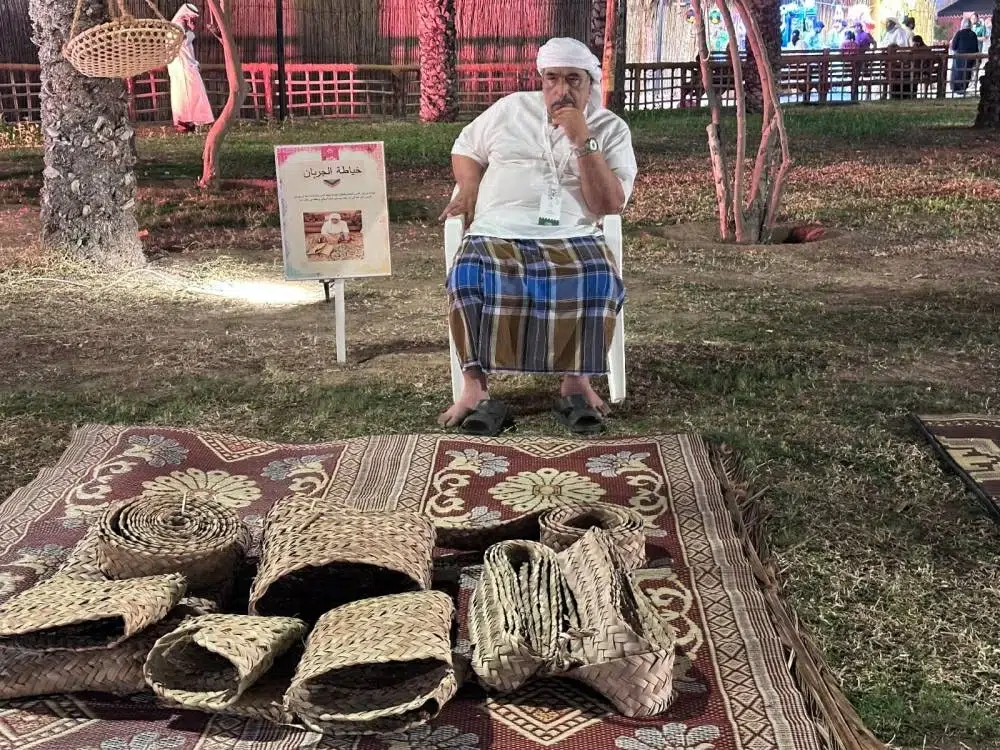
The Craft of “Gurab” and Palm Products at Sharjah Heritage Days
The craft of “gurab” and palm products are highlights of Sharjah Heritage Days, showcasing the vibrancy of Emirati culture and its ancient traditions. These events attract visitors eager to explore exquisite handicrafts that reflect the deep connection between the Emirati community and natural resources. At this cultural gathering, a diverse array of palm-based products is presented, reflecting a rich agricultural heritage and inspiring many to experience these unique traditional crafts.
Demonstration of the “Gurab” Crafting Process
The agricultural environment pavilion at Sharjah Heritage Days witnessed notable attendance, where Abdullah Ali Ahmed Al Shehhi presented a live demonstration of the “gurab” crafting process using palm fronds. Al Shehhi explained the method of collecting green fronds and drying them in the sun until they turn yellow, before women weave and sew them to create this traditional container used for storing dates. He emphasized that the craft of gurab is not just a trade but an integral part of Emirati cultural heritage.
Dates: From Gurab to Mabsa
Al Shehhi noted that after being stored in the gurab, dates are transferred to the “mabsa,” where they are mixed with date syrup, fennel seeds, ginger, black seed, and lemon leaves. The mixture is left for two to three months before being transported, historically on the backs of donkeys, reflecting the details of agricultural life in the past. He also showcased various types of dates grown, such as Barhi and Khass Habashi, and explained the stages of date maturation from the palm tree to the finished product.
Products from Palm and Traditional Agricultural Tools
Also participating in the pavilion was Mariam Ali Rashid, who has been crafting bags from palm fronds for over ten years, presenting examples of her handmade work. Traditional agricultural tools used in fields and tree trimming were displayed. Visitors were introduced to various agricultural products cultivated, such as tomatoes and eggplants, which are grown by farmer Yusuf Rashid Al Jumaili, who inherited the profession from his ancestors. In addition to showcasing traditional pickles like lemon and chili paste, the old irrigation system “Al Yazirah” was introduced, along with its components, including the channel, well, basin, and parts made from palm fronds.
Continuing Traditional Agricultural Practices
The agricultural environment pavilion at Sharjah Heritage Days provides a vivid picture of the Emirati connection to the land and palm trees, affirming the continued presence of traditional agricultural practices in community memory. These events serve as an opportunity to renew collective memory and enhance pride in national heritage, as the craft of “gurab” and palm products contribute to preserving these rich traditions and promoting the environmental and cultural aspects of the UAE.