
In a remarkable exposé, the BBC has gained access to secret detention centers previously run by the UAE in Yemen, shedding light on often unreported human rights abuses amidst the ongoing Yemeni civil war. This investigation confirms longstanding allegations of a clandestine network of prisons managed by Emirati forces and their allies, drawing attention to the plight of detainees who have faced severe mistreatment. The coverage aims to unravel the darker aspects of the conflict while focusing on the hidden realities of war in Yemen.
The BBC obtained permission to enter detention centers located in former Emirati military bases in Yemen, confirming longstanding allegations of a secret network of prisons operated by the UAE and its allied forces in the ongoing Yemeni civil war.
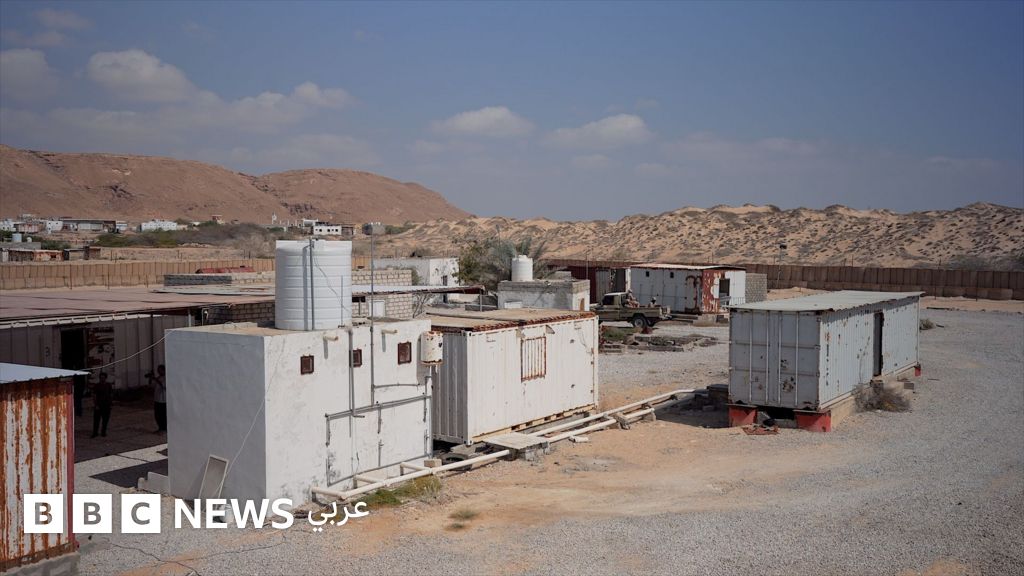
A former detainee spoke to the BBC about experiencing “beating and sexual assault” at one of these sites. The BBC observed cells in two military bases in the south of the country, including shipping containers marked with names that appeared to belong to detainees, along with dates carved into their sides.
The UAE did not respond to our request for comment, but it has previously denied similar allegations. Until recently, the Yemeni government, supported by Saudi Arabia, was allied with the UAE against the Houthis, who control northwest Yemen. However, the Saudi-Emirati coalition has collapsed, and Emirati forces withdrew from Yemen at the beginning of January, allowing Yemeni government forces and their allied groups to reclaim large areas of the south from UAE-backed southern separatists.
Among the reclaimed areas is Al Mukalla Airport, where we arrived on a Saudi military plane, then set out to visit the former Emirati military bases in the oil-exporting region of Al-Dhaba. It had been nearly impossible for international journalists to obtain visas to cover events in Yemen in recent years, but the Yemeni government, backed by Saudi Arabia, invited journalists to visit the sites, accompanied by Yemen’s Minister of Information, Muammar Al-Eryani.
Detention and Torture Facilities
What we witnessed matched the accounts we have independently gathered, both in our previous reports and in interviews conducted in Yemen, separate from the government-organized visit. At one site, there were about ten shipping containers, their inner walls painted black and poorly ventilated. The messages written on the walls seemed to indicate the dates detainees were brought in or to keep track of their days in detention. Some dates dated back to December 2025.
In another military base, the BBC entered eight cells made of brick and cement, including small cells measuring just one meter by one meter and two meters high, which Al-Eryani stated were used for solitary confinement. Over the years, human rights organizations have documented testimonies from former detainees describing these facilities.
Yemeni lawyer Huda Al-Sarari is collecting these accounts. The BBC independently attended a meeting organized by Al-Sarari, attended by about 70 people who claimed to have been detained in Al Mukalla, along with families of 30 others who said their relatives are still in custody. Several former detainees told us that about 60 men were placed in a single shipping container at one time.
Torture Cases and Repeated Testimonies
One former prisoner told the BBC: “There was no place to lie down. If someone fell, the others had to support him.” The former prisoner recounted that he was beaten for three days after his arrest, as investigators pressured him to confess to being affiliated with Al-Qaeda. He added: “They told me that if I didn’t confess, they would send me to Guantanamo,” referring to the U.S. military detention center in Guantanamo Bay, Cuba.
He claimed he was held there for a year and a half and was subjected to daily beatings and abuse. He confirmed that among his captors were Emirati soldiers and Yemeni fighters: “We experienced all kinds of torture, and the worst torture occurred during interrogation. They even sexually assaulted us and said they would bring a doctor.”
Families’ Appeals and Renewed Testimonies
A woman claimed that her son was arrested as a teenager and “has been detained for nine years.” The mother said: “My son was an athlete. He had just returned from a competition abroad. That day, he went to the gym and never returned.” She added: “I didn’t hear from him for seven months.” Then they allowed me to see him for ten minutes, and “I clearly saw the signs of torture.”
Testimonies and allegations have increasingly accumulated, documented by human rights organizations and media outlets, including the BBC. Yemen’s Minister of Information, Muammar Al-Eryani, expressed shock regarding these violations, noting that victims have spoken about the existence of these prisons “but we did not believe it.”
As Saudi-UAE relations continue to deteriorate, Yemenis face a painful reality amid changing political circumstances in their country. In the midst of all this, the conditions of the detainees remain unclear, as Minister Al-Eryani noted that there are former detainees who are still in the same situation.