
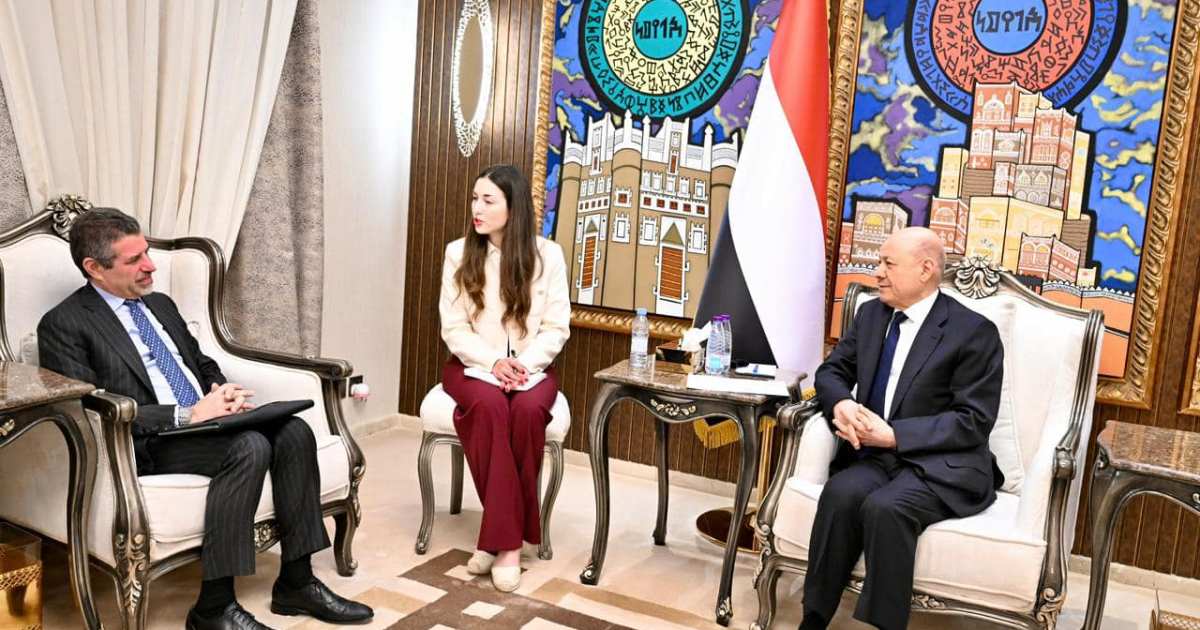
Alimi Meets U.S. Ambassador as the STC Rejects Withdrawal from Hadhramaut
In a significant development on the Yemeni scene, Rashad Alimi, the head of the Yemeni Presidential Leadership Council, met with Stephen Fagin, the U.S. Ambassador to Yemen, to discuss the tense security situation in Hadhramaut. During the meeting, Alimi issued a warning about the repercussions of unilateral military movements by the Southern Transitional Council (STC), which insists on maintaining its positions in Hadhramaut amid increasing calls for withdrawal. This situation highlights the challenges faced by the Yemeni government in regaining control of vital areas.
Alimi’s Warnings About Military Escalation
During his meeting with the U.S. ambassador, Alimi noted that “unilateral military movements in Hadhramaut and Mahra represent a serious threat to the unity of military and security decision-making.” He added that these actions undermine the legal standing of the state and weaken its ability to combat terrorism, which is a “sovereign decision” handled by the relevant institutions. Alimi called on the international community to take a firm stance supporting Yemeni decisions on essential operations to confront terrorism, expressing the need to translate these decisions into actions within the Security Council.
STC’s Rejection of Withdrawal
On the other hand, the Southern Transitional Council reiterated its refusal to comply with Alimi’s decisions. The military spokesperson for the transitional forces, Mohamed Al-Naqeeb, confirmed that “our forces are ready and steadfast to face any threats and protect citizens.” He indicated that the STC is establishing its presence in Hadhramaut and Mahra to deter any threats to security. Despite local and international pressures, the transitional forces remain in their positions with no signs of actual withdrawals.
Regional Tensions and Their Implications
As tensions escalate, Saudi Arabia has asserted that its national security is a “red line,” accusing the UAE of pushing the STC to carry out operations that contradict the kingdom’s interests in Hadhramaut and Mahra. However, the UAE Foreign Ministry has denied these accusations, emphasizing its commitment to Saudi security. These statements come at a sensitive time, as the transitional forces in eastern Yemen continue to defy international calls for withdrawal.
As events unfold, concerns are rising that any new disruption in the eastern regions could hinder oil exports and exacerbate economic tensions, further increasing the suffering of the Yemeni people. The challenge facing Alimi and his diplomatic meetings with the U.S. ambassador is crucial for finding a solution to the current crisis, yet they have not yet succeeded in persuading the STC to withdraw from Hadhramaut.