
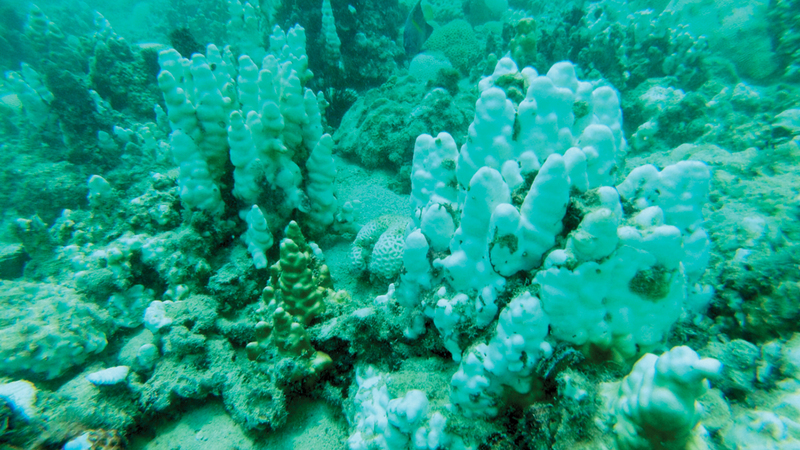
Recent research from the Mubadala Center for Climate and Environmental Studies in the Gulf region at New York University Abu Dhabi has shed light on the rising temperatures in the Arabian Gulf. This study outlines the reasons behind the significant increase in heat during the summer months, which threatens marine ecosystems, coral reefs, and fish populations. Understanding these causes allows scientists and local authorities to anticipate environmental conditions two to three months in advance, enabling timely preventive measures to protect marine life in the area.
The Gulf’s Extreme Heat
The Arabian Gulf is the hottest sea in the world during the summer. While marine species have adapted to high temperatures, extreme heat can lead to coral bleaching and severe disturbances within marine ecosystems. Until recently, the underlying causes of these temperature spikes were not well understood. The study reveals that marine heatwaves occur due to changes in two major wind patterns, particularly a weakening of the northwestern winds and an intensification of the Indian summer monsoon winds.
The Role of Atmospheric Changes
This shift results in increased humidity in the atmosphere above Gulf waters, trapping heat at the sea surface. The likelihood of these changes intensifies during a La Niña phenomenon, which occurs when tropical Pacific Ocean waters are cooler than normal, coinciding with a weakened Atlantic Oscillation. This combination often leads to record-high temperatures in the Gulf. Research lead Zohair Al-Ashqar notes, “The study reveals an unusual phenomenon; while marine heatwaves in other oceans occur under clear skies and strong sunlight, the Gulf reaches peak temperatures in humid and foggy conditions.”
Impacts and Solutions
The study emphasizes the potential for developing early warning systems for marine heatwaves in the Arabian Gulf. Such systems could be crucial in safeguarding biodiversity, fish stocks, and coastal environments amid increasingly severe weather patterns driven by climate change. Understanding the dynamics of rising temperatures in the Gulf is essential for formulating effective conservation strategies for the area’s unique marine life.
As marine heatwaves become more frequent, proactive measures will play a vital role in protecting this delicate ecosystem, ensuring that the unique biodiversity of the Gulf continues to thrive in the face of climate challenges.