
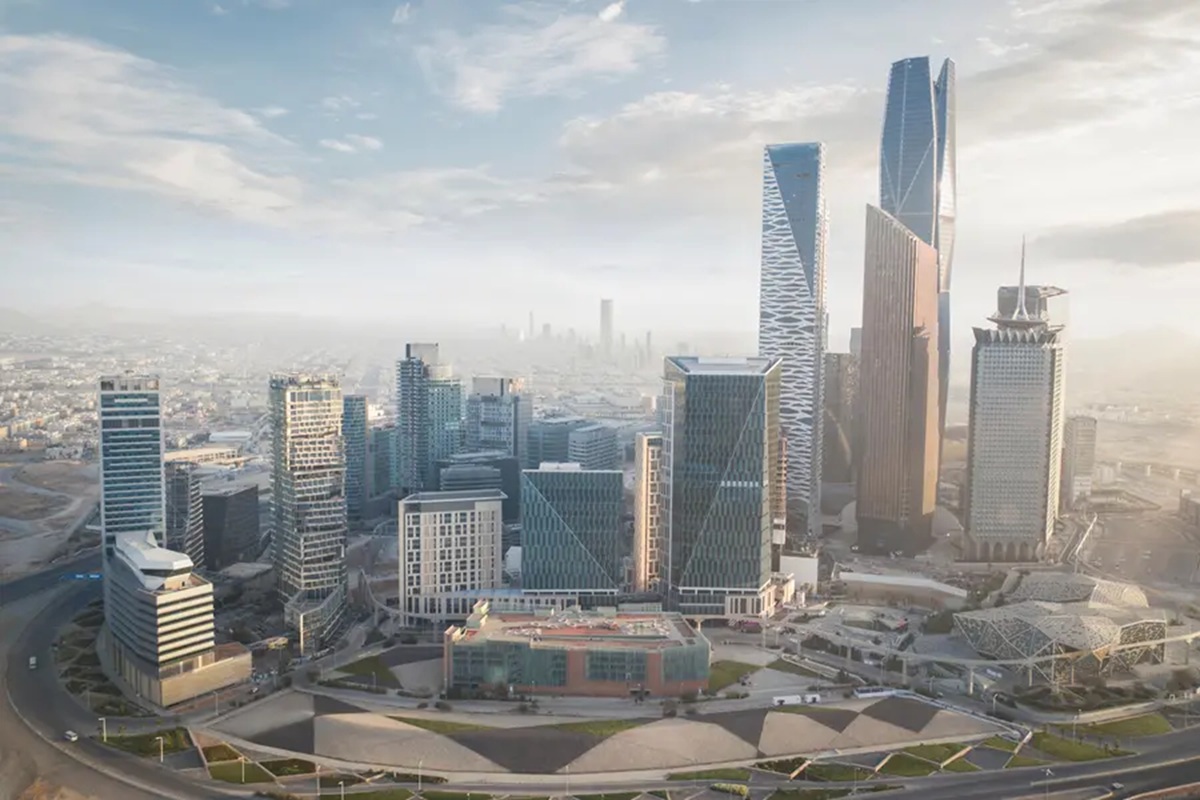
Saudi Arabia‘s real estate market is experiencing significant growth, driven by a series of transformative reforms, ambitious giga projects, and a staggering $1.55 trillion investment pipeline. As the Kingdom aims to diversify its economy away from oil dependency, the surge in Saudi real estate has created dynamic opportunities across various sectors, from residential to industrial. This article delves into the factors propelling the Saudi real estate boom, highlighting major reforms and an increasingly robust infrastructure that enhances investment potential.
Economic Resilience and Demand Growth
According to CBRE, the Saudi real estate sector continues to demonstrate “resilience and rapid evolution” as the Kingdom’s economic diversification accelerates. In the second quarter of 2025, Saudi Arabia’s real GDP rose by 3.9 percent year-on-year, prompting an upward revision of the annual growth forecast to 4.2 percent. Notably, the non-oil sector now makes up 56 percent of the total GDP, generating sustained demand across residential, office, retail, hospitality, and industrial markets. This robust performance is further supported by an active pipeline of government reforms and major giga projects.
Key Reforms Shaping the Future
A trio of significant policy interventions is set to influence the trajectory of Saudi real estate in the upcoming quarters:
- New ownership law for non-Saudis: Set to take effect in January 2026, this law encourages foreign investment, aligning with the Kingdom’s goal of attracting $100 billion in annual foreign direct investment (FDI) by 2030.
- Expanded white land tax (WLT): Launched in April 2025 and revised in August, the updated WLT introduces a tiered rate structure aimed at more than 411 million square meters of undeveloped land, stimulating construction and reducing speculation.
- Five-year rent freeze in Riyadh: Instituted in September, this initiative seeks to stabilize rental costs for residents and businesses, further solidifying Riyadh’s status as a global business hub.
Saudi Arabia’s development pipeline currently stands at an impressive $440 billion in committed projects, alongside another $1.55 trillion in potential long-term investments, prominently featuring giga developments like NEOM and Qiddiya City. Key events such as Expo 2030 Riyadh and a comprehensive municipal restructuring initiative are driving significant urban transformations throughout the Kingdom.
Office Market: Exceptional Performance
The office real estate sector is notably flourishing, marked by Riyadh’s growing stature as a regional corporate hub. Grade A office rents surged by 15 percent year-on-year, with occupancy rates hovering near 98 percent, highlighting a near-zero vacancy rate for prime assets. The Regional Headquarters (RHQ) Programme has been a catalyst for increasing demand, resulting in 34 new licenses issued in Q2, with the total now reaching 634.
At the heart of this expansion, the King Abdullah Financial District (KAFD) is undergoing a significant transformation, aiming to double its footprint and accommodate 40,000 daily visitors. Infrastructure enhancements, including the reactivation of its 3.6-kilometer monorail, support its vision of becoming a “10-minute city.” Outside of Riyadh, Jeddah maintains approximately 95 percent occupancy for Grade A offices, while Dammam stabilizes in the high 80s, signaling a consistent demand for quality office spaces.
Residential Market Sees Transaction Surge
On the residential front, transaction volumes have skyrocketed, recording a remarkable 17.9 percent increase quarter-on-quarter, translating into SR7.7 billion ($2.05 billion) worth of activity. In Riyadh, apartment prices rose by 6.3 percent year-on-year, with villa prices climbing 11.6 percent. These developments highlight the effectiveness of the government’s five-year rent freeze in promoting stability and maintaining investor confidence amidst rising costs.
Retail Sector Evolves with New Destinations
The retail landscape is also growing, bolstered by increased consumer spending and projected sales growth of 4.4 percent compound annual growth rate (CAGR) through 2027. Although rental growth has remained modest, market stability is evident. Noteworthy is the launch of a landmark partnership between Majid Al Futtaim and Diriyah Company to establish VOX Cinemas and multiple global brands in Diriyah Square, reflecting a shift toward mixed-use, pedestrian-friendly environments.
The retail development pipeline is bustling, with 800,000 square meters of new space expected, including 100,000 square meters by year’s end. Major projects like Westfield Riyadh, Bellevue Riyadh, and Avenues Mall are set to open between 2026 and 2027, positioning Northern Riyadh as the next prime retail corridor.
Hospitality Market Growth and Localisation
In the hospitality sector, a notable 10 percent increase in revenue per available room (RevPAR) was recorded in August, spurred by an 11 percent rise in occupancy rates. While Riyadh saw a modest 2.7 percent increase in its RevPAR, Jeddah faced a 7.3 percent decline due to competitive pricing adjustments. Localisation efforts are gaining momentum, with Adeera Hospitality, backed by the Public Investment Fund (PIF), launching three Saudi-born hotel brands—Alia, Sama, and Noor—to operate across Qiddiya City.
The surge in tourism is palpable, with 32 million visitors recorded during the summer season and total spending reaching SAR53.2 billion ($14.19 billion), reflecting a 15 percent increase year-on-year. This underscores the hospitality sector’s expanding contribution to the Kingdom’s non-oil economy.
Industrial Sector Thrives Amid Strong Growth
The industrial sector is experiencing impressive growth, marked by a 7.1 percent year-on-year rise in the Industrial Production Index, coupled with a 5.6 percent increase in manufacturing output. Logistic rents in Riyadh are on the rise, particularly in the Al Faisaliyah and Al Mashael districts, where rates reached SR299 ($80) per square meter per annum. Jeddah’s Asfan submarket stands out with the highest national rent, at SAR350 ($93) per square meter per annum.
This surge in the industrial sector is bolstered by $116 billion in construction-related investment, alongside a notable increase in industrial licensing and factory openings, highlighting the ongoing transformation of Saudi real estate.
A Market in Transformation
According to Matthew Green, Head of Research for MENA at CBRE, the Saudi real estate market is navigating through a vital transformation phase driven by sweeping regulatory reforms and sustained long-term investments. He stated, “Saudi Arabia’s real estate market is currently moving through a major transformation phase, amidst significant regulatory reforms and sustained strategic investments, creating a dynamic environment for investors, developers, and occupiers alike.”