
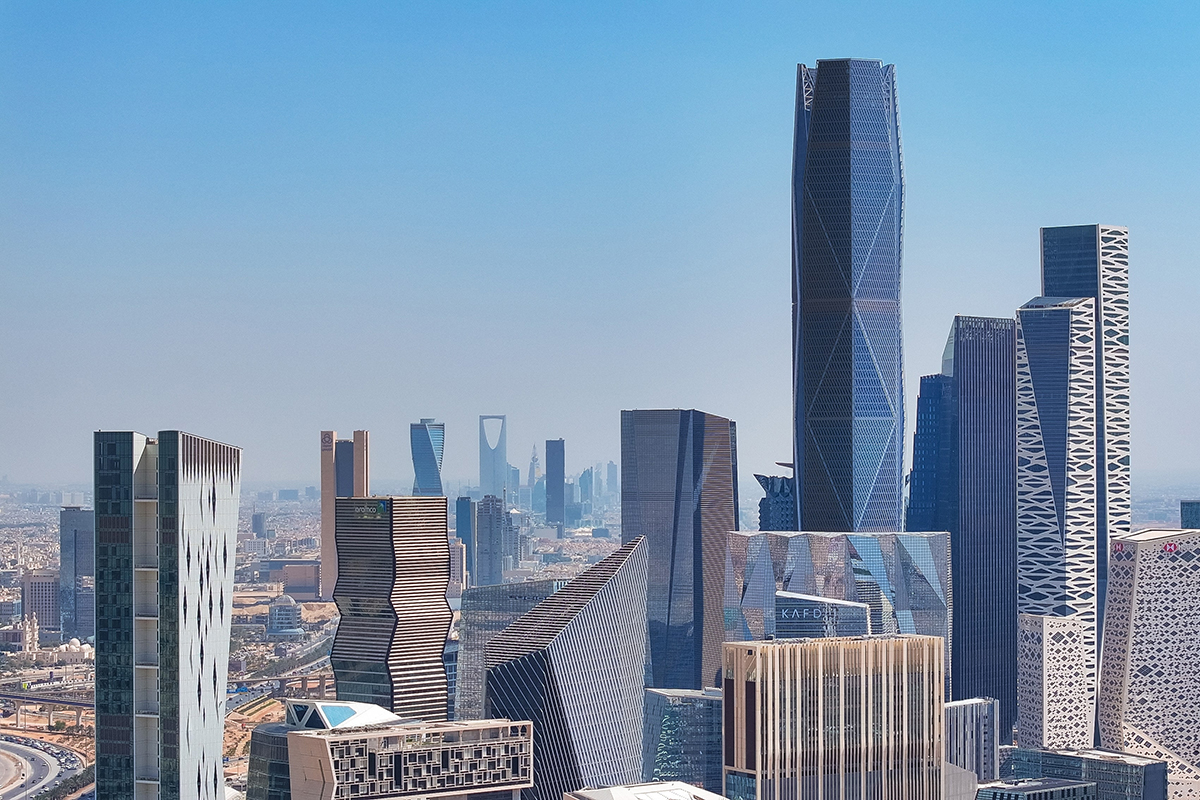
As Saudi Arabia prepares to implement significant foreign ownership reforms for the real estate sector in 2026, investors from across Asia are eagerly looking to capitalize on emerging opportunities. The new regulations promise to reshape the property landscape, attracting a wave of international buyers who are particularly drawn to the luxurious developments in major cities and the sacred sites of Makkah and Medina. This influx signals a pivotal shift in the Kingdom’s investment strategy, positioning it as an appealing destination for foreign investors.
Last month, the Saudi government approved the highly anticipated foreign ownership law for real estate investors, which is expected to take effect in January 2026.
The initial wave of international buyers is predominantly composed of affluent individuals and family offices with deep-rooted religious, cultural, or commercial connections to Saudi Arabia. These investors are particularly attracted to luxury developments in Riyadh and Jeddah, as well as the prospect of owning property within the holy cities of Makkah and Medina.
This surge in investment comes as Saudi Arabia implements ambitious reforms to facilitate foreign ownership of residential property for the first time, requiring a minimum investment of SAR 4 million ($1.07 million). In just 18 months, over 40,000 applications for Premium Residency permits have been received, with 8,074 permits issued in 2024 alone.
“Saudi Arabia is inspired by the Dubai and Abu Dhabi playbook. They are combining major policy reforms with massive real estate development,” said Kashif Ansari, co-founder and Group CEO of property portal Juwai IQI, to Arabian Business.
“With new laws allowing foreign ownership, a pipeline of ultra-modern projects like NEOM and The Red Sea, and a significant pricing advantage, we think the Kingdom will emerge alongside its neighbors as a major destination for real estate investment.”
The Kingdom expanded its Premium Residency program from two to seven categories last year, including options for exceptional competence, talent, business investors, entrepreneurs, and real estate owners. The “exceptional competence” category received the largest share of permits, totaling 5,578, followed by 348 permits granted for “talent.”
Regional Ambitions
Dubai’s success as a leading destination for foreign property investment has generated $121 billion in foreign-owned property. Meanwhile, Abu Dhabi attracts $1 billion in new investment every six months, serving as a model that Saudi Arabia aspires to replicate by leveraging its larger economy and more abundant land.
“There has been a visible uptick in international inquiries, especially from buyers in Greater China, Southeast Asia, and the broader Islamic world,” Ansari observed, highlighting a strong demand from Muslim buyers looking for properties in Makkah and Medina.
The expected foreign residential investment for this year stands at $1.22 billion, nearly double the SAR 2.5 billion ($670 million) in net commercial real estate foreign direct investment recorded in 2023, according to Ansari. International buyers are primarily focusing on Riyadh and Jeddah, as well as flagship developments like Diriyah Gate and Laheq Island.
Property prices in major cities remain highly competitive compared to regional counterparts, with projects in Riyadh priced at around $123 per square foot and Jeddah at approximately $100 per square foot. The most active sectors are the luxury and upper mid-market segments, appealing directly to individual buyers.
The Premium Residency program offers numerous advantages to foreign investors, including permanent or time-limited residency for families, visa-free travel, exemption from expatriate levies, and the ability to work in the private sector without sponsorship. Notably, residents can secure usufruct rights to properties in the holy cities of Makkah and Medina for up to 99 years.
Challenges Remain
However, challenges persist in fully opening the market to foreign investors.
“Buyers still seek clarity on mortgage availability, registration procedures, repatriation of funds, financing, legal protections, and new paths to residency,” Ansari noted, adding that Saudi Arabia may need to introduce more accessible visa options to stimulate broader foreign demand beyond ultra-high-net-worth individuals.
The property market opening aligns with Saudi Arabia’s Vision 2030 economic diversification strategy, which aims to elevate homeownership rates among citizens to 70 percent while simultaneously attracting foreign investment. According to Ansari, these two objectives can coexist effectively.
“By concentrating on foreign ownership in designated zones and allowing it to gradually increase, the government can protect affordability for locals in various neighborhoods,” he explained.
The early wave of foreign buyers consists predominantly of high-net-worth individuals and family offices connected to Saudi Arabia through religious, cultural, or business ties. Many are keen to seize early access to a market poised for significant development, diversification opportunities, and premium lifestyle enhancements.
Looking forward, luxury residential and branded community developments are anticipated to offer the highest potential returns over the next five years. Mega-projects like NEOM, a futuristic city in the northwest, and The Red Sea development could yield substantial capital appreciation as these projects approach completion.
Nonetheless, investors face risks such as potential construction delays, policy implementation hurdles, and fluctuations in the global economy. “The Kingdom must maintain investor confidence with consistent rules and steady progress toward opening for investment,” warned Ansari.
Saudi Arabia’s strategy includes utilizing major international events to showcase its economic potential. The Kingdom’s significant investment in sports is projected to contribute 10 percent of GDP by 2030 and is expected to attract sports tourists who may eventually become property buyers.
Rather than competing directly with the UAE, Saudi Arabia is positioning itself as a complementary force in the regional market. “Each Gulf market has its unique appeal. Together, they create a critical mass of opportunity, confidence, and infrastructure that makes the region more attractive to global investors,” Ansari concluded.
With these reforms, the Kingdom aims to enhance its standing as a safe and appealing choice among G20 nations, targeting three Saudi cities to be among the world’s top 100 places to live. This vision is expected to further bolster its attractiveness to international residents and investors alike.