
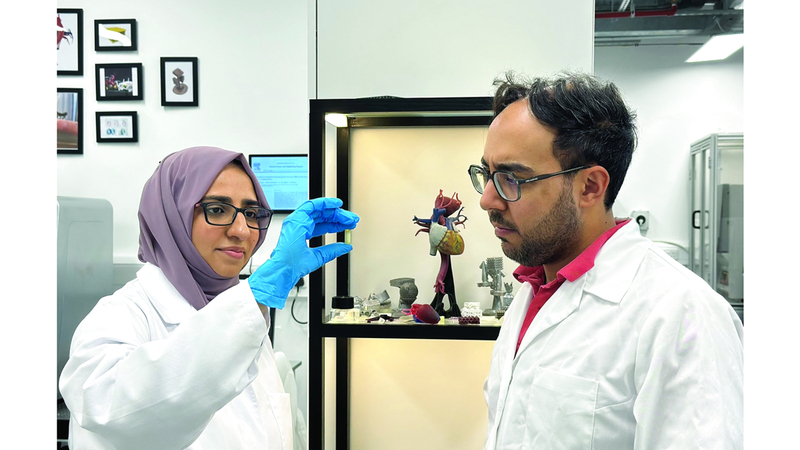
In a groundbreaking development, researchers at NYU Abu Dhabi have successfully created a swallowable capsule designed to collect bacteria samples from the small intestine, a feat that provides insights into an area of the gut typically inaccessible through conventional testing methods. This innovative capsule offers the potential for a deeper understanding of the gut microbiome, which can greatly influence health outcomes and disease prevention strategies.
Introducing the CORAL Capsule
The CORAL capsule, crafted by a team led by Assistant Professor of Biomedical Engineering Khalil Ramadi, represents a non-invasive method to gather samples from the gut microbiome. This capsule is uniquely tailored to target the small intestine, ensuring that the samples collected reflect the specific bacterial communities present in this vital area. The absence of electronic components allowed the team to utilize 3D printing technology for its manufacture.
Addressing Gaps in Microbiome Research
According to Ashish Ja, an assistant professor of biology at the university and a co-author of the study, “The capsule captures bacteria that cannot be accessed through other means, filling a significant gap in microbiome science. Understanding these primary communities may be the key to early disease detection and the development of targeted treatments.” The capsule’s structure is engineered to engage with bacteria during its natural transit through the digestive system.
Design Simplicity and Experimental Success
Researcher Hanan Mohammed, the study’s lead author, elaborated on the design philosophy behind the capsule: “We developed the capsule with minimal complexity, lacking batteries or electronics. It is simply a precision structure that leverages the body’s natural movements.” In animal studies, the capsule has successfully collected bacterial samples from the small intestine, revealing significant differences when compared to samples from the large intestine.
Future Prospects and Commercialization Efforts
The research team is currently focused on modifying the capsule for human use, alongside developing retrieval mechanisms. Efforts are underway to commercialize this cutting-edge technology, aiming to pave the way for enhanced gastrointestinal diagnostics and precision medicine.
As research continues, the implications of the CORAL capsule could drastically improve our understanding of the microbiome and its critical role in health and disease management.