
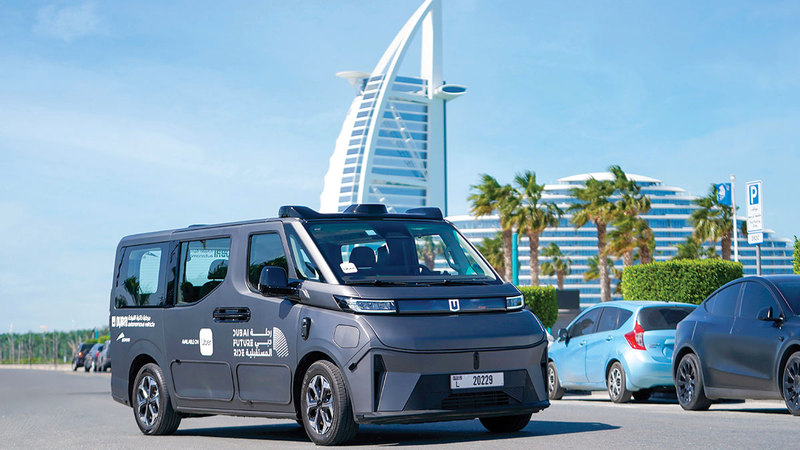
The Roads and Transport Authority (RTA) in Dubai has reported a significant increase in the registration of autonomous vehicles, reaching over 160 units as part of the “Journey of Dubai’s Future” project. This initiative aims to have 4,000 self-driving vehicles operational by 2030. Currently, these vehicles are undergoing testing on the Emirates Road (E611) near Al Maktoum International Airport, with trials taking place in three designated lanes. The testing, which began last Monday and will continue until next Saturday, is part of the RTA’s efforts to expand the operational scope and assess the vehicles’ performance under real driving conditions.
Safety and Testing Innovations
The RTA emphasised that the autonomous vehicles have not encountered any significant challenges during their journeys so far, despite being subjected to various simulated traffic scenarios, including “children and pedestrians crossing in front of them,” “sudden stops,” and “recognising traffic signals and other vehicles’ signals.” Advanced driving technologies enable these vehicles to monitor their surroundings and respond appropriately without being influenced by human factors such as distraction, fatigue, or speeding—factors that contribute to approximately 95% of traffic accidents. This capability enhances the potential for reducing accident-related risks, thereby boosting public confidence and road safety.
Transforming Daily Transportation in Dubai
Adel Shaqri, Director of Transport Systems at the RTA, highlighted that Dubai is reinforcing its position as a global centre for innovation and quality of life enhancement. He acknowledged that the “Journey of Dubai’s Future” has transitioned from a trial phase to the operational phase for autonomous taxis. “Dubai has successfully integrated self-driving taxis into daily life, serving as a significant driver of enhanced quality of life in the emirate. Over 160 autonomous vehicles have been registered, with 70 currently active on the roads, particularly in Jumeirah, through strategic partnerships with global firms such as WeRide and Apollo Go, allowing users to request rides via the Uber and Apollo Go applications,” he stated.
Commitment to Safety Standards
According to Shaqri, these vehicles have already travelled nearly four million kilometres, showcasing an impressive safety record without any noteworthy incidents. He emphasised that the primary concern in adopting autonomous technologies is ensuring maximum safety and security standards. “The causes of traffic accidents are predominantly attributed to human errors, including distractions, fatigue, and speeding. Autonomous technology can effectively eliminate these factors, and we are stringent in granting operational licenses to companies only after their vehicles meet strict safety standards,” he added.
Diverse Testing Scenarios and Future Plans
The RTA’s “Dubai Movement Labs” play a crucial role in ensuring that these vehicles are equipped to handle the local climate’s challenges, such as high temperatures, humidity, and fog. The labs conduct rigorous testing, encompassing over 248 different scenarios, from sudden stops to pedestrian interactions and the reading of traffic signals. Shaqri noted that these labs are not only beneficial for the transport sector but also support the Dubai Economic Agenda D33 by fostering an environment conducive to startups and entrepreneurs. This initiative includes collaborative research partnerships with more than seven strategic universities, both locally and internationally, aimed at advancing AI, sensor technologies, and vehicle-to-signal communication.
A Vision for the Future of Self-Driving Vehicles
Looking towards the future, Shaqri remarked, “Our clear and sustainable goal is to ensure that 25% of all transportation trips in Dubai are self-driving by 2030. We aim to have more than 4,000 self-driving vehicles operating in the taxi and limousine sectors by that year. The Dubai Movement Labs will continue to be the primary gateway for evaluating and testing the success of these vehicles and technologies moving forward.”