
Sharjah 24:
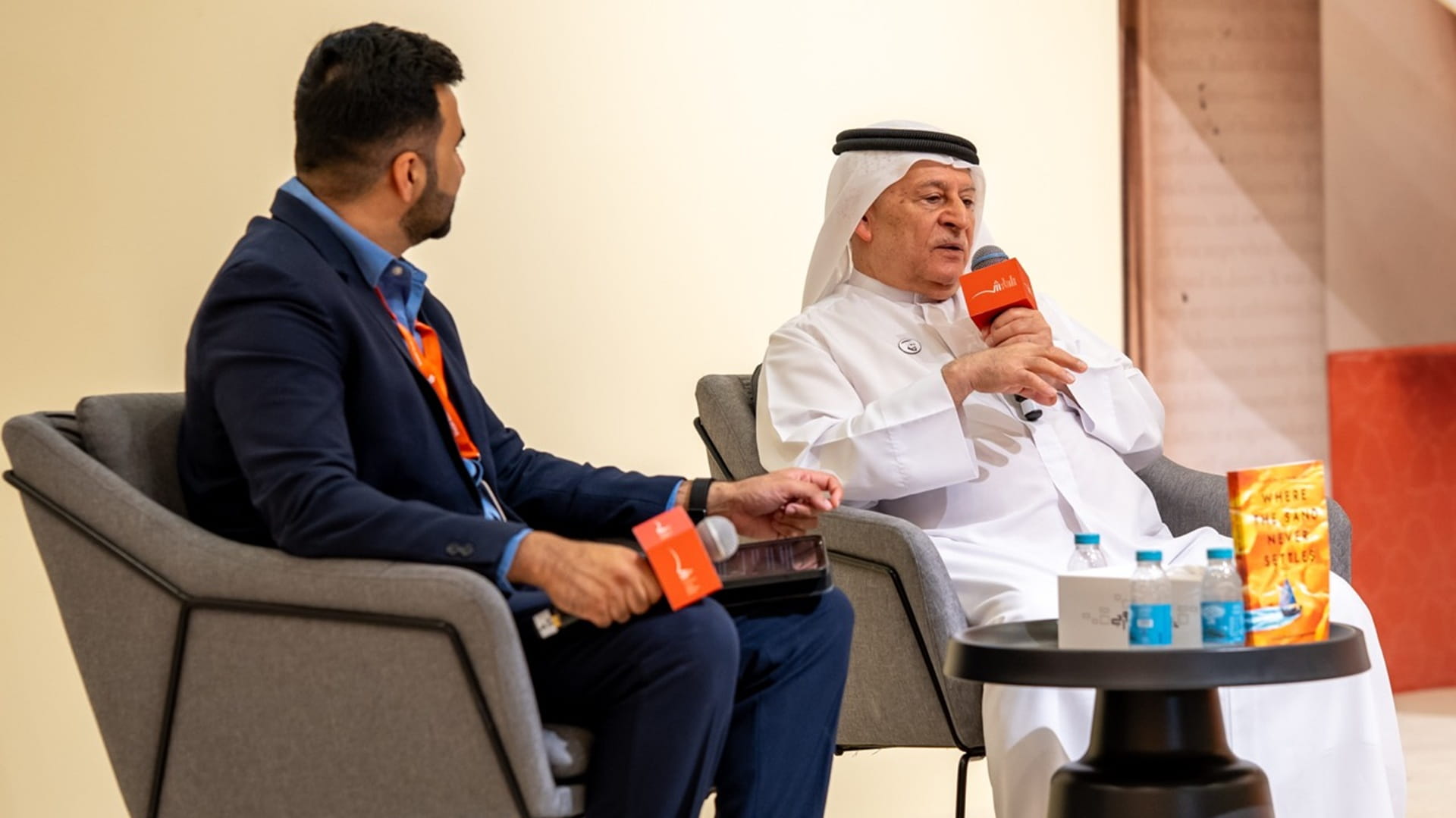
At the Sharjah International Book Fair 2026, Emirati cultural researcher and historian Dr Ahmed Al Khouri shared intriguing insights into the memory of Emirati society through his extensive collection of heritage items and personal anecdotes from the 1950s. His book, “Where the Sands Do Not Settle,” documents these experiences, highlighting the significance of recording the stories of past generations and preserving the nuances of daily life as evidence of the profound social and economic transformations in the United Arab Emirates.
A Window into 1950s Abu Dhabi
During a session titled “Preserving Memory: Literature as the Guardian of Cultural Heritage,” moderated by media personality Abdul Karim Hanif, Al Khouri revisited life in Abu Dhabi in the 1950s. He delved into the everyday realities of the time, including methods of obtaining fresh water transported by ships from nearby regions and islands. He noted the community’s reliance on fish as a primary food source, where salting and preserving were essential practices during less bountiful days for fishing.
Among his cherished childhood memories, Al Khouri recounted a moment in 1957 when his father bought him a leather shoe. However, unaccustomed to wearing it while walking, he opted to carry it to school and put it on only once he reached the classroom, illustrating aspects of school life during that era.
Over 10,000 Heritage Pieces
Al Khouri also discussed his longstanding passion for collecting antiques, which began in his childhood with stamps and coins, evolving into a vast collection of over 10,000 items today. This diverse range includes pottery, hospitality-related artifacts, and maritime tools, as well as archaeological pieces believed to date back to the Neolithic era. He fondly reminisced about a traditional coffee pot, a gift from his father during one of their trips in the early 1960s, which he still treasures. His focus on collecting items reflects both the traditions of Arab hospitality and the various professions practiced by the local community.
Emphasising the critical role of maritime activities in the Emirati way of life, Al Khouri noted their significance as a source of livelihood and a vital means of trade with distant regions, including India.
Personal Memoirs as Evidence of Societal Changes
In discussing his book “Where the Sands Do Not Settle,” Al Khouri explained how it captures his life experiences and connects them to the broader social and economic changes that have shaped the UAE. He highlighted that many details of life familiar to his generation are not experienced by newer ones, rendering their documentation necessary to preserve cultural memory and allow future generations to connect with their community’s history.
He referred to the drawings and photographs left by ancient communities, which have become invaluable resources for understanding their lifestyles, even if they were never intended to serve as historical records.
A Memorable Encounter with Sheikh Zayed in 1967
Al Khouri recounted a significant meeting with the late Sheikh Zayed bin Sultan Al Nahyan in 1967 during a visit to the vocational training centre where he was studying at the time, which catered to just 17 trainees. He reflected on Sheikh Zayed’s encouragement for them to pursue education and enhance their skills. Al Khouri also shared his experiences studying and working in the United Kingdom and the professional insights he gained, reiterating that the progress achieved by the UAE since the formation of the federation in 1971 has been a result of hard work, continuous learning, and perseverance in the face of challenges.
He concluded the session by underscoring the importance of preserving human experiences and inherited knowledge for future generations, stressing the vital role of writing and documentation in safeguarding cultural memory and maintaining the details of life that contribute to the history of Emirati society.