
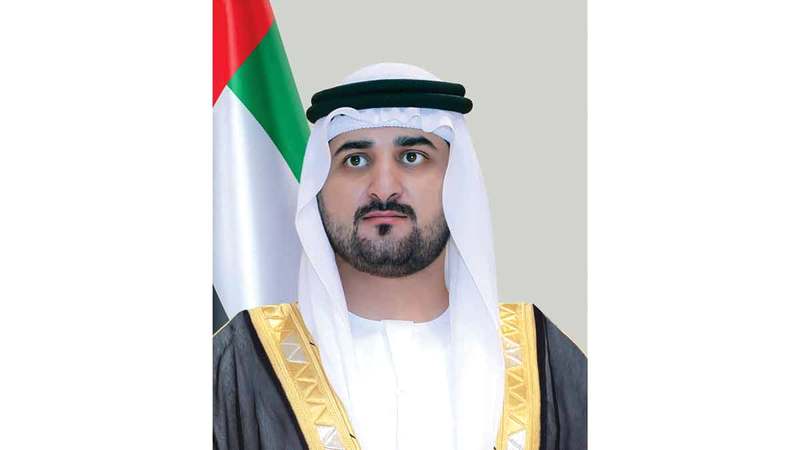
Sheikh Maktoum bin Mohammed bin Rashid Al Maktoum, the First Deputy Ruler of Dubai and Vice President of the Cabinet, Minister of Finance, and Head of the Dubai Judicial Council, has recently reviewed the operational plan for the Dubai Centre for Judicial Expertise, alongside performance indicators from the Rental Disputes Centre. In this context, he also assessed the progress made by the Judicial Police since its operational commencement.
Strengthening the Rule of Law
Guided by the vision and directives of His Highness Sheikh Mohammed bin Rashid Al Maktoum, Vice President of the UAE and Ruler of Dubai, Sheikh Maktoum emphasised the commitment to continuously enhance the judicial framework in Dubai. This effort aims to reinforce the rule of law, protect rights, and build confidence in judicial institutions, ultimately supporting Dubai’s competitiveness and its standing as an ideal destination for living, working, and investing.
He praised the achievements across various judicial domains, underlining the importance of ongoing enhancements in service efficiency and the integration of judicial entities. Moreover, he stressed the need for developing precise performance measurement systems, advancing human capabilities, and employing cutting-edge technologies. These factors contribute to expediting the resolution of disputes and ensuring the accuracy and effectiveness of judgments, thereby solidifying Dubai’s stature as a global model for judicial excellence and swift justice.
Sheikh Maktoum directed continuous improvement of judicial working mechanisms to keep pace with Dubai’s rapid growth, responding effectively to community and business needs, and ensuring the judicial system is prepared for future changes and developments.
Advancement of Judicial Expertise Services
During the review, Sheikh Maktoum discussed the operational plan of the Dubai Centre for Judicial Expertise, which has been active since 15 August 2026. This plan includes ensuring the continuity of service delivery, finalising the regulatory frameworks for the Board of Directors, technical committees, and expert committees, while coordinating with strategic partners to enhance operations and services.
In a recent post on the social media platform “X,” he elaborated on the plan, which is focused on developing digital services and leveraging artificial intelligence. He noted that the Rental Disputes Centre achieved a remarkable resolution rate of 94.8% for appellate cases within the targeted timeframe and highlighted the expansion of the Judicial Police’s functions to improve the efficiency of executing judicial orders and decisions.
“Dubai continues to evolve its judicial system through significant projects and tangible outcomes, reflecting advancements in service quality and the speed of justice delivery,” Sheikh Maktoum stated.
He concluded by affirming that “our judicial system is a cornerstone for stability and trust, and Dubai’s justice system progresses in tandem with its leadership.”
The plan includes a project to enhance the digital management structure of the Centre’s operations and services. This project will establish a central digital portal for processing requests and managing operations, alongside developing electronic connections with relevant judicial bodies and incorporating artificial intelligence to improve service delivery. A comprehensive performance monitoring system for tracking achievements will also be developed.
Improvement in Rental Dispute Resolution Indicators
Sheikh Maktoum reviewed the performance indicators for the Rental Disputes Centre from January to 29 September 2026, which demonstrated improvements in the speed of dispute resolution while maintaining high accuracy levels in court judgments.
For initial committees, the average time for disputes to be resolved from the date of the first session decreased from 19.6 days in 2025 to 14 days during the specified period in 2026. Similarly, the average resolution time from the date of filing a lawsuit dropped from 36.7 days to 27 days.
In appellate committees, the time taken to resolve disputes from the date of the first session fell from 27.8 days to 12 days, while the average resolution period from the date of filing decreased from 46.8 days to 23 days. The percentage of resolved appellate cases from the total registered during the targeted timeframe reached 94.8%, surpassing the 90% goal.
Enhancing Judicial Execution Efficiency
Sheikh Maktoum also reviewed the results of the Judicial Police’s operations, which began their executive functions on 1 July 2026. This initiative is part of a collaborative project between judicial entities in the emirate and Dubai Police to enhance direct coordination and expedite the execution of judicial orders and decisions.
The initial results from the first two months showed a 19.2% decline in the number of individuals wanted under arrest warrants. Furthermore, the scope of Judicial Police activities has been expanded to include forced execution, enforcement of visitation and custody orders, judicial coordination, and other related tasks.
Sheikh Maktoum encapsulated the overarching goal of these developments, saying, “Under the vision and direction of Mohammed bin Rashid, we remain committed to enhancing Dubai’s judicial ecosystem, reinforcing the rule of law while safeguarding rights and bolstering confidence in judicial institutions.”