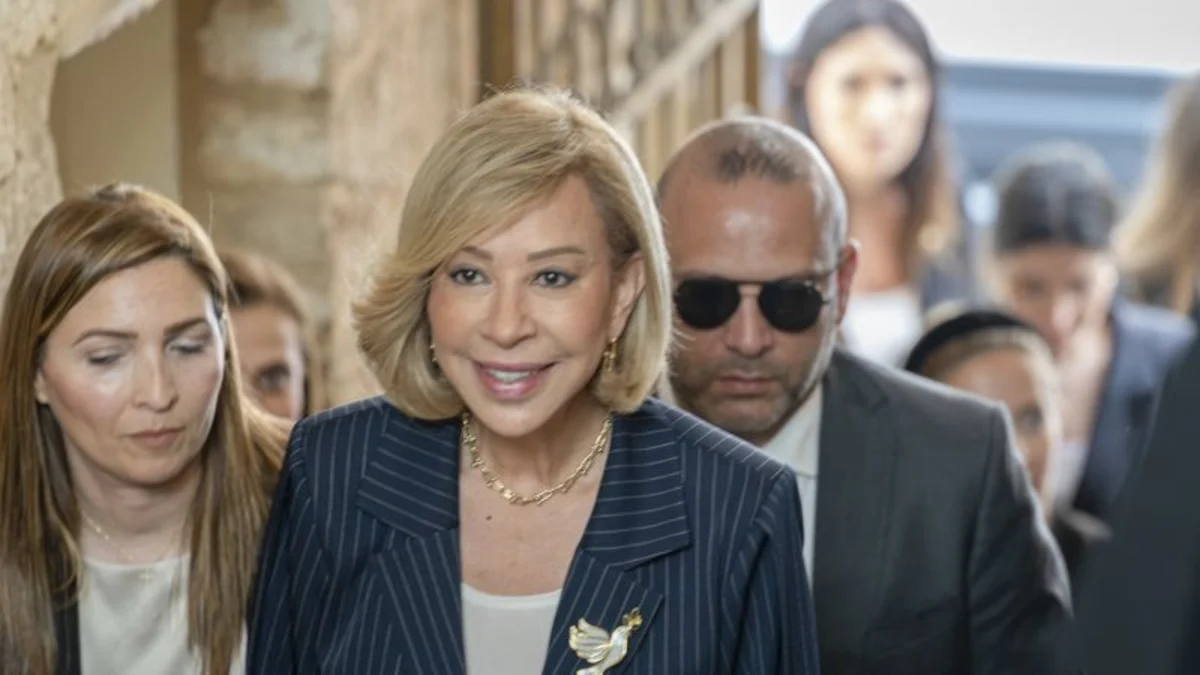
This article was written by Neemat Aoun, Lebanon’s First Lady, president of the National Commission for Lebanese Women and a member of the jury for the 2027 Zayed Award for Human Fraternity. The views expressed are the author’s own and do not necessarily reflect those of CNN.
Women from southern Lebanon left their homes carrying what they could, with children too young to understand why they had to go. I recently met mothers, daughters and grandmothers who had spent months in shelters, many of them former schools. Classrooms had become bedrooms; playgrounds, shared kitchens. I sat with them and listened.
They spoke of loss: homes left behind, livelihoods interrupted and months spent trying to secure life’s most basic necessities. But something else stayed with me. I saw women preserving their families’ dignity with what little they had, then sharing it with families they had never met. Mothers worked to give their children mornings that felt familiar, knowing that a child shaken by trauma needs reassurance as much as words. Grandmothers gathered their neighbours around them, making fear easier to bear by sharing it.
None of these women gave speeches about dignity or solidarity. They practised both, every day, in the hardest of circumstances.
Peace is built in everyday acts
We often measure recovery after war by the number of homes rebuilt and bridges repaired. That is necessary, but these encounters reminded me that buildings can be restored in years; what breaks between people—their trust, sense of security and belief that they are responsible for one another—cannot be put back together by bulldozers and cranes. It takes people, many of them women, whose work rarely reaches the cameras. This is the peace that protects communities from within. Without it, reconstruction remains fragile.
In Lebanon, living together cannot remain an abstract idea. We have learned it the hard way, and relearn it with every crisis. During each wave of displacement, people have opened their homes to families they did not know, without asking where they came from or which religious community they belonged to.
That is the message of the Document on Human Fraternity, signed in Abu Dhabi in 2019 by the late Pope Francis and the Grand Imam of al-Azhar, Dr Ahmed al-Tayeb: all people are one family, created by God, equal in dignity and rights, and peaceful coexistence can help ease many of the crises facing our world. The document expresses this in the language of principles. Lebanese people know it through experience—and know the heavy price of forgetting it.
Schools can help build a shared future
If there is a place where living together begins, it is the school. Women have understood this for a long time. Last February, I met Zarka Yiftali, the Afghan advocate for girls’ education and a recipient of the 2026 Zayed Award for Human Fraternity. She has made it her mission to ensure that no Afghan girl is denied her right to learn. As I listened to her, I thought of Dr Julinda Abu Nasr, a Lebanese education pioneer whose work shaped generations of Lebanese people. The two women come from different countries and generations, but share one conviction: when a girl learns, the space for hatred in her society shrinks.
Through the School of Citizenship, a national education initiative in which we work with young people on citizenship, civil peace and social cohesion, we try to turn that conviction into daily action. Recently, we honoured school principals—most of them women—who kept education going when everything seemed to point towards its suspension, while preserving the cohesion of their local communities during wartime. We honoured them because we believe that a child who finds safety and psychological support at school today can become a citizen who protects civil peace tomorrow.
Recognising the work that often goes unseen
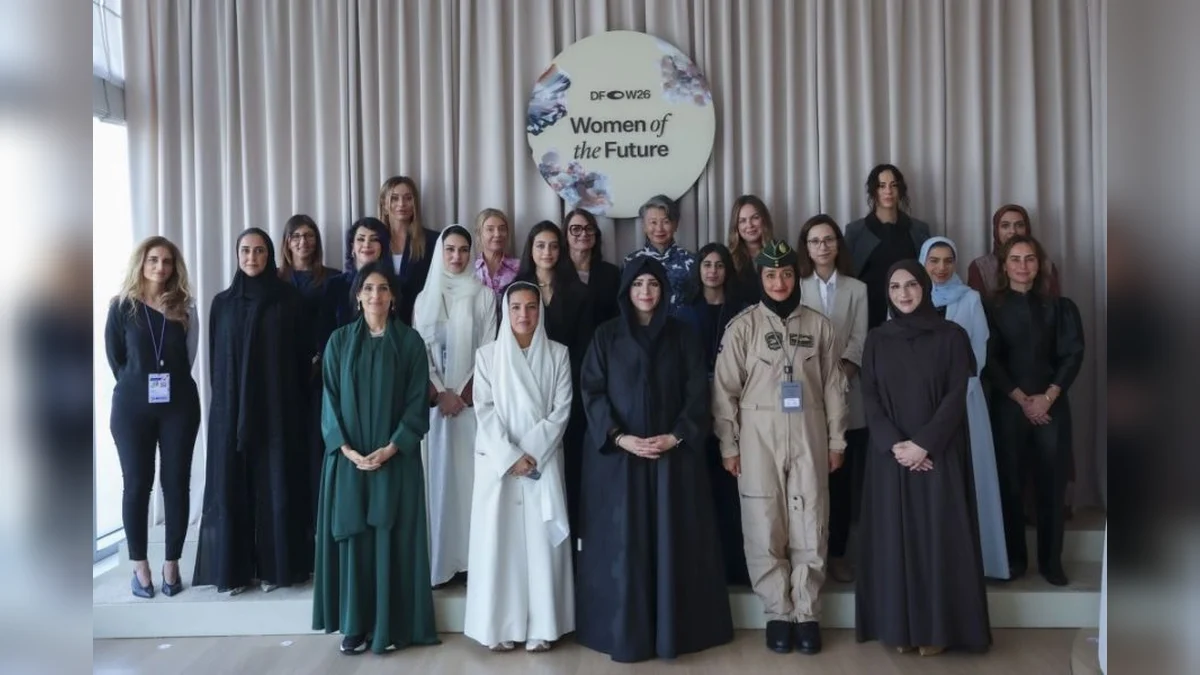
I found the same conviction among women in other parts of the world. At this year’s World Council for Human Fraternity, organised annually by the Zayed Award, I joined a discussion with women leaders from Colombia, Pakistan, Indonesia and Azerbaijan at the invitation of Mohamed Abdelsalam, the award’s secretary-general. Our countries and experiences differed, but women and children were at the heart of our conversation.
Mr Abdelsalam later invited me to join the jury for the 2027 award. I saw the invitation not as another title to add, but as a responsibility. The award bears the name of the late Sheikh Zayed bin Sultan Al Nahyan, founder of the United Arab Emirates, whose name is associated with tolerance and generosity. Its aim is to make human fraternity not just a principle we repeat, but a way of life. I have seen that commitment in the work of its secretary-general and team.
I am proud to be the first Lebanese figure to join the jury since the award was established. I take this seat on behalf of Lebanon, not only in my own name. As I read the nominations, I will carry with me the faces of the women I sat with. The fraternity worthy of recognition does not always make headlines; often, it is found in quiet work far from the spotlight.
As president of the National Commission for Lebanese Women, I see the same contradiction repeated: in every crisis, women are expected to endure, protect and repair what has been broken. When the crisis eases, we rarely ask them how to build what comes next. Our work at the commission is to end that contradiction: to safeguard women’s rights and dignity in law and in everyday life, and to ensure they have a place where decisions are made—not simply to thank them after each crisis.
The future begins with the people who care for one another
I am a mother and a grandmother. When I think about the world my daughter and granddaughter will inherit, I do not wish for one without disagreements; such a world has never existed. I wish for a world that knows how to disagree without fighting, schools that do not become shelters, and homes no one is forced to leave.
I know that world will not come about through a decision alone. It will be built, as I have seen in Lebanon, by women sharing their bread with neighbours they have never met, teachers refusing to let lessons stop, and mothers protecting their children’s sense of security amid fear. Cameras may not capture these women, but human fraternity, in its truest sense, begins with them.