
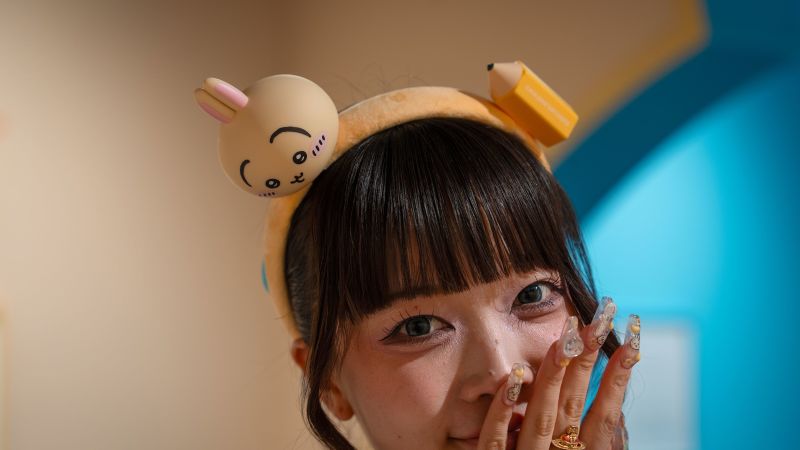
The animated series “Chikawa,” initially perceived as a charming children’s cartoon, conceals a much darker and more complex reality behind its adorable character designs. This Japanese anime, featuring characters with a fluffy appearance and gentle voices, immerses viewers in a world where its protagonists navigate challenging tests, strenuous jobs, and a daily struggle for survival.
Adorable Yet Dark
The show’s main character, reminiscent of a hamster, is joined by friends “Usagi,” who has rabbit ears, and “Hashiwari,” a cat-like creature. These characters are designed with simple, minimalistic traits, featuring round faces and rosy cheeks, set against a backdrop dominated by pastel colours and cheerful music. This visual aesthetic starkly contrasts with the harsh realities they face, whereby characters must undergo trying challenges, pursue arduous working conditions, and confront the societal pressures that define their existence.
The Rise of Chikawa
Created by Japanese illustrator Nagano, “Chikawa” first garnered attention on the platform “X” in 2020, quickly amassing over 5.5 million followers. The franchise expanded into a brief television series in Japan in 2022, followed by a feature film that debuted in cinemas this summer. Some scenes in the film have been described as having a dark atmosphere, leading social media users to liken it to horror films.
Responses to Life’s Struggles
In the world of “Chikawa,” characters line up for jobs assigned by armoured officials, selecting between monotonous, poorly-paid tasks like weed removal and perilous monster-hunting jobs that could ultimately lead to their demise. Each character copes with these pressures in their own unique ways: “Chikawa” struggles to speak and often experiences anxiety, prompting tears; “Hashiwari” remains optimistic, being the only one to communicate in complete sentences; while “Usagi” exhibits erratic behaviours and resorts to shouting as a means of interaction. Despite these challenges, the trio regularly finds solace in shared meals, which help to boost their spirits.
Reflective of Societal Pressures
According to Jason Chun, a historian of East Asian popular culture at the University of Hawai’i–West O’ahu, “Chikawa” is a product of specific Japanese anxieties, including the pressures of university entrance exams, job qualifications, low wages, and the cultural impetus to endure hardship silently.
A Broader Appeal
This narrative resonates beyond Japan, as challenges faced by characters echo the experiences of youth across Asia. In China, students grapple with stiff competition in academia and the job market, with youth unemployment in Taiwan surpassing 11%. The rise of gig economies sees an expected 300 million individuals working in temporary jobs in China this year, with many South Korean youth juggling multiple roles. Hence, Chun describes “Chikawa” as fundamentally a “cute children’s story about working in today’s gig economy.”
Diverse Audience Demographics
Interestingly, the series appeals to an audience beyond children, with the average viewer’s age hovering around 40. Those in their thirties make up the largest demographic, followed closely by individuals in their twenties and fifties. The characters are intentionally designed without defined genders, allowing fans to project their own identities and experiences onto them.
The Kawaii Phenomenon and Commercial Success
The “kawaii” culture, emblematic of cute Japanese characters, has burgeoned into a thriving industry. Iconic franchises like “Pokémon” and “Hello Kitty” have generated billions in revenue. Similarly, “Chikawa” has transcended mere storytelling to become a commercial powerhouse. Merchandise ranging from socks to hair styling products permeates the market, with plans for an amusement park based on the series already underway. Additionally, Japan’s largest airline intends to launch a “Chikawa”-themed aircraft in October, while the series enjoys significant popularity in Hong Kong, Seoul, Shanghai, and Taipei.
Box Office Success
The film adaptation of “Chikawa” recorded one of the largest opening days in Japanese box office history. A temporary shop in Shanghai amassed 2.68 million yuan (around $400,000) in just ten hours, while eager fans in Hong Kong caused police to intervene to manage crowds outside a pop-up store.
The Fan Connection
The emotional bond between fans and “Chikawa” is evident, as exemplified by Ling Chiu, who manages a fan group on Facebook and humorously refers to her continuous spending on merchandise as a “bankruptcy journey.”
International Expansion
The series is also expanding its reach beyond Asia, leveraging social media platforms. Fans are circulating unofficial translations of episodes and manga in English, with one translation account on X boasting over 16,000 followers.
Challenges of Cultural Transfer
As “Chikawa” seeks to globalise, it faces challenges in ensuring its cultural themes resonate with a wider audience. What Japanese viewers interpret as resilience, mutual support among friends, and perseverance may, in different cultural contexts, be perceived as negativity or resignation to circumstances.