
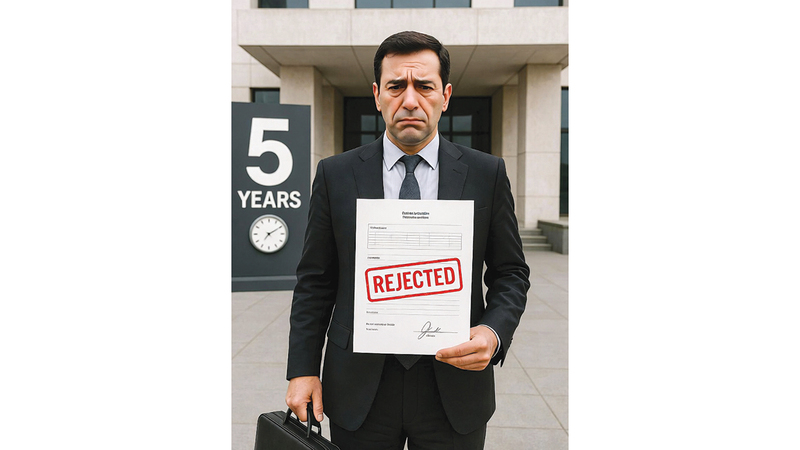
Rejection of the Appeal by an Employee Who Was Absent from Work for 5 Years Due to a Dispute Over Work Location
The Abu Dhabi Family and Civil Administrative Court highlighted the case of a former employee who was absent from work for five years due to a dispute regarding the workplace. In its ruling, the court confirmed that the appeal against the execution judge’s decision, which permanently closed the file, was not permissible. This underscores the complexities of legal issues related to termination of service and the circumstances surrounding the enforcement of judicial rulings. This article sheds light on the details of the case, the reasons for rejecting the appeal, and the lessons learned from it.
Case Details
The events of the case date back to 2018 when the employee initiated procedures to enforce an administrative ruling in his favor that annulled the decision to terminate his service. Although he submitted a request to resume the enforcement in 2025, the court retained the file after confirming that the purpose of the enforcement had been achieved in 2020. The employee requested to be reinstated in Abu Dhabi after the closure of the work branch in Al Ain, which led to a rise in disputes.
Employer’s Response
The employer’s representative claimed that the employee had been notified in January 2020 about the necessities of work at the Al Ain branch. Despite preparing everything needed to resume his duties, he left after attending without performing his tasks, prompting the employer to take termination actions due to repeated absences, in accordance with applicable legal procedures.
Legal Controversy
The employee insisted that the court’s ruling had not been implemented correctly, asserting that his workplace should be in Abu Dhabi. He recalled that being reinstated in Al Ain did not mean the ruling was executed as it should be. He called for enriching the procedures by investigating and hearing witnesses, emphasizing that there was no evidence to support the justifications for his termination.
Final Court Decisions
The court based its decision on the fact that the employer had executed the ruling by reinstating the employee to his position with the same rank and financial allowances, and that he had been notified of this. The court affirmed that the dispute over the workplace did not fall within the scope of enforcing the ruling, and thus it had the right to close the file permanently, leading to the rejection of the employee’s appeal.
Ultimately, the judiciary confirmed that according to civil procedure laws, an appeal against the execution judge’s decision cannot be contested if it aligns with the stated legal objectives, and that determining the workplace is considered outside the scope of enforcement. This imposes additional restrictions on appealing the ruling. Consequently, the decision was made to reject the appeal, with the appellant bearing the legal costs.
This case clarifies the importance of understanding the laws and procedures related to termination of service, as well as the necessary steps for enforcing judicial rulings. It also highlights the necessity for employees to attend and follow up on their duties to avoid undesirable legal consequences.