Zayed Aishu, Dubai
Keeping goods flowing during regional disruption takes more than ports capable of receiving ships. It depends on a connected network of ports, free zones, warehouses, storage facilities and distribution services that can offer traders alternative routes and keep essential supplies—particularly food—moving to markets and consumers.
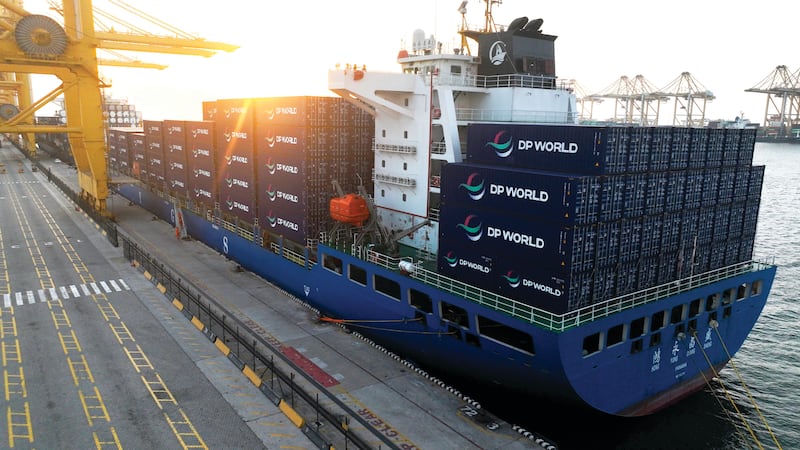
DP World says its response has combined the reach and operating capacity of its network with continued investment in ports, economic zones and logistics services. Between 1 March and 30 June 2026, its “green corridor” helped facilitate the movement of goods worth AED33.9 billion. Food products accounted for more than AED5.3 billion of that total, highlighting the role of the corridor in getting supplies to shop shelves.
A connected network for trade
Shehab Al Jassmi, DP World’s chief commercial officer for ports and terminals in the Gulf Cooperation Council, said the group was continuing to develop an integrated network of assets and logistics facilities in the UAE and across the region. These include ports, free zones, warehouses and service centres, linking cargo handling and storage with distribution to end markets.
Speaking to Emarat Al Youm, Al Jassmi said the network built on capabilities whose value had become clear during regional disruption. Resilient supply chains, he said, require not only alternative transport routes but also infrastructure able to receive, store, manage and distribute goods in line with market needs.
Jebel Ali Free Zone (Jafza), which has more than 12,000 companies, recorded overall occupancy of more than 90% across its asset categories. Land occupancy stood at 94%, warehouses at 99%, while office occupancy was at its highest level in a decade. Jafza attracted more than AED1 billion in new investment in the first six months of the year, Al Jassmi said, reflecting continued demand for space and services supporting trade, manufacturing, storage and distribution.
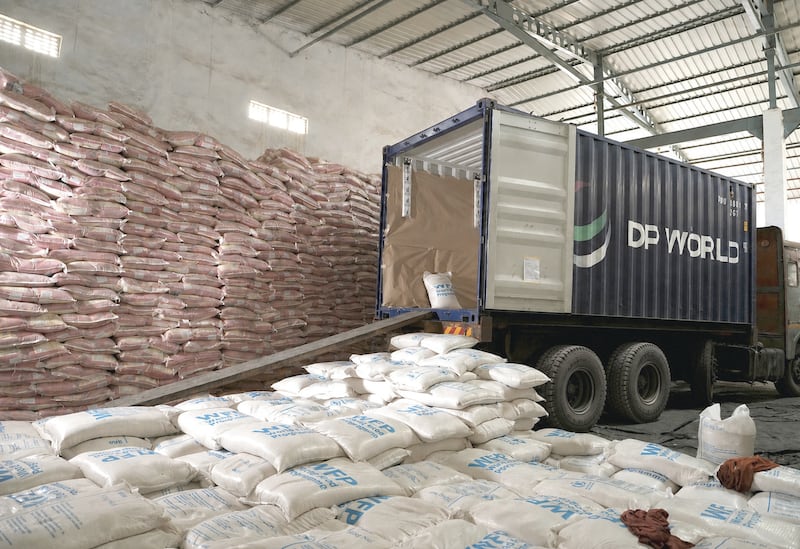
Jafza’s importance, Al Jassmi said, extends beyond its role as a free zone. It is a practical extension of Jebel Ali Port, bringing together the port, warehouses and logistics providers so companies can handle customs clearance, storage, distribution and re-exports in one integrated environment.
Demand for the zone’s assets and services is supported by UAE infrastructure and construction projects, the growth of e-commerce and the expansion of third-party logistics companies, which need space and facilities to manage storage and distribution.
Expanding capacity in Jeddah
In Saudi Arabia, DP World is developing the Southern Container Terminal at Jeddah Islamic Port through investment of more than $800 million. The programme is intended to strengthen the port’s capacity and operational efficiency, with infrastructure and cargo-handling services focused in particular on food and other perishable goods.
The group has increased the terminal’s capacity for refrigerated containers from 1,200 to 2,340 and developed a modern facility able to inspect up to 75 refrigerated containers at a time. The upgrades are intended to speed the handling of cargo requiring controlled temperatures and improve food supply-chain performance.
Al Jassmi said handling food and perishable goods had been a priority for the group because these shipments require specialised equipment, rapid handling and careful temperature management.
Following an expansion programme lasting between four and five years, the Southern Container Terminal raised its annual capacity to five million TEUs and recorded high handling volumes in July 2026. DP World said the terminal then set a new monthly record in October 2026, handling 242,096 TEUs. That surpassed the previous record of 221,229 TEUs, set in July, and marked its best monthly performance since operations began in 1999.
The terminal is part of DP World’s wider logistics network in the region, linking maritime trade through Jeddah with road transport, storage and distribution. The group is also developing the 415,000-square-metre Jeddah Logistics Park, adding logistics and distribution capacity close to the port.
Al Jassmi said DP World’s investments at Jeddah Islamic Port formed part of the group’s regional network, which had helped accommodate diverted cargo and support the flow of goods. A further project in Jeddah, a logistics park involving investment of $250 million, is scheduled to open in the first quarter of 2027 as the group expands its services in Saudi Arabia.
Fujairah terminals brought forward
In the UAE, DP World is developing the Al Rughailat multi-purpose container terminal and the Dibba general cargo terminal in Fujairah under a 50-year concession. The projects involve investment of about AED2.5 billion over several years.
The group has brought forward its target for the terminals to begin phased operations to 18–24 months, from an earlier estimate of 24–30 months. Development will take place in stages, based on demand and market requirements, Al Jassmi said.
Al Rughailat, near Fujairah airport, is expected to have annual capacity of about 2.5 million TEUs, handle 1.7 million tonnes of general cargo and process 190,000 car-equivalent units. Dibba is planned to handle 3.6 million tonnes of general cargo a year, with expanded capacity for general cargo and roll-on/roll-off services.
Once both terminals are operating, DP World’s total container-handling capacity in the UAE is expected to rise from 19.4 million TEUs to about 22 million. Al Rughailat will also provide a deep-water gateway able to accommodate the latest generations of mega container ships.
Al Jassmi said the projects were intended not only to increase port capacity but also to connect the terminals to DP World’s wider UAE network, including Jebel Ali Port and Jafza, through inland transport links. That integration would allow services and activities to be matched to cargo types, destinations and customer requirements.
The two terminals, he stressed, were not intended to replace Jebel Ali Port, but to create a more integrated UAE port system in which operational capacity and activities are distributed according to cargo destinations and the services businesses need.
Regional investment continues
DP World is continuing to develop a special economic zone on the border between Oman and the UAE, Al Jassmi said, with the aim of strengthening cross-border links and expanding trade and logistics activities.
He said the group had not suspended any of its major regional investment projects and was continuing to develop its ports, logistics services and economic zones. The recent disruption had also strengthened DP World’s crisis-management experience and operational resilience, he said.
That resilience rests on a diverse range of assets and capabilities, including ports, terminals, free zones and warehouses, as well as road and rail transport networks, customs corridors and partnerships. Bringing these elements together in a connected network reduces dependence on any single route and helps the group respond to changes in operating conditions.
A global network of ports and logistics services
According to the latest data, from November 2026, DP World is the world’s fourth-largest container port operator by total throughput and capacity. It manages global capacity of 110 million TEUs, representing about 10% of the global market.
The company operates in more than 80 countries through more than 590 business units, spanning major regions including Europe, the Americas, Asia-Pacific, Australia and Africa. It has grown from a local port operator into a global provider of integrated supply-chain solutions, with a workforce of more than 120,000.
Its business areas include marine ports and terminals; economic and free zones; logistics, including freight management and multimodal transport for thousands of customers across key sectors; and marine services and shipping, including Drydocks World, which specialises in ship and offshore-facility repairs.
Why integrated networks matter
Around 80% of international merchandise trade by volume moves by sea, according to the United Nations Conference on Trade and Development (UNCTAD). Afaf Mustafa, founder and managing director of Sea Scope Maritime Consultancy and Project Management, said tensions put global supply chains under severe pressure, raising shipping and insurance costs and extending delivery times.
She said DP World’s experience during regional disruption showed the value of an integrated network of ports and logistics facilities. Its ability to manage cargo across a network that extends beyond a single port can connect handling with storage, customs clearance, transport and distribution. This integration makes it easier to reroute shipments when shipping lanes are disrupted and helps reduce the risk of delays, particularly for food and essential goods.
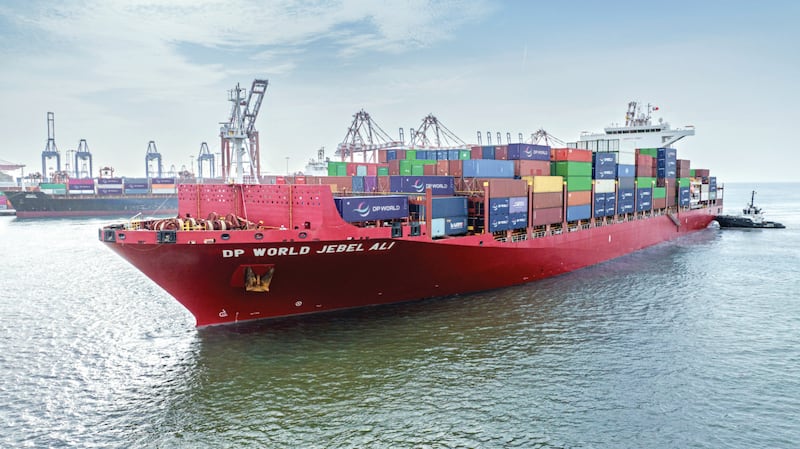
Mustafa said Jebel Ali Port’s strategic location and links with the free zone, airports and transport networks strengthened Dubai’s position as a hub connecting Asian, European and African markets. The port handled 15.6 million TEUs in 2025 and is connected to more than 80 weekly shipping services reaching 150 ports worldwide, she said.
Alternative routes from port to market
Mohammed Jassim Al Rais, general manager of Al Rais Shipping Agencies, said one of DP World’s most important contributions to traders during regional disruption was providing a clear alternative when a regular shipping route was interrupted.
In March 2026, in coordination with the relevant authorities and shipping lines, the group enabled containers to be discharged at Khor Fakkan or Fujairah and then moved by road, under customs supervision, to Jebel Ali. Importers could then complete their usual clearance procedures, Al Rais told Emarat Al Youm.
The value of the arrangement, he said, was not simply a change in the port of arrival. It ensured that shipments could continue towards their destination and gave traders a clear view of the cargo’s route and expected arrival time, helping them plan deliveries and update customers. An alternative port alone is not enough if there is no practical way to move containers from it, or if a change of route creates further procedural complications.
Al Rais said the movement of more than one million containers over several months from east-coast ports to Jebel Ali and domestic markets, by truck and rail, showed that the network could turn alternatives into routes capable of handling substantial trade volumes, rather than limited emergency measures.
For food cargo, time is part of the value
The importance of logistics networks is especially clear for food, Al Rais said. Time is part of the value of goods such as fruit, dairy products and other perishables: a delayed arrival can shorten the period available to sell them, even if they reach their destination in good condition. Quickly identifying a new route and providing suitable refrigerated transport are therefore critical.
From the moment a shipment is rerouted, importers need to know where it will be unloaded, whether refrigerated transport is available and when it is expected to reach the market. The earlier those details are established, the better able companies are to protect product quality and maintain regular supplies.
Disruption to shipping routes affects more than voyage times, Al Rais added; it can also influence import and purchasing decisions and the way businesses manage stock. UNCTAD estimated that, during the Red Sea disruption, rerouting a vessel from Asia to Europe around the Cape of Good Hope added about 12 days to the journey. That extra time can affect importers’ decisions on quantities, sources of supply and ports of arrival.
Having multiple ports and routes gives importers more room to respond, he said. Recent events had strengthened traders’ confidence in Dubai as a regional redistribution hub: cargo can enter through the east coast, complete its procedures at Jebel Ali and then continue to another market. The arrangements covered import and trans-shipment containers, as well as links for moving cargo between Jebel Ali and Gulf ports.
Connecting transport and logistics facilities
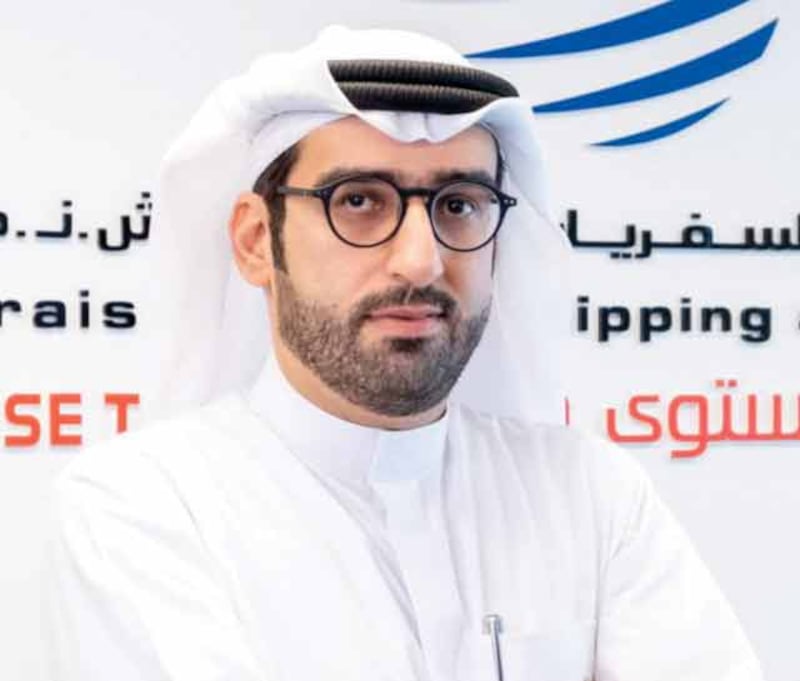
Ahmed Abdulrazzaq, vice-chairman of the National Committee for Shipping and Logistics and general manager of Maltrans Emirates Shipping, said Dubai had established itself as a global trade and logistics hub through a long-term strategic vision. That vision combined integrated infrastructure with the emirate’s geographic position, economic openness and flexible government policies.
Dubai links Asian, European and African markets, as well as markets across the region, through its ports, airports, free zones, warehouses and road networks, Abdulrazzaq told Emarat Al Youm. The strength of the system, he said, comes not from each facility operating in isolation but from their ability to work together and move goods between different modes of transport.
Jebel Ali Port is part of a broader network connecting the port with free zones, logistics facilities and transport links. The process does not end when containers are unloaded: it can continue through storage, consolidation, distribution and re-export. Free zones help companies manage storage, distribution and repackaging, while a mix of sea, air and land freight provides options on time and cost.
Keeping food, medicines and medical supplies moving requires a system able to operate in exceptional circumstances, including ports, airports, roads, warehouses and refrigerated storage. This variety reduces dependence on a single route and makes it possible to reorganise cargo movements when international shipping lanes are disrupted.
Co-operation between government bodies, ports, airlines, shipping companies, customs-clearance businesses and logistics providers can speed up procedures and improve cargo handling, Abdulrazzaq said. This is particularly important for food and pharmaceutical products, which have specific transport, storage and temperature requirements.
Higher freight and insurance costs
In October, the National Committee for Shipping and Logistics said it was difficult to establish uniform container freight rates following problems affecting the Strait of Hormuz. Shipping rates and related costs had risen by about three to five times, or 300% to 500%, it said. The increase was attributed mainly to additional charges, including war-risk premiums, emergency fees linked to the conflict and emergency fuel surcharges, which vary between carriers.
Supply-chain resilience depends on more than transport speed, Abdulrazzaq said. It also requires diversified sources of imports, appropriate stock levels and preparation for potential interruptions. Digital transformation, data sharing, electronic customs clearance, shipment tracking and better inventory management can also improve efficiency and reduce processing time.
Ports and economic security
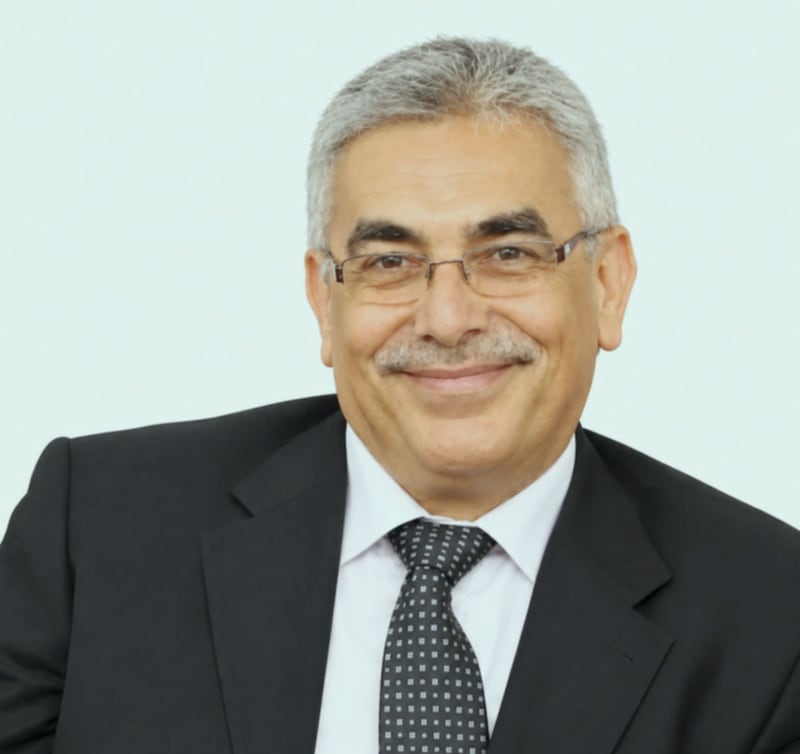
Najeeb Abdullah Al Shamsi, an economic expert and director general of Al Masar Centre for Economic Studies, said DP World had demonstrated its ability to manage crises and respond to exceptional changes. During the disruption, the group’s role went beyond the traditional functions of port operations and cargo handling to become part of the effort to safeguard trade security and maintain the flow of goods, he told Emarat Al Youm.
Disruption to vital shipping lanes had highlighted the need for a diverse logistics network and the risks of relying on a single trade route, Al Shamsi said. DP World’s geographic reach, operating experience and network of ports and logistics centres made it possible to reroute goods and use different alternatives.
While disruption to shipping affected freight, transport and insurance costs, the most important challenge was maintaining supplies and preventing goods from being cut off, he said. Ports should therefore be viewed as part of a wider economic-security system, not simply as facilities providing operational services.
The UAE’s infrastructure includes ports, airports, transport networks, logistics services, free zones and storage and distribution facilities. Together, these give the country the ability not only to move goods through its territory but also to redistribute them and connect production markets with centres of consumption.
DP World’s role, Al Shamsi said, lies in using these resources as a connected network that can reorganise trade when a route is disrupted, drawing on other ports, road and rail transport and logistics centres. Securing food supplies requires a network able to operate in varied conditions, helping food cargo reach shops and consumers regularly.
The value of the group’s geographic reach, he said, is measured not simply by the number of its ports and assets but by how closely they are connected and whether alternatives can be put into operation when needed.