
4 Chinese Cities in the Global Challenge of Dubai for Autonomous Mobility
Four Chinese cities have witnessed significant transformations in the realm of autonomous mobility as part of the Global Challenge of Dubai for Autonomous Mobility 2025. This event, with a prize pool estimated at $3 million, embodies Dubai’s efforts to become a leader in smart mobility. During these tests, projects and partnerships aimed at fostering innovation in mobility were highlighted, focusing on four primary objectives.
Objectives of the Field Tests
Ahmed Hashim Bahrozyan, the Executive Director of the Public Transport Agency and Chair of the Organizing Committee for the Autonomous Mobility Conference, stated that the technical team’s visit to China was directed toward achieving four main objectives. First, the performance of autonomous vehicles was monitored in real-world conditions to ensure compliance with safety standards. Second, the teams had the opportunity to understand the capabilities of each company through direct interaction with their technologies. Additionally, the team visited company headquarters to gain insights into their operational mechanisms and technical support, aiding in the establishment of strategic relationships. Finally, future steps for the challenge were discussed based on the results of the trials.
The Four Test Cities
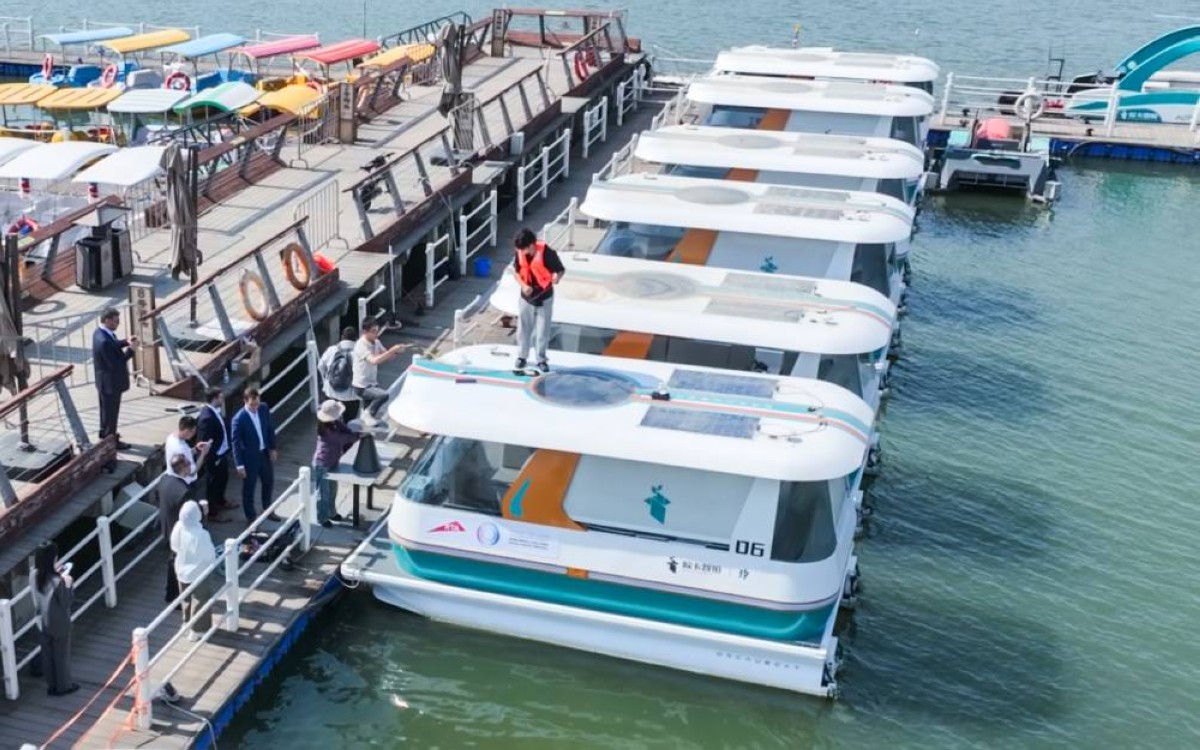
The tests were conducted across four major Chinese cities: Guangzhou, Xi’an, Guiyang, and Suzhou. Each city provided a unique environment for evaluating autonomous vehicles, with a team composed of nine members from the Roads and Transport Authority and a judging panel of global experts. Five different types of vehicles were selected for testing, including autonomous taxis, buses, and water transport vehicles. To ensure the accuracy of the results, objective methodologies and highly precise measuring devices were employed.
Testing Methodology
The Roads and Transport Authority provided the team with a clear methodology for the field tests, categorizing the assessments into three main types. The first type involved testing vehicles at rest, where systems were evaluated while the vehicle was stationary, focusing on sensors and safety features. The second type was conducted in mixed traffic, measuring vehicle performance under real conditions on public roads. The third type took place in a controlled environment, where specific scenarios were simulated to study vehicle interactions with road users.
Global Conference on Autonomous Mobility in Dubai
The Roads and Transport Authority is organizing the fourth edition of the Global Conference on Autonomous Mobility in Dubai under the theme “Redefining Transportation: The Path to Smart Mobility” from September 24 to 25, 2023. This conference is a unique platform that brings together leading experts and specialists in the field to accelerate the transition towards smart mobility. Dubai aims for 25% of all trips to be autonomous by 2030, reflecting the emirate’s ambitious vision in this sector.
With a focus on these objectives and the testing experience in four Chinese cities, efforts are being made to enhance the development of autonomous mobility, positioning Dubai as a focal point for the world in this advanced field.