
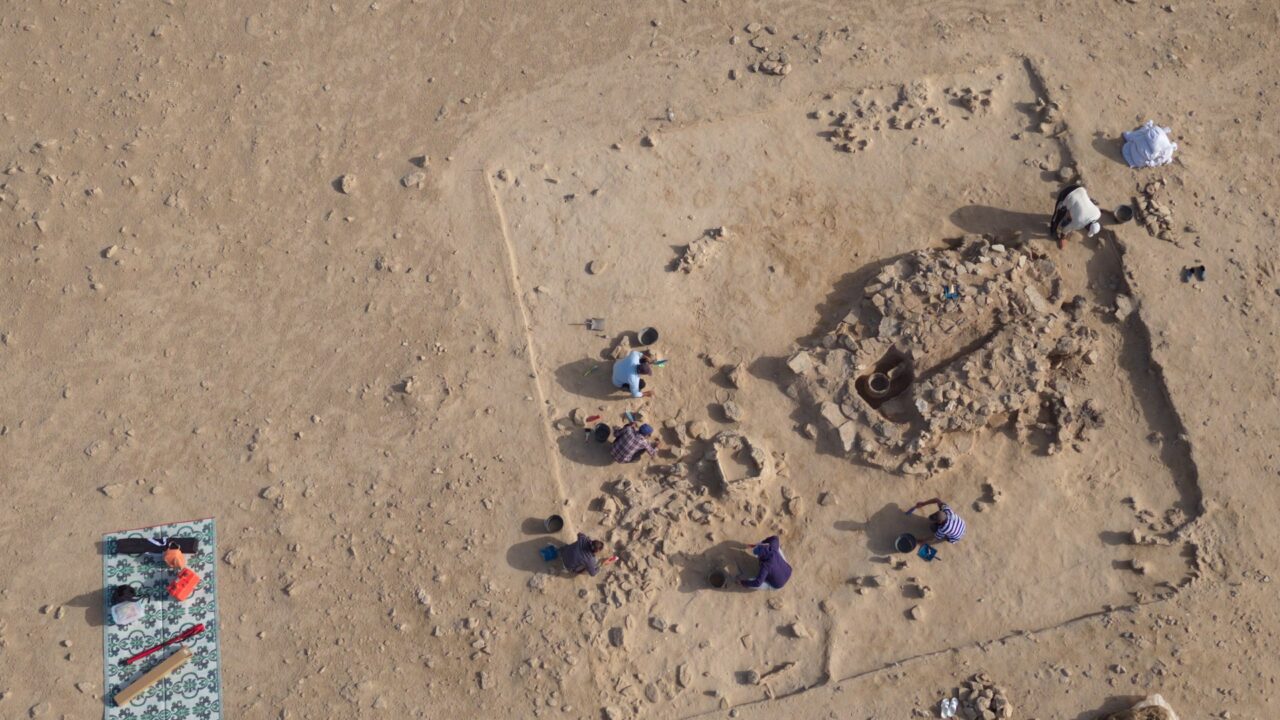
Rice may have been part of life in the Gulf nearly 4,000 years ago, according to evidence recovered from a Bronze Age pottery jar on Kuwait’s Failaka Island. The finding, reported in a study by University of Kuwait associate professor Dr Majed Al-Mutairi and former antiquities inspector Dr Hamed Al-Mutairi in the journal Near Eastern Archaeology, offers a possible glimpse of food and trade in the ancient Dilmun civilisation.
The evidence came not from inscriptions or historical accounts, but from microscopic plant remains found inside a jar at archaeological site S 27, in the south-east of Failaka. The island was part of Dilmun, an important link in ancient trade routes connecting Mesopotamia with the Gulf and regions further east.
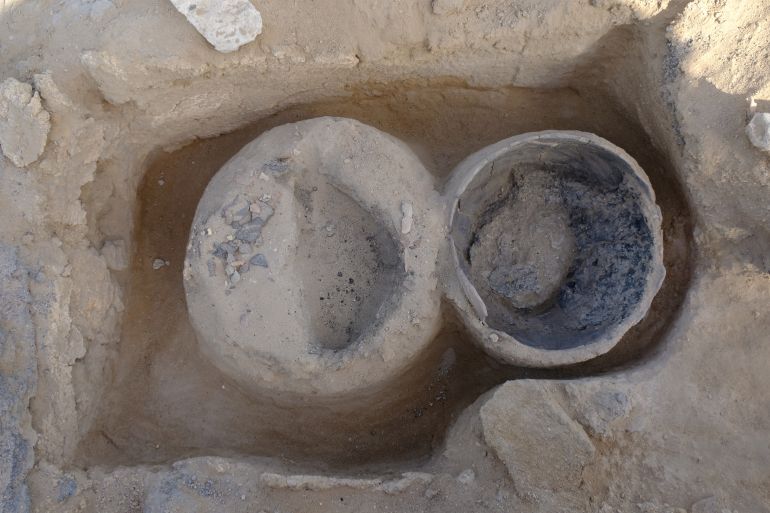
During excavations at the site in 2018, a Kuwaiti archaeological team uncovered a buried stone structure thought to have been used for heating or food preparation. Inside its fire chamber, they found a pottery jar, designated SU 19, bearing traces of burning.
“Finding the jar in the fire chamber suggests that it may have been used to prepare food, particularly as it showed traces of burning that indicate it was used as a cooking pot,” Majed told Al Jazeera Net. “This was confirmed by analyses that detected microscopic plant remains.”
Testing the pollen
To identify the remains, the researchers analysed two samples of sediment from inside the jar, one taken from its base and the other from the middle. The work was carried out at the pollen laboratory of the Georgian National Museum under the supervision of Dr Eliso Kvavadze.
First, a density-separation process using a cadmium-containing solution isolated lighter organic material, including pollen, from heavier mineral sediment. The samples then underwent acetolysis, a chemical treatment that removes some plant and organic matter that could obscure pollen’s finer features.
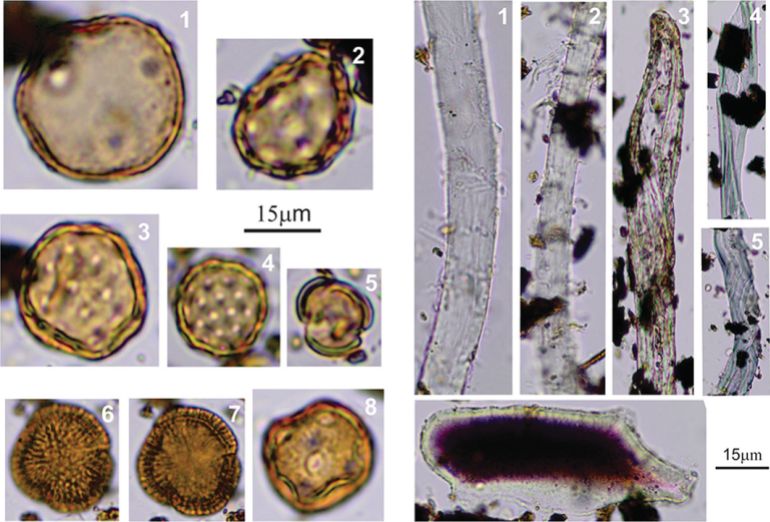
The prepared samples were mounted on glass slides and examined under a light microscope. Researchers assessed the pollen grains’ shapes, sizes and detailed outer walls, then compared them with established taxonomic references to identify their plant origins.
The analysis identified rice, olive and walnut pollen, along with starch granules and remains from other plant species too small to be seen with the naked eye.
Plants from beyond the island
Rice and olives are not crops readily suited to Failaka’s arid environment, Majed said. The olive traces are also the first evidence of the plant recorded in a Bronze Age archaeological context on the island.
“The ancient pottery jar has, through this discovery, become a possible witness to the range of plant materials known to the island’s inhabitants, and perhaps used in preparing their food,” he said.
Hamed told Al Jazeera Net that rice was likely brought to Failaka from elsewhere, with the Indian subcontinent among the possible sources. During the Bronze Age, Dilmun belonged to a broad network of maritime contacts and trade linking Mesopotamia with the Gulf and lands to the east, including the Indian subcontinent. Rice may have travelled along these routes directly or through intermediary trading centres, eventually reaching island residents.
However, Hamed stressed that plant analysis cannot establish rice’s place of origin. India therefore remains a possible source, not one scientifically proven to have supplied the remains found on Failaka.
What the discovery may reveal
The find offers more than a possible early sign of rice consumption in the Gulf: it may also shed light on the food available to people on Failaka around 4,000 years ago.
“The presence of traces of rice, olives and walnuts inside a vessel associated with a heating structure, alongside starch and other plant remains, suggests that the site was used to store or prepare food,” Hamed said.
Shells, snails and burnt stones were also found around the structure. These provide further evidence consistent with activities involving the use and preparation of marine resources.
The researchers say the discovery gains significance when set against earlier evidence for rice in the region. Previously published evidence of rice in parts of the Near East dates to later periods. Charred rice grains found at Mleiha in the United Arab Emirates, for example, date to the third century AD, while the archaeological context of the Failaka remains belongs to the early second millennium BC.
“If this dating is confirmed, the discovery could represent one of the earliest archaeological indications that rice reached the Gulf, and perhaps provide early evidence of the crop’s movement between South Asia and the ancient Near East,” Hamed said.
Important caveats
The researchers caution that their findings are pollen grains, not whole or charred rice grains. They were also unable to radiocarbon-date the jar’s contents directly, relying instead on the pottery’s classification and the archaeological context to estimate its age.
The evidence cannot establish that rice was a common or regular part of the islanders’ diet, how it was prepared, or even whether it was cooked in this particular jar.
“But finding its traces in a jar associated with a fire structure adds an important piece of evidence to the history of food and trade in the ancient Gulf.”