
The UAE as a Global Hub for Trade and Supply Chains Through Major Infrastructure and Logistics Projects
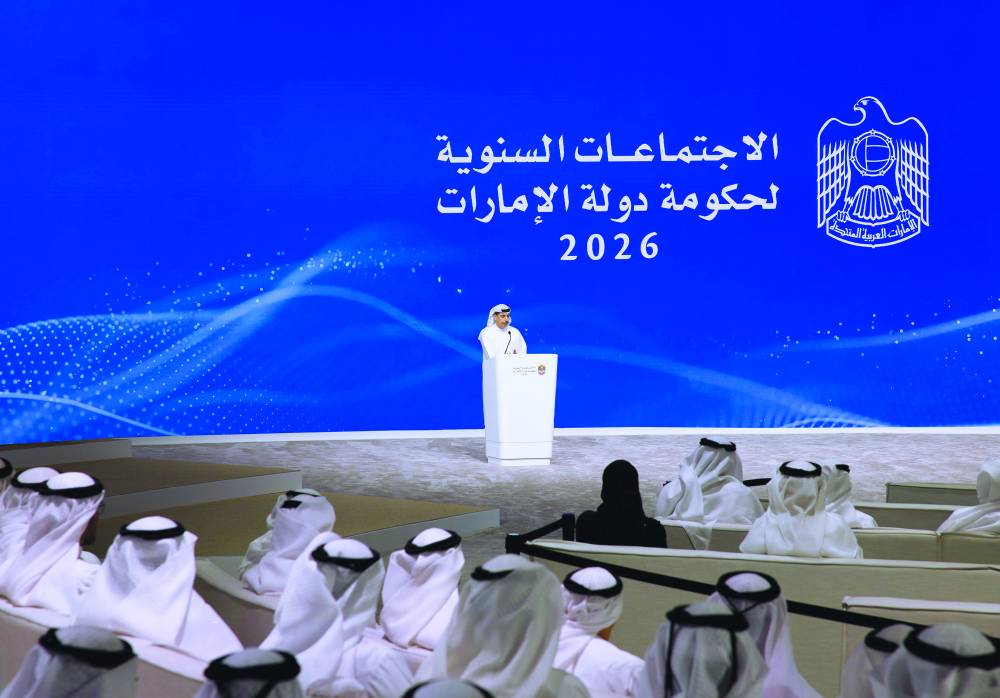
The United Arab Emirates is positioning itself as a leading global centre for trade and supply chains, driven by a series of major infrastructure and logistics initiatives. During the “UAE: A Global Centre for Trade and Supply Chain” session at the Annual Meetings of the UAE Government 2026, key achievements and future goals were highlighted, showcasing the country’s proactive planning, integration of federal and local entities, private sector collaboration, and robust infrastructure capable of adapting to evolving demands.
Present at the session were Suhail Mohamed Faris Al Mazrouei, Minister of Energy and Infrastructure, and Issa Kazim, Chairman of DP World. Al Mazrouei discussed Project Four, which serves as a crucial transportation artery linking Ras Al Khaimah with the border region of Saudi Arabia. This initiative aims to enhance connectivity among the Emirates and bolster regional economic and logistical centres.
Enhancing Transportation Networks
Spanning 148 kilometres—80 kilometres in Dubai and 68 kilometres at the federal level—the project is designed to increase road capacity, alleviate congestion, and improve the flow of vehicles and goods to meet future transportation needs driven by economic growth.
Furthermore, plans are underway to connect Project Four with new routes towards the eastern coast, enhancing the integration of transport networks across both coastlines. This will provide additional pathways linking ports to logistics hubs and border crossings. Coordination with local authorities is ongoing to update connection points and finalise routes, ensuring that the project complements existing and planned roads while addressing developmental needs across the Emirates.
Significant Growth in Container Handling
Al Mazrouei noted a remarkable increase in container handling at eastern coast ports, soaring from 433,000 to 1.8 million containers, marking a substantial growth of 316 percent between February and October 2026. Additionally, the handling of general and bulk cargo surged from 5 million to 15.8 million metric tonnes, an increase of 216 percent. Operational capacity at eastern coast ports has also risen by 30 percent, achieved by enhancing handling equipment and operational facilities. Moreover, weekly Union Railway services have escalated from one trip to seven daily trips.
Strategic Underground Water Stock and Renewable Energy Goals
On the water front, plans are in place to boost the strategic underground water reserve from 5.6 billion gallons to 12 billion gallons by 2028, representing a 114 percent increase. The share of the eastern coast in water desalination is expected to rise from 15 percent to 27 percent by 2036. Additionally, efforts to increase renewable energy capacity from 8.2 gigawatts to over 23 gigawatts by 2031 are aligned with national strategies to diversify energy sources and enhance the readiness of vital sectors.
Expansion of Container Capacity
Issa Kazim announced that the container handling capacity at DP World’s terminals in the UAE is set to reach 21.9 million standard containers annually upon the completion of the development of the Ruwais Port and the Dibba terminal in Fujairah. The Ruwais Port alone will provide half of the nation’s containerised imported goods supply, offering an additional outlet for importers to meet local demand. Furthermore, the Dibba terminal will facilitate the handling of 3.6 million metric tonnes of general cargo.
Highlighting the significance of this expansion, Kazim pointed out that Jebel Ali Port handled approximately 15.6 million standard containers in 2025, averaging 1.3 million containers monthly, which amounts to nearly 43,000 daily. The port is critical, as it accounts for roughly 80 percent of the country’s total container imports. In addition to catering to local demand, Jebel Ali also serves regional markets through transshipment operations.
Strengthening Interconnected Shipping Networks
Moreover, Kazim shared details on how the group has integrated Jebel Ali Port with the ports of Khor Fakkan, Fujairah, and Sohar via a land bridge, which has facilitated the transport of over 840,000 containers at an average of 3,500 containers a day. Khor Fakkan and Fujairah collectively accounted for about 95 percent of the container traffic across this bridge, involving shipments of food, retail goods, furniture, and construction materials, establishing a streamlined flow of goods from multiple ports to markets through a single transport network.
To accommodate the growing volume of transported goods between ports via land routes, the group has expanded its logistics truck fleet from 120 to approximately 3,500 vehicles. In Fujairah, the group has also operated a new berth for Emirates Global Aluminium, receiving alumina needed for production and exporting finished aluminium to global markets. Reports indicate the berth has handled 341,000 tonnes of imported alumina and 33,000 tonnes of finished aluminium for export.
Regionally, Kazim discussed activating a route linking Jebel Ali with Umm Qasr Port in Iraq, further extending to Turkey and European markets. Since July, maritime services have also commenced between Jebel Ali and ports in India and Karachi, Pakistan, transporting 58,000 containers. These services rely on a network that spans more than 80 countries and encompasses over 60 ports and terminals, effectively connecting the UAE’s access points with its trade partners and granting exporters broader opportunities to reach their customers.