
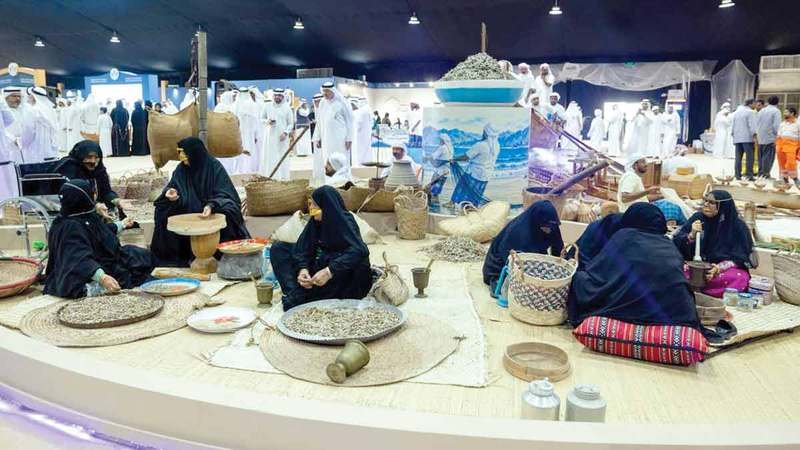
The culinary landscape is witnessing a delightful transformation as traditional Emirati ingredients like “sahna” (a salty fish) find new homes in contemporary dishes. At the first specialised festival dedicated to “jashaa” (a type of rice) and sahna, the boundary between heritage and modern cuisine was expertly blurred, giving visitors a chance to savour flavours they may not have associated with these beloved local ingredients.
A Fusion of Tradition and Modernity
Chef Mona Al Mansouri introduced a unique dish—pasta with sahna—at the festival. Remarkably, she reimagined the classic Caesar salad by replacing the traditional anchovies with sahna sourced from a participating Emirati family. “The idea revolves around integrating a cherished local product into globally known dishes,” she explained. “Sahna added a distinct flavour, proving it can transcend its traditional uses traditionally associated with home-cooked meals.”
Reviving Old Connections
Meanwhile, Abdullah Saeed Al Zaabi from “Abdullah Al Zaabi and Sons Farms” presented another innovative take by blending sahna with the local plant, Al Ghaf. Their creation, dubbed “Tabbouleh Sahna”, aimed to reconnect local environment components with modern dining. “We prepared sahna and Al Ghaf together to present them in a dish that revives an ancient story of the relationship between local flora and the Emirati table,” he shared. This presentation was complemented by traditional “Aseedah”, linking the past with contemporary tastes.
A Community Experience
The festival also served as a platform for the younger generation and older community members to engage in the preparation of sahna. Families gathered to participate in the traditional methods of processing this esteemed ingredient, bringing forth memories of collaborative efforts within households. Meryam Mohammed Al Zaabi, who participated in preparing sahna and jashaa, expressed pride in this cultural legacy: “Women were historically the hands behind these dishes, from cleaning the fish to drying and preparing it.” She highlighted the communal aspect of sahna-making, where women came together, sometimes accompanied by folk songs, turning food preparation into a social event rather than a mere household chore.
The Story Behind the Ingredients
Abdullah Salim Al Taboot, an enthusiast of heritage, reminisced about past connections to the sea, noting that fishing was once not merely a pastime but a fundamental means of survival. “The livelihood came from the sea; resources were abundant,” he reflected, reminding attendees that jashaa and sahna are still relevant despite evolving lifestyles. He recalled how families used every available resource, mixing scarce jashaa with rice and other staples to ensure everyone was fed.
A Dynamic Festival
The Khorfakkan Festival of Jashaa and Sahna featured 85 participating productive families alongside 10 governmental entities and several companies specialising in fishing gear and fish processing. The event offered interactive experiences including live demonstrations, workshops, and activities aimed at children and families. Visitors could observe traditional techniques for preparing jashaa and sahna, explore the tools used in their making, and taste dishes that merge the historical essence of the ingredients with modern culinary approaches.
Organised by the Sharjah Chamber of Commerce and Industry in collaboration with the Khorfakkan Municipality, the festival runs until 27th September, showcasing jashaa and sahna not just as remnants of the past but as ingredients capable of flourishing in contemporary kitchens. As they transcend generations, these local treasures are being reintroduced in ways that resonate with today’s dining experiences.