
Abu Dhabi is gearing up to host the much-anticipated Abu Dhabi Honey Forum, which will be a key component of the upcoming Global Food Week 2026. This significant event is organised by the Abu Dhabi Agricultural and Food Safety Authority in collaboration with Apimondia, the world’s largest organisation specialised in beekeeping, along with ADNEC Group, a member of the UAE’s Cities. The forum aims to be the largest scientific gathering dedicated to beekeeping and honey production in the Middle East and North Africa region.
Scheduled to take place from October 6 to October 8, the forum carries the theme “Sustainable Beekeeping in Arid Environments: Innovative Solutions and Technologies for Climate Change Adaptation.” Over the three days, it will convene a distinguished gathering of experts, researchers, policymakers, and private sector representatives to discuss the latest scientific and technological advancements in sustainable beekeeping. This event will showcase innovative solutions that support food security and enhance the sector’s resilience against climate challenges while fostering regional and international cooperation and knowledge exchange.
Avenue for Expert Dialogue
The Abu Dhabi Honey Forum stands out as one of the most significant specialised events within the Global Food Week 2026, hosted under the patronage of His Highness Sheikh Mansour bin Zayed Al Nahyan, Deputy Prime Minister and Minister of the Presidential Court, and Chairman of the Abu Dhabi Agricultural and Food Safety Authority. The forum will highlight the UAE’s pioneering efforts in developing an integrated model for beekeeping and honey production in arid environments, further establishing its status as a regional and global centre for innovation, research, and development in this vital sector.
Participants can expect a wide array of attendees, including beekeepers, researchers, academics, government entities, international organisations, investors, agricultural technology companies, honey producers, marketers, and postgraduate students interested in the sector from around the globe.
Strategic Topics of Discussion
Key strategic topics to be addressed at the forum include the preservation of bees and the development of sustainable beekeeping practices in arid regions, as well as innovations in hive management, the added value of hive products and their therapeutic benefits, honey quality, and the enhancement of related markets and supply chains.
The forum will officially kick off on October 6 with an inaugural ceremony followed by a scientific programme featuring several keynote lectures from international experts affiliated with Apimondia. A high-level panel discussion will also take place, showcasing the UAE’s exemplary experience and leadership in building a sustainable honey and beekeeping sector. Additionally, the first day will include a scientific poster exhibition and a platform for presenting recent research and studies.
Focus on Innovation
On its final day, the forum will spotlight technology and innovation as critical drivers for the future of beekeeping. A high-level discussion will explore the latest AI-supported solutions and innovative techniques for hive management aimed at boosting productivity and enhancing resilience against climate change, complemented by a series of specialised scientific lectures.
Acknowledgment and Future Perspectives
The conclusion of the forum will encompass the announcement of final recommendations and the recognition of award winners, along with a field visit to a local apiary. This visit will allow participants to observe best practices and techniques employed in effective hive management.
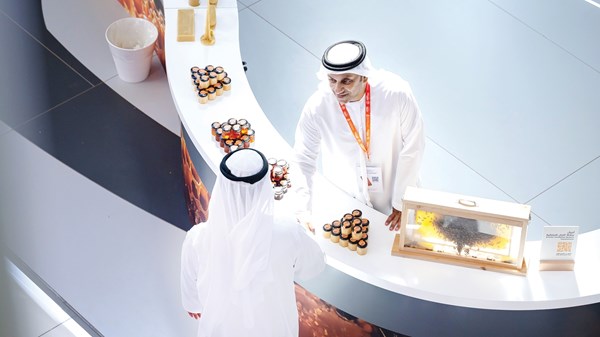
Alongside the scientific programme, the Abu Dhabi Honey Forum will host a specialised exhibition featuring over 40 booths from beekeepers honoured with the Sheikh Mansour Agricultural Excellence Award, and more than 20 booths representing companies and institutions showcasing the latest hive equipment, agricultural technologies, and Emirati honey products. Participating entities will include honey testing laboratories, universities, research institutions, and relevant government bodies.