
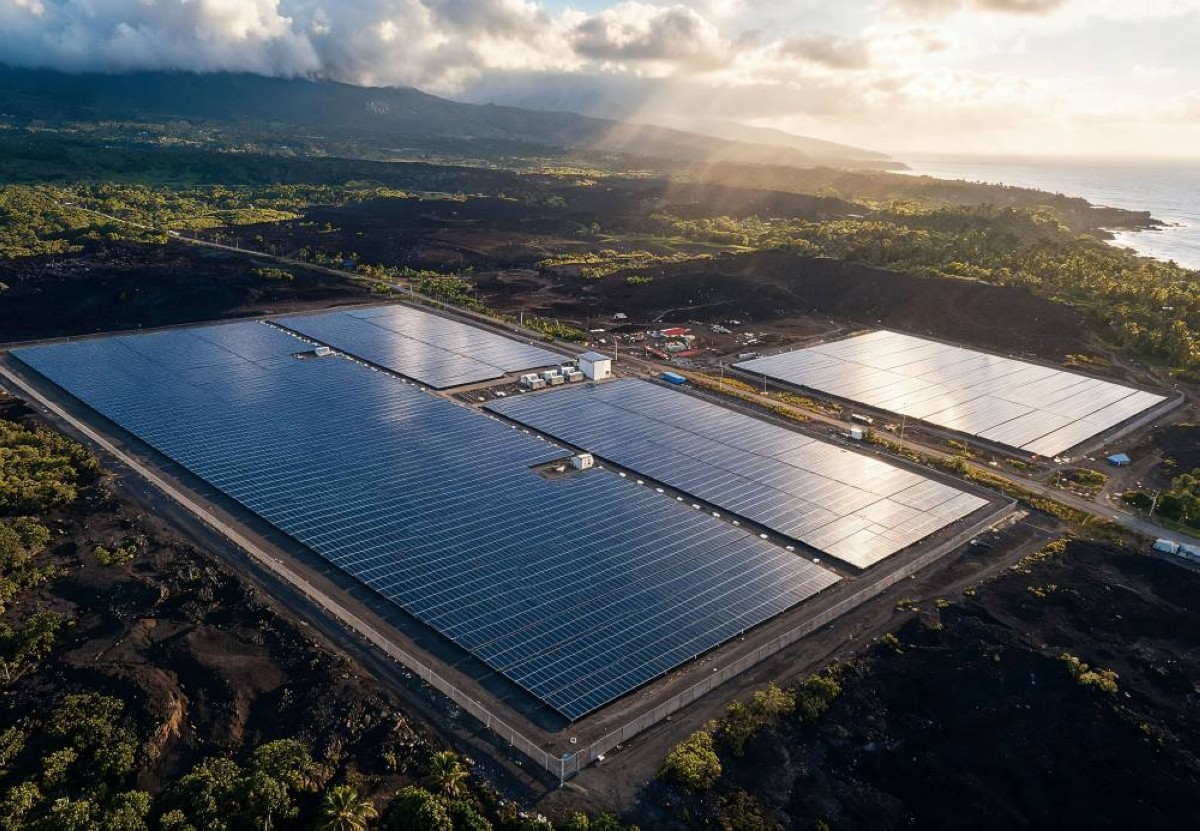
In a significant step towards enhancing renewable energy solutions, His Excellency Othman Ghazali, President of the Comoros, inaugurated three solar power stations in the country. Funded by the Abu Dhabi Fund for Development (ADFD) with nearly AED 84.4 million, the project is executed by the Abu Dhabi Future Energy Company, known as Masdar, in collaboration with Global South Utilities. This initiative illustrates the United Arab Emirates’ commitment to leveraging its expertise and capabilities to promote the widespread adoption of renewable energy, bolster global energy security, and foster a more sustainable future.
Inauguration Ceremony and Project Details
The inauguration ceremony was attended by several dignitaries, including Jumaa Rashid Al-Ramithi, UAE Ambassador to the Comoros, Ahmed Khamees Al-Kalbani, Acting Operations Sector Head at ADFD, Dr. Mohammed Al-Zarouni, Head of Strategic and Private Projects Department at Masdar, and Ali Abdulla Al-Shammari, Managing Director and CEO of Global South Utilities, along with various high-ranking officials from both nations.
Project Specifications and Impact
The project encompasses photovoltaic solar power stations with a total installed capacity of approximately 20 megawatts. This capacity is distributed as follows: 12.86 megawatts on Grande Comore, 4.05 megawatts on Anjouan, and 3.1 megawatts on Mohéli. Additionally, the project includes battery storage systems with a capacity of 16 megawatt-hours and an 8-megawatt output on Grande Comore and Anjouan, alongside around 30 kilometres of 20 kV medium voltage overhead power lines.
Technical studies suggest that the three stations are set to generate around 33.75 gigawatt-hours of clean electricity annually, sufficiently meeting the energy needs of approximately 17,500 homes while avoiding roughly 20,900 tonnes of CO2 emissions each year.
Strengthening Ties Between the UAE and Comoros
President Othman Ghazali highlighted that this strategic initiative reflects the deep-rooted brotherly relations between the Comoros and the UAE, founded on trust and a shared vision for a more prosperous and sustainable future. He expressed gratitude to His Highness Sheikh Mohamed bin Zayed Al Nahyan, President of the UAE, for his continuous support. He views the opening of these power stations as a vital milestone for establishing sustainable development foundations that will create new avenues for prosperity for the people of the Comoros.
Benefits for Local Communities
UAE Ambassador Jumaa Rashid Al-Ramithi noted that the pioneering project translates the exemplary partnership between the two countries into impactful developmental projects that improve community life and boost economic growth. He affirmed that the stations support the energy system on Grande Comore, Anjouan, and Mohéli by expanding solar energy utilisation and employing innovative energy storage solutions, thus enhancing the reliability of electricity supplies.
Mohammed Saif Al-Suwaidi, Director General of ADFD, stated that the project represents a sustainable investment that goes beyond just energy provision to establishing a solid foundation for growth and prosperity. He emphasised that the power stations would reduce dependence on imported fuel and create a more stable environment for businesses and public services while ensuring that the development’s benefits extend to local communities through capacity building and job creation.
Long-Term Development Goals
Mohammed Jameel Al-Ramahi, CEO of Masdar, underscored the pivotal role of renewable energy sources in enhancing energy security and economic resilience. He mentioned that the project will support the Comoros’ current energy needs while also aligning with its long-term development ambitions by harnessing solar energy potential and advanced storage technologies to accelerate sustainable social and economic growth.
Ali Abdullah Al-Shammari reiterated that the project serves as a robust model for transforming international development partnerships in renewable energy investments into tangible benefits for communities. By integrating energy generation, battery storage, and supportive infrastructure, it will bolster the energy system’s reliability and support the state’s ambitions for sustainable development.
Addressing Energy Challenges
This inauguration comes at a time when the Comoros faces increasing challenges in the electricity sector. In 2024, imported diesel constituted approximately 91% of the energy mix, while electricity demand reached 254 gigawatt-hours against an actual generation of 150 gigawatt-hours, compounded by roughly 3,000 cases of power outages in the nation. The expected annual solar production from the project will amount to around 13.3% of total electricity demand and 22.5% of actual generation capacity, enhancing energy system efficiency and capacity to meet growing demand. This marks a new pathway for diversifying energy sources and mitigating the impact of fluctuations in imported fuel prices, paving the way for a more stable energy system.