
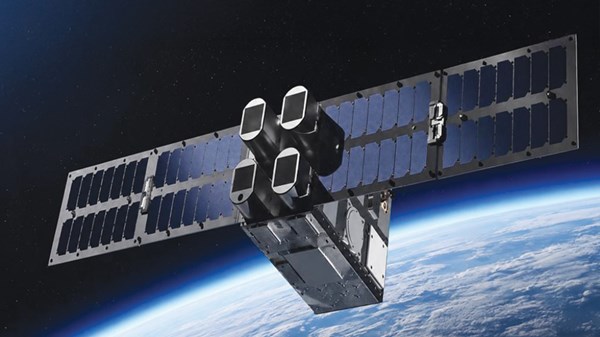
The UAE’s pursuit of advanced space navigation technology took a significant leap forward with the successful operational verification of the Emirati satellite, «Leonaf-1». Following the satellite’s launch on 7 July, it has now surpassed initial operational goals by successfully validating its navigation payload and receiving signals from low Earth orbit, thereby propelling the future of space navigation systems.
A Groundbreaking Endeavour
The National Centre for Space Science and Technology at the United Arab Emirates University announced the successful transition of the satellite from its launch and commissioning phase to achieving its technical objectives. This milestone marks a critical advancement in the operational and scientific programme for the satellite, as performance continues to be monitored in orbit. Leonaf-1 stands as the UAE’s first satellite specifically developed for satellite navigation technologies.
Long-Term Vision for Satellite Navigation
Leonaf-1 is a crucial component of a comprehensive vision aimed at establishing a satellite navigation system based on low Earth orbit. The mission seeks to assess technologies that could be instrumental in the development of future systems for positioning, navigation, and timing. This initiative aligns with the UAE’s broader strategy to enhance scientific research, technical development, and innovation in the space sector.
Mission Objectives and Achievements
The primary focus of Leonaf-1 is to evaluate low Earth orbit space navigation concepts and technologies. The satellite is tasked with broadcasting signals similar to those of existing global navigation satellite systems across the L5/E5 and S frequency bands, while also validating signal transmission and reception with ground stations, all without interfering with current navigation systems. Furthermore, the mission aims to assess on-board software performance related to orbital positioning and timing synchronisation, providing valuable data for future space navigation system developments.
Team Effort and International Collaboration
The successful verification of navigation payloads and the reception and processing of signals represent a vital step forward in the mission’s operational programme. Early phases included critical assessments of satellite system integrity, establishing communication links, and carrying out necessary operational tests. Emirati engineers and researchers from the National Centre for Space Science and Technology lead the operations of Leonaf-1, having played a crucial role in both the development and testing phases of this initiative. This effort not only enhances national expertise in satellite systems and space navigation but also fosters international cooperation, highlighted by partnerships with institutions and companies from France, which have facilitated knowledge transfer and skill development for Emirati professionals.
Supporting Future Research
The outcomes of Leonaf-1 hold promise for advancing research and applications related to navigation, positioning, and timing techniques. These findings are expected to benefit various sectors in the future, including smart transportation, aviation, and autonomous vehicles. As the National Centre for Space Science and Technology continues its operational and scientific programme, it stands poised to leverage the insights and data generated from Leonaf-1, propelling the UAE’s ambitions in space navigation technology further into the future.